


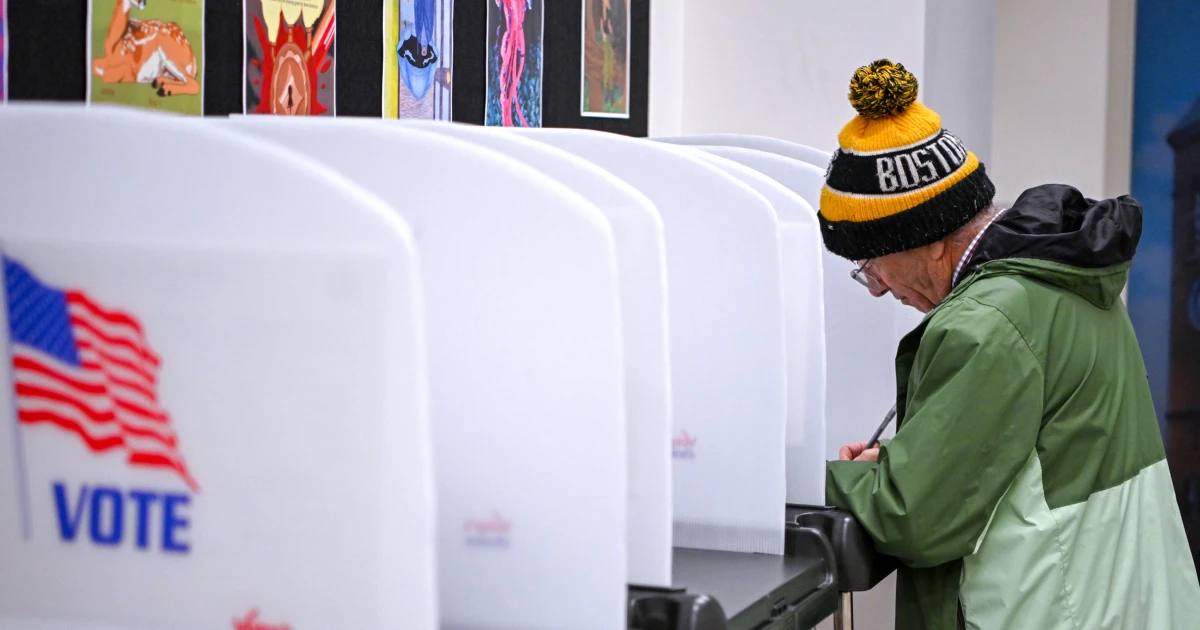
Exit polls serve as a vital tool in understanding voter behavior and preferences on Election Day, providing insights into the electorate before final votes are counted.
What is an Exit Poll?
An exit poll is a survey conducted with voters immediately after they leave their polling places. Different from pre-election public opinion polls, which gauge likely voter sentiment, exit polls capture the opinions of those who have actually cast their ballots. They also account for voters who participated early or via mail through follow-up interviews.
Who Conducts Exit Polls?
This year, SSRS, a reputable survey and market research firm, will administer exit polls on behalf of major news organizations, including NBC News, ABC News, The Associated Press, CBS News, CNN, Fox News, and MS NOW. While all these entities receive the same data, NBC News will provide independent analysis and reporting on the findings.
What Questions Are Included?
The national exit poll primarily asks which political party’s candidate—Democrat or Republican—voters supported for their House representatives. Many states further inquire about votes for Senate and gubernatorial candidates. Additionally, voters are questioned on key issues of concern, such as “What is the most important issue facing the country?” Demographic data, including age, gender, race, and educational background, is also collected to analyze voting patterns among different groups.
How Are Exit Polls Conducted?
Exit polls on election day involve in-person surveys at strategically chosen polling places. Interviewers, stationed at over 450 locations across 15 competitive Senate states, will ask voters to complete a questionnaire that includes approximately 25 questions. Efforts will be made to adhere to local guidelines regarding survey location.
In addition to on-site polling, a pre-election survey captures responses from voters participating via mail or voting early. This includes initial outreach via mail, phone, or online, followed by follow-up interviews to confirm voting intentions and final choices.
Surveys are available in English and Spanish. On election day, interviewers are directed to offer the questionnaire to every third or fifth exiting voter, compiling data throughout the day.
Results from conducted questionnaires are transmitted to a central data center at multiple points throughout the day. This ongoing accumulation of information helps provide real-time updates to the exit poll data set.
Are Exit Polls Anonymous?
Yes, participant anonymity is a fundamental aspect of exit polling. Voters fill out their responses privately, submitting them anonymously into designated boxes. For remote interviews conducted by phone or online, personal identifiers are not recorded, ensuring complete privacy regarding individual voting records.
Which States Will Participate in Exit Polls?
This year’s exit polls will encompass all 50 states through a national poll, with more specific state-level polls conducted in 45 states with significant Senate and gubernatorial elections.
How Many Voters Are Interviewed?
The national exit poll aims to gather data from over 75,000 voters across various methods—on-site, online, and by phone. In 15 key states, a minimum of 4,000 voters will be surveyed, while Alaska will target around 3,000, including participants from early voting locations. Other states with Senate or gubernatorial exit poll results will engage between 500 to 3,000 voters.
How Is Exit Poll Data Used?
The NBC News Decision Desk leverages exit poll data to assist with projecting results on election night. More importantly, these polls help narrate the electoral narrative by providing insights into what drives voter turnout and decision-making.
What Information Does NBC News Report?
NBC News maintains a strict policy on reporting exit poll results: no findings are disseminated before 5 p.m. ET on election night, nor are any results that could indicate a race outcome shared until after polls have closed in the relevant state. As election night progresses, updated results from field interviewers will refine polling data in real-time.
