


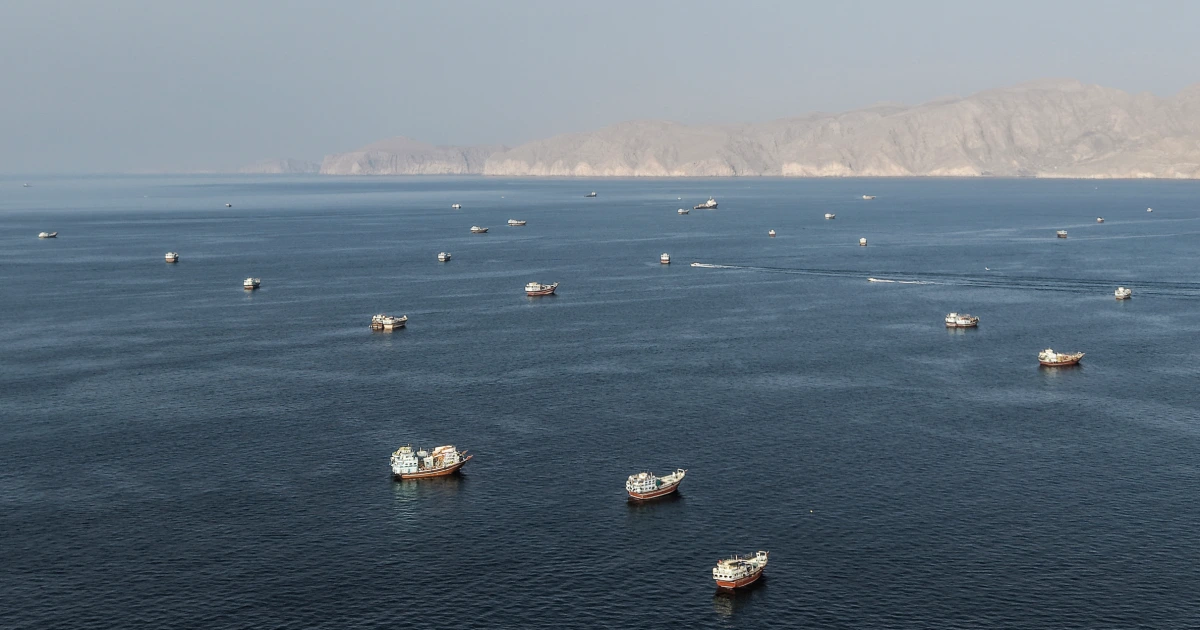
The U.S. military recently conducted a series of targeted strikes on Qeshm Island in Iran, as reported by two officials from the U.S. government. This action, described as limited in nature, occurred just before crucial midterm elections in the United States and amidst growing concerns over escalating tensions in the Middle East.
Officials emphasized that these attacks did not signify a shift towards extensive combat operations in Iran. They framed the strikes as a defensive response to ongoing Iranian attempts to target maritime shipping and U.S. military assets in the region. One official noted that the United States is currently intercepting drones and missiles aimed at shipping routes on a daily basis.
In recent weeks, the Islamic Revolutionary Guard Corps (IRGC) has increasingly targeted U.S. aircraft both manned and unmanned over the Strait of Hormuz. In response, U.S. forces have occasionally struck Iranian missile launchers when the IRGC has fired upon U.S. planes. According to a U.S. source, the latest strikes were prompted by an instance of Iran attempting to target an American aircraft, leading to a calculated response aimed at neutralizing the missile launcher involved.
Following the strikes, Iranian state media reported hearing five explosions on Qeshm Island. These military actions ensued despite President Donald Trump’s prior declaration that he would refrain from conducting strikes on Iran ahead of the elections.
The prolonged conflict with Iran has posed significant challenges for the Republican party, especially in light of rising gasoline prices and broader economic implications affecting voter sentiment as they approach the midterms. While U.S. military engagement appears to remain limited, thousands of U.S. troops are stationed in the vicinity, aiming to enforce a naval blockade that prevents the transfer of Iranian oil to international markets. Additionally, further military assets are being deployed to the theater.
Earlier in the day, Vice President JD Vance conveyed a cautiously optimistic view that diplomatic solutions might still be attainable in light of the heightened tensions. He mentioned having reached out to Iran’s security chief, Mohsen Rezaei, in an effort to discuss humanitarian assistance, including medical supplies. Vance indicated that both he and Trump were hopeful for future negotiations to de-escalate the situation.
The outlook remains tense as concerns about the U.S. potentially ramping up military operations against Iran linger in the region. Concurrently, back-channel conversations are underway, influenced by Israeli and other Middle Eastern allies pushing for a policy direction amidst ongoing conflict, which has already had significant impacts on global markets and struggling Iranian economies.
Israeli Prime Minister Benjamin Netanyahu has advocated for increased military action prior to recent elections, underscoring the high stakes associated with national security following attacks from groups like Hamas. With the midterm elections looming, this conflict has also surfaced prominently among U.S. voters, influencing perceptions and decisions.
On the trading front, oil prices experienced a steep decline following indications of potential progress in diplomatic efforts to resolve the ongoing strife. Trump highlighted this development in a speech, attempting to downplay the scope of the U.S. involvement in what he described as limited combat engagements, reiterating that significant military operations have not been prevalent for months.
Iranian Foreign Minister Abbas Araghchi has also remained vocal about the possibility of negotiations, stating Iran’s willingness to pursue diplomatic avenues. “While our Brave Armed Forces are fully prepared to defend the Homeland, Iran continues to give diplomacy a chance to succeed,” he wrote on social media last week.
