


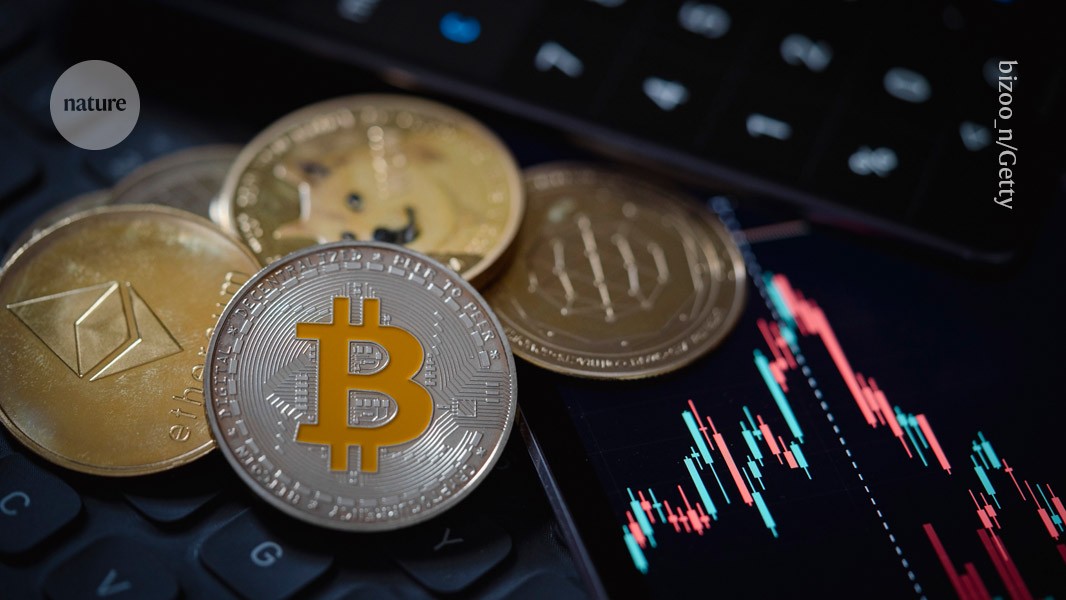
Researchers will be compensated with cryptocurrency for their reviews in the new ResearchHub Journal.Credit: bizoo_n/Getty
A novel approach to academic publishing is being tested with the launch of the ResearchHub Journal, which rewards peer reviewers with cryptocurrency. This initiative allows peer reviewers to earn up to US$150 per review in a unique digital currency called ResearchCoin.
Founded in 2020, ResearchHub aims to enhance the openness and efficiency of scientific communication. The platform is spearheaded by Brian Armstrong, the co-founder of Coinbase, the largest cryptocurrency exchange in the United States.
“It’s a strange oddity of history that peer reviewers don’t get paid. It’s a valuable thing that they do and we should recognize, reward it,” stated Armstrong during the journal’s launch in San Francisco, coinciding with Bitcoin’s surge to an all-time high of US$100,000.
Advancing Open-Source Science
In a 2019 blog post, Armstrong expressed dissatisfaction with the pace and quality of scientific research and proposed that it should adopt a model similar to open-source software—encouraging collaborative construction of knowledge while leveraging successful features from platforms like Reddit, GitHub, and Kickstarter.
The ResearchHub Journal commits to a rapid peer-review process, promising that submitted preprints will undergo evaluation within two weeks, followed by a publication decision in seven additional days. Authors are required to pay an article-processing charge of $1,000, and all published papers and reviews will be made available under a CC-BY license. However, to date, the journal has yet to publish any articles or be indexed in notable bibliometric databases like Web of Science or Scopus.
In addition to peer review, authors can earn ResearchCoin through practices such as preregistering their studies and sharing data openly. Users of ResearchHub can also gain tokens for uploading academic papers and providing feedback on submissions. The platform allows for tipping among users and payment for completing various research tasks, with ResearchHub taking a 7% commission on all token transactions, half of which is reinvested back into the community.
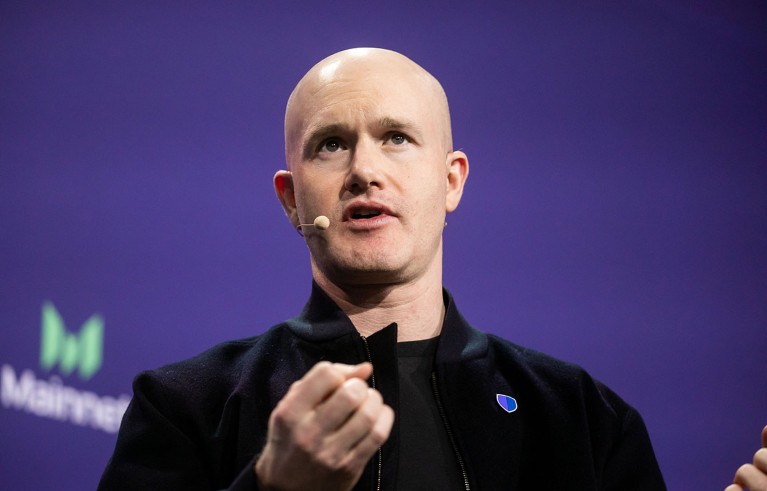
Brian Armstrong, CEO of Coinbase, emphasizes a transformative approach to scientific publishing with ResearchHub.Credit: Michael Nagle/Bloomberg via Getty
Experts recognize the potential of ResearchHub to shift the academic credit system but warn that radical changes in publishing often face significant challenges. Alex Holcombe, a metascientist at the University of Sydney, emphasizes the need for new credit models beyond simply publishing papers, noting that peer review is a critical aspect of the scientific process.
Compensation Challenges in Peer Review
While paying peer reviewers is not unprecedented—some economics and medical journals have historically offered compensation—systems like ResearchHub may face hurdles in gaining academic acceptance amid skepticism about cryptocurrency. PeerJ, another open-access journal, utilizes a token-based reward system for reviewers, indicating a growing interest in this alternative compensation model.
Reviews conducted for ResearchHub have proven financially beneficial for some reviewers. For instance, Pedro Paulo Gattai Gomes, a molecular biology consultant from Brazil, reports earning more from reviewing for ResearchHub than he did in previous academic roles, with 70% of his income derived from this activity.
“Getting paid to review is justice, because in my opinion it is very unfair to work voluntarily and not even receive a thank you,” Gomes remarked.
Cashing in ResearchCoin for traditional currency involves some complexity. Currently, users can exchange ResearchCoin for other cryptocurrencies on decentralized exchanges like Uniswap, but plans are in motion to list ResearchCoin on more accessible centralized exchanges as well.
James Butcher, a publishing consultant in Liverpool, cautions that the cryptocurrency model carries risks of exploitation and might hinder adoption due to the conservative nature of the academic community.
