


On Thursday, the U.S. stock market experienced its most significant decline in 18 months, with the tech-heavy Nasdaq 100 losing $2.3 billion in market capitalization, a drop of 6.3%. The broader S&P 500 index followed suit, erasing $2.8 trillion in market value after a 4.4% plunge.
Global Reactions to U.S. Market Decline
Following this downturn, U.S. futures exhibited mixed signals early Friday as European shares also suffered losses. The repercussions of the selloff rippled through Asia, where South Korea’s Kospi index experienced an alarming drop exceeding 8%, leading to a temporary suspension of trading. Renowned AI data center memory suppliers, Samsung and SK Hynix, saw their stocks fall more than 10%, although they managed to recover some of those losses later in the session. The Nikkei 225 in Japan also faced a decline of as much as 6%, thereby entering bear market territory.
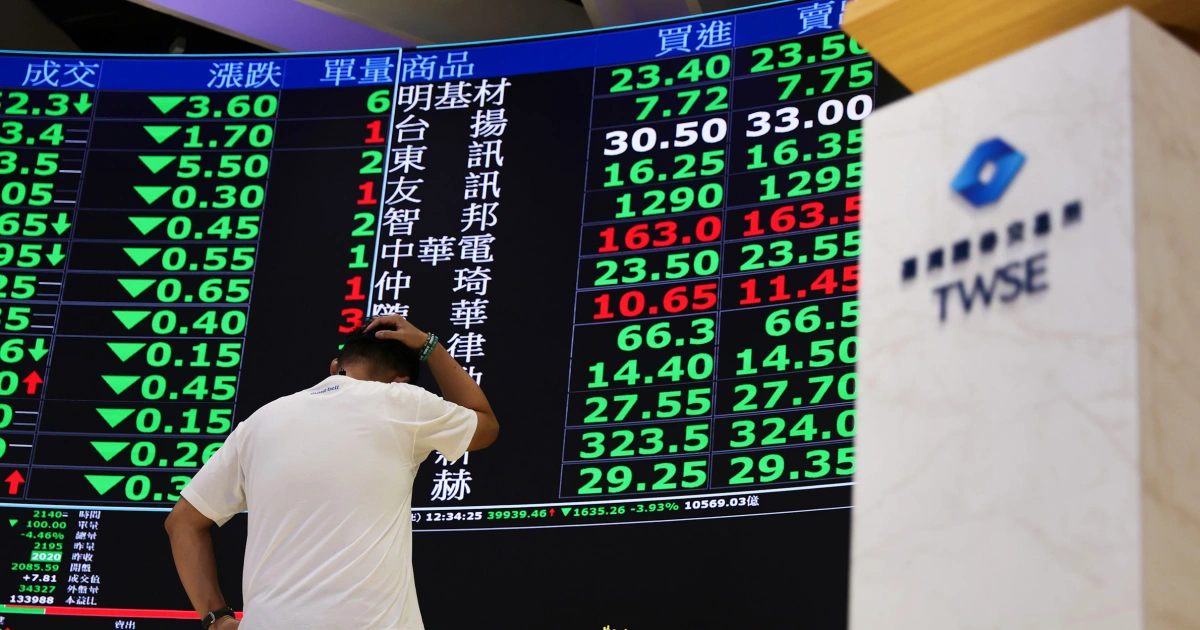
In Taiwan, home to key players in the AI sector like chip manufacturer TSMC, the benchmark TAIEX index plummeted by 9%.
London’s FTSE 100 index opened Friday down by 1.6%, while both the French CAC40 and German DAX indexes reflected similar negative trends.
Factors Behind the Market Declines
Charu Chanana, Chief Investment Strategist at SAXO Markets, commented on the situation, stating, “Markets are being punished according to their dependence on the U.S. AI infrastructure cycle.” Tai Hui, J.P. Morgan’s APAC Chief Market Strategist, echoed this sentiment, noting the strong link between the companies in Taiwan, South Korea, and Japan with the global AI capital expenditure cycle. “I am not surprised to see the magnitude of correction today following the sharp correction in the U.S.,” he added.
Political Changes and Market Implications
The sharp decline in market values unfolded after dramatic midterm election results in the U.S. that are poised to bring anti-AI and anti-data center politicians, such as Texas Gov.-elect Gina Hinojosa, into office. The election outcome has led to anxiety that the Democratic Congress might impose stricter scrutiny on the tech industry, particularly regarding AI infrastructure projects, potentially resulting in delays and increased costs. Analysts believe these developments may jeopardize the profitability of ongoing investments.
Ongoing Market Challenges in Asia
In the months leading up to the American elections, Asian investors experienced significant fluctuations. Following a high point in June driven by an AI stock boom, markets are now reeling from a harsh sell-off. Concerns over the increasingly inflated valuations of key AI companies have contributed to this downturn, compounded by the uncertainty introduced by the Democratic sweep in the U.S.
Chanana from SAXO Markets emphasized the importance of this situation, explaining, “This matters enormously for Asia because much of the hardware supporting America’s AI ambitions is manufactured here.” As market dynamics shift, the interconnected nature of global supply chains further complicates the outlook for investors both in Asia and worldwide.
