


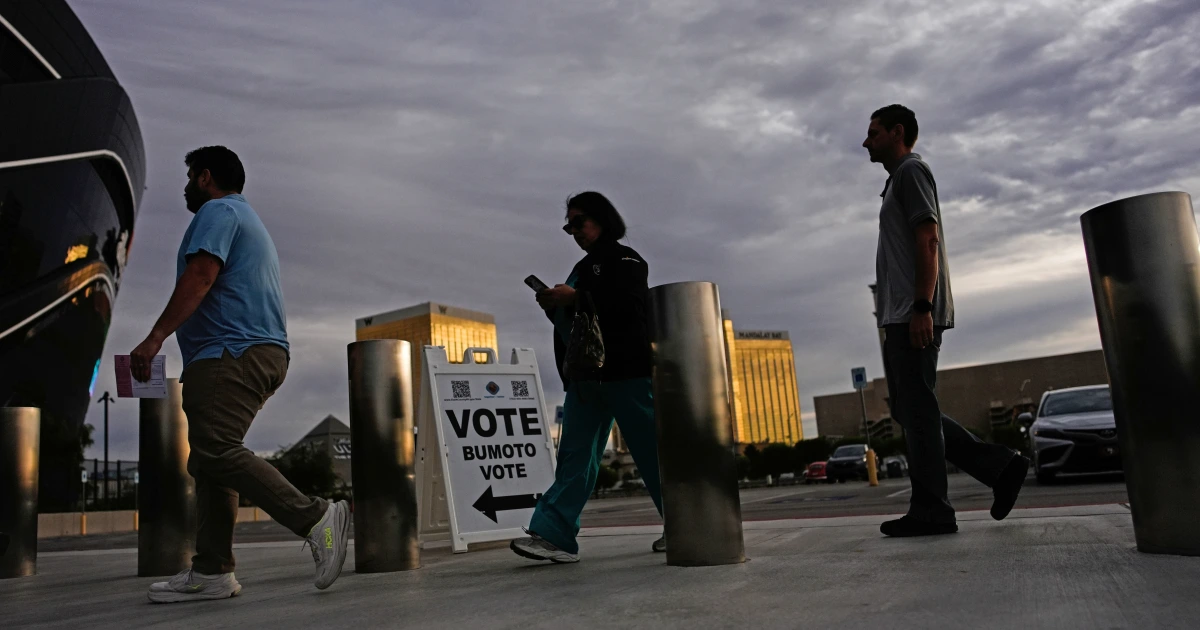
As voters participated in the recent midterm elections, new insights emerged from the NBC News Exit Poll indicating significant dissatisfaction with President Donald Trump’s administration. Nearly half of the assessed voters viewed the election as a chance to express their discontent with Trump’s performance, a notable increase compared to the prior midterm elections. Specifically, 43% cited opposition to the president as a key reason for their voting choice, which surpasses the figures recorded during the 2018 midterm elections when Trump first took office.
Despite Trump’s attempts to rally support for Republican candidates through a vigorous campaign drive, his job approval ratings appear largely unchanged. Economic concerns, primarily high inflation, loomed large in voters’ minds. Many cited rising costs of living—particularly regarding gas, food, and utilities—as a substantial hardship, with a significant portion attributing these issues directly to the current administration’s policies.
Declining Approval Ratings for Trump
The poll results indicated that only 38% of voters approved of Trump’s performance, a pronounced decline from 45% in 2018. Disapproval is especially apparent in key battleground Senate states such as Georgia, Ohio, Michigan, and Texas, where majorities are critical of how Trump is managing his responsibilities.
Mixed Feelings Towards Both Major Parties
In a surprising twist, sentiments shared by voters reflected a general dissatisfaction with both the Democratic and Republican parties. The poll revealed that over half of voters—54%—held an unfavorable view of the Democratic Party, while 59% expressed similarly negative feelings toward the Republican Party. Remarkably, nearly one in five voters did not regard either party favorably, marking an increase of five points compared to previous midterm elections.
Voter confidence appeared more favorable toward the Democrats regarding several critical issues, including the economy, healthcare, and government corruption, although the Republican Party maintained an advantage on immigration-related matters.
Economic Concerns Take Center Stage
Perceptions concerning the economy have shifted dramatically: a staggering 75% of respondents deemed the economy to be in a rough state, with 65% suggesting that Trump’s policies have contributed to worsening conditions. The cost of living heavily influenced voting decisions, with approximately half of voters identifying it as a crucial factor. This sentiment starkly contrasts with the positive economic outlook reported in 2018 when most voters felt the economy was flourishing.
Pivotal Issues Influencing Voter Behavior
When asked to prioritize national issues, voters overwhelmingly pointed to the economy and the state of democracy as their chief concerns, picking the economy at 39% and democracy at 32%. Many voters indicated significant worry about inflation and its impacts on essential living costs, wherein gas prices and food remained paramount concerns, leading to a pronounced backlash against the president’s tenure.
Shift in Key Demographic Support
As election results unfolded, attention was drawn to pivotal demographic groups, especially Latino voters and younger voters under 30. The proportion of Latino voters identifying as Democrats saw an uptick, from 39% in the preceding election to 43% this year. They are now more closely aligned with the Democratic favor compared to recent years, which may indicate a shift in party loyalty.
Young voters, after showing a marginal increase in support for Trump in 2024, also appear to be gravitating back toward the Democratic Party. This trend highlights an area of critical watch for future elections as demographic shifts continue to reshape the political landscape.
