


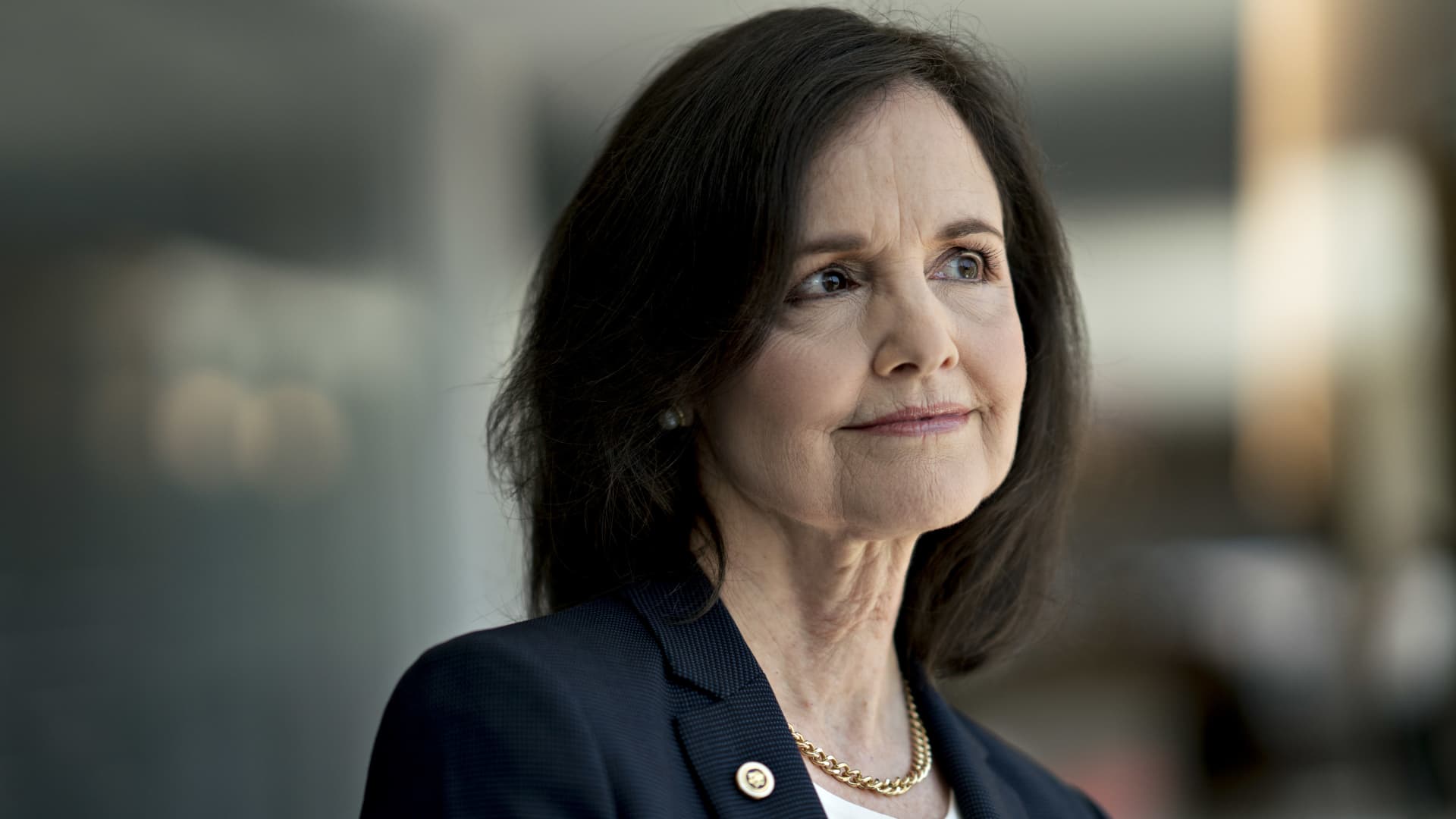
Judy Shelton, whose nomination as a member of the Federal Reserve was rejected by the Senate due to controversial economic views, has now taken on a new role as a counselor to Treasury Secretary Scott Bessent. The Treasury Department has stated that Shelton will focus on currency policy, specifically addressing financial conditions in China.
Although not widely recognized as an expert on China, Shelton’s credentials include authorship of two significant books: “The Coming Soviet Crash,” published in 1989, and “Money Meltdown,” released in 1994. The latter discusses the necessity of a unified international monetary system. Prior to her appointment at the Treasury, she served as a senior fellow at the Independent Institute, a well-known free-market think tank, and previously held a position at Stanford University’s Hoover Institution. Shelton earned her Ph.D. in business administration from the University of Utah.
The Treasury highlighted Shelton’s extensive career dedicated to analyzing national monetary and financial conditions and their effects on exchange rates. This expertise is especially pertinent in evaluating the complex financial landscape of China, which is subject to rapid changes and increasing scrutiny.
Her appointment occurs amid a period of significant turnover within the Treasury. A recent report from the Wall Street Journal detailed that seven Senate-confirmed officials departed from the department as of August, with only one position officially filled since then. This backdrop may imply challenges within the Treasury’s senior leadership.
Bessent has also appointed David Zervos, a former chief market strategist at Jefferies, to a similar counselor role as Shelton. Importantly, neither appointment requires Senate confirmation, allowing for a more streamlined integration into the department.
It is worth noting that the Senate’s blockade of Shelton’s nomination for the Federal Reserve was largely a result of her unconventional perspectives on the independence of the Fed, her advocacy for a return to the gold standard, and her public questioning of the need for a central banking system in the U.S. This prior debate sets the stage for her new role, which involves advising on currency policy at a critical time for the nation’s economic strategy.
In a correction to earlier reports, it has been clarified that Shelton authored “Money Meltdown” in 1994 and that the correct spelling of the financial firm Zervos formerly worked for is Jefferies.
