


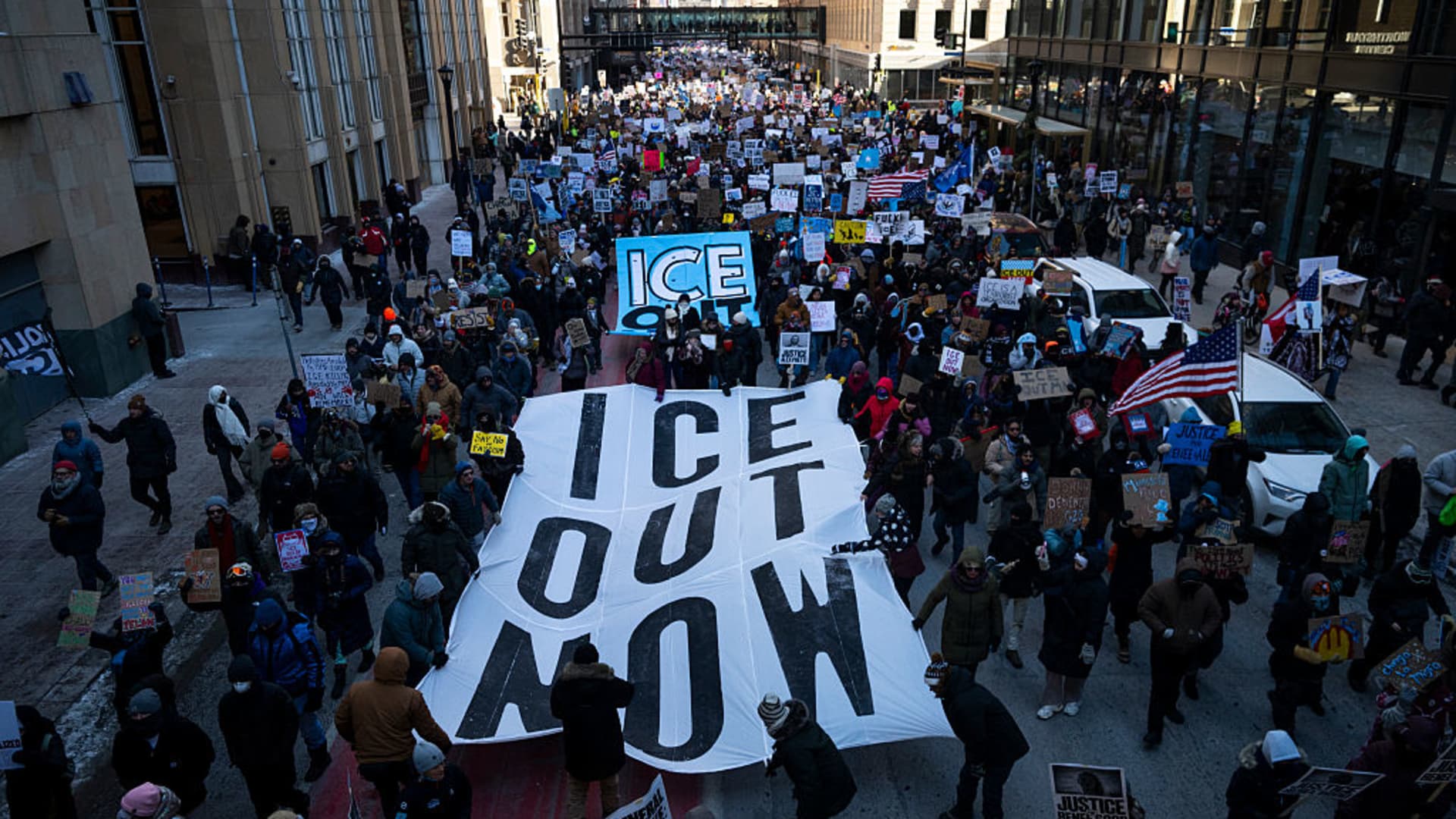
In Minneapolis, the aftermath of Operation Metro Surge continues to impact local businesses, particularly those owned by immigrants. The operation, which was one of the largest immigration enforcement actions conducted by the Department of Homeland Security, left a significant economic toll on the community, affecting grocery stores like Colonial Market owned by Daniel Hernandez.
“We’re barely — literally barely — surviving,” Hernandez stated, reflecting on the toll the operation took. His grocery store, once bustling with customers, saw foot traffic dwindle as nearby neighborhoods were heavily targeted by immigration enforcement. Despite the operation ending months ago, Hernandez’s business has yet to see a recovery, suffering a staggering 60% decline in sales.
Hernandez was forced to close the location on Lake Street, a core area for the Hispanic community in Minneapolis. After opening the store just two years prior, he borrowed against his home and used his savings to establish a foothold in this vital area. Yet, as sales plummeted due to the heightened ICE presence, the community’s economic struggles were underscored by a recent analysis from the University of Pennsylvania. It showed that cities affected by immigration raids in 2025 saw a approximately 3% drop in weekly foot traffic and over 6% in consumer spending, amounting to billions in economic losses.
The Economic Impact of Enforcement Actions
The Lake Street Council reported that immigrant-owned businesses suffered a collective loss of $46 million during the peak months of the operation. In the broader context, the city of Minneapolis estimated the economic activity lost to be nearly $700 million between December and April. Mayor Jacob Frey described that figure as conservative, noting the long-term effects that the operation inflicted upon the community.
In the months following the surge, employment rates suffered, with an analysis from the Brookings Institution indicating a 0.4% shortfall in employment for the most heavily affected cities. Furthermore, the unemployment rate in Minnesota rose above the national average for the first time in nearly two decades, as many local businesses struggled to retain employees.
Despite some economic aid released by city officials—approximately $7 million for businesses and $3 million in rental assistance—Mayor Frey acknowledged that these measures were insufficient to fully remedy the damage done. He compared the effects of the operation to those seen following natural disasters, emphasizing the urgent need for more comprehensive support.
As Hernandez and others grappled with these challenges, the Minneapolis Foundation rallied corporate donations to provide supplementary assistance. However, former mayor R.T. Rybak noted a hesitance among major companies to publicly respond to the surge, drawing a contrast to their vocal reactions following other community crises, such as the death of George Floyd.
Challenges Facing the Hispanic Community
The Latino Donor Collaborative highlighted that if U.S.-based Latinos were to form their own country, their economy would rank as the fourth largest worldwide, with a GDP of approximately $5.1 trillion. However, this demographic has faced significant challenges amidst rising anti-immigration sentiments. Hispanic households’ spending growth rates have decreased over the past two years, and immigration policy has come to the forefront as a major concern for many Latino consumers.
Jason Chavez, a Minneapolis City Council member, pointed out that many immigrant business owners utilized their life savings during the enforcement period to keep their operations afloat. As emergencies pile up, such businesses are left vulnerable to shocks that could lead to permanent closures.
While foot traffic has shown some signs of recovery through community events, there remains a persistent fear among residents. Businesses like Lito’s Burritos, owned by Miguel Hernandez, continue to suffer from the psychological effects of the raid, with a notable drop in customers when immigration enforcement headlines surge in the news.
On a more hopeful note, community initiatives, such as a pop-up market at Colonial Market where immigrant entrepreneurs sell their products, have started to revive local engagement. Hernandez has invited local police officers to these events, believing their presence may deter any unwanted ICE attention and encourage community participation.
Conclusion: Resilience Amidst Uncertainty
Despite these small steps toward recovery, many business owners remain anxious about the potential for renewed crackdowns. As Daniel Hernandez succinctly noted, “During the storm, you can feel the winds. But once the storm is over, all that you see is destruction.”
As Minneapolis looks to rebuild, the community continues to face the dual challenges of economic recovery and pervasive fear related to immigration enforcement, illustrating the complex interplay of policy and its far-reaching impacts on local economies.
