


MANILA, Philippines — The annual summit of Southeast Asian leaders commenced on Sunday in Manila, bringing together nations of the Association of Southeast Asian Nations (ASEAN) for three days of critical discussions. Among the attendees is U.S. President Donald Trump, who is set to engage in this significant diplomatic event following a challenging midterm election for his party.
The summit discussions will encompass pressing global issues, particularly the ongoing conflicts in the Middle East, as indicated by preliminary drafts of the post-summit communications reviewed by The Associated Press. The dialogue aims to strengthen the leaders’ unified approach toward these complex challenges, which includes addressing geopolitical tensions, economic uncertainties, and societal threats that have profound implications for the region.
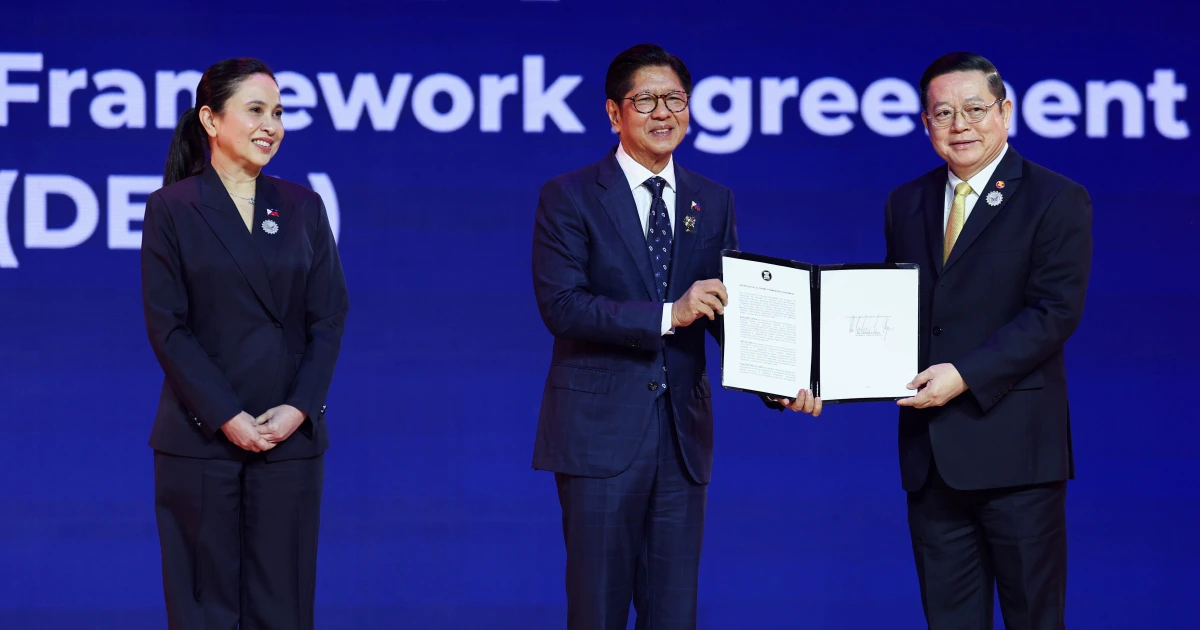
President Trump, accompanied by U.S. Secretary of State Marco Rubio, is scheduled to arrive in Manila on Tuesday afternoon after the main ASEAN meetings conclude. He will participate shortly after the transfer of the ASEAN chairmanship from Philippine President Ferdinand Marcos Jr. to Singapore.
During the summit, ASEAN leaders are expected to reiterate their commitment to self-restraint and the peaceful resolution of disputes, particularly concerning the South China Sea and the internal conflict in Myanmar. They will also focus on ways to mitigate the economic impact stemming from persistent global crises.
In a draft statement, the leaders reaffirmed their dedication to upholding international law, including the principles laid out in the United Nations Charter. The importance of peaceful conflict resolution and the safeguarding of freedom of navigation in regional waters are also highlighted as key points of discussion.
President Marcos emphasized the necessity of unity among ASEAN nations amid increasing global challenges. He remarked, “That commitment matters even more as the waters around us turn on shifting tides, geopolitical tensions, economic uncertainty, new technologies, climate change, and transnational threats.” He warned that international developments are affecting the region more rapidly than any single nation can handle alone.
However, achieving unity in ASEAN presents its own challenges, given the diverse political systems, ranging from democracies to authoritarian regimes, and varying degrees of alignment with major powers like the United States and China. The organization has often been criticized for its symbolic gestures of solidarity rather than effective conflict resolution.
On Tuesday evening, President Trump will participate in several high-profile meetings, including a gathering of the Quadrilateral Security Dialogue with leaders from Japan, Australia, and India—a coalition often viewed as a counterbalance to China’s influence in the region. Additionally, he will attend an informal summit with ASEAN leaders.
On Wednesday, Trump is expected to meet with Marcos, receiving a ceremonial welcome and attending a state luncheon at the presidential palace in Manila. They are likely to reaffirm the longstanding alliance between the United States and the Philippines before both leaders head to the APEC summit in Shenzhen, China, hosted by President Xi Jinping.
U.S.-based geopolitical analyst Greg Poling noted that Trump’s brief visit to Manila is crucial for reassuring allies amid concerns following the midterm elections. He stated, “The short stop in Manila will help reassure allies and partners that they aren’t being forgotten before he jets off to Shenzhen to focus on meetings with Xi.” He also indicated that Trump’s diminished political standing may influence China’s receptiveness during their discussions in Shenzhen.
While Trump is poised to engage with ASEAN leaders, it is noteworthy that China’s representation at the summit will be led by Premier Li Qiang, who will meet ASEAN officials before departing before Trump’s arrival.
