


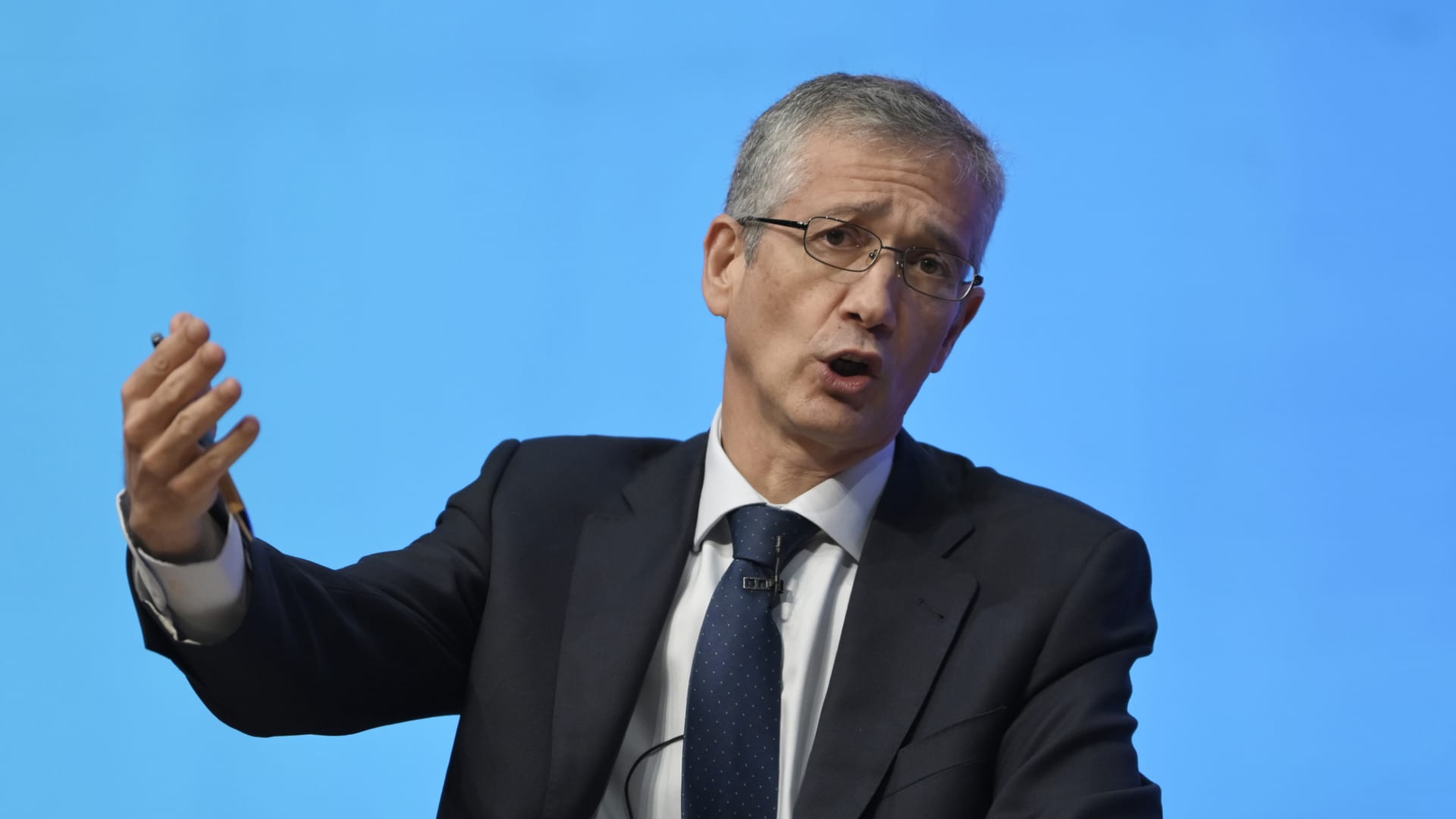
Pablo Hernández de Cos is poised to become the next president of the European Central Bank (ECB) following the endorsement of euro area leaders at a recent European Council summit. This nomination is set to succeed Christine Lagarde, who has indicated she will step down on February 7, 2027, marking the conclusion of her seven-year tenure as the first female head of the ECB.
While the appointment awaits formal approval after consultations with the European Parliament and the ECB’s Governing Council, those bodies lack veto authority, paving the way for Hernández de Cos’s anticipated eight-year term as president. Reports suggest that de Cos gained momentum for this nomination after the Netherlands shifted its support to Klaas Knot, the sole other candidate.
Professional Background
At 55 years old, Hernández de Cos has an extensive background in economics and central banking. He began his career at the Bank of Spain in the 1990s and advanced through multiple roles, becoming its governor in 2018 until June 2024. Since July 2025, he has served as the General Manager of the Bank for International Settlements, located in Basel, Switzerland.
Having chaired the Basel Committee on Banking Supervision from 2019 to 2024, de Cos emerges as a candidate with significant insight into monetary policy and financial stability—qualities especially pertinent amid current economic volatility characterized by inflation challenges and political uncertainties.
Decision-Making Dynamics
Sources have noted that Hernández de Cos received sufficient backing after rigorous political negotiations. Despite the Netherlands’ last-minute support for Knot, key representatives from major eurozone economies—including Germany, France, and Italy—have participated in discussions to secure equitable representation within the ECB’s six-member Executive Board.
Monetary Policy Stance
Analysts describe Hernández de Cos as a centrist figure in monetary policy, sometimes referred to as an “owl” due to his balanced approach. While historically favoring lower interest rates to stimulate growth during periods of subdued inflation, he has shown readiness to endorse significant rate hikes amid rising energy costs, particularly following geopolitical tensions from Russia’s actions in Ukraine.
Christian Kopf, a senior figure in fixed income at Union Investment, pointed out that de Cos’s views may adapt to shifting economic contexts, signifying a commitment to data-driven decision-making in a climate of elevated inflation expectations.
Political Landscape and Economic Balance
Hernández de Cos’s anticipated leadership signals a collaborative effort to address the monetary needs of diverse eurozone member states, potentially harmonizing interests between northern and southern economies. The strategic alignment of Hernández de Cos with Germany’s Markus Brunnermeier and France’s Laurence Boone in key roles reflects an effort to balance perspectives, especially given that northern states typically advocate more hawkish policies.
This careful selection comes in response to the historical economic disparities observed during the euro area crisis, as southern economies emerge stronger today compared to their status a decade ago, achieving remarkable growth.
Challenges Ahead
The new appointment arrives as various eurozone nations grapple with persistent economic challenges, notably France, which faces rising borrowing costs as it navigates fiscal stability amidst political uncertainty. Upcoming elections could further complicate the market dynamics, posing challenges for the ECB in setting cohesive monetary policy across the region.
As the eurozone contends with inflation rates rising to 4%—the highest in over three years—Hernández de Cos will have to confront the dual challenge of maintaining price stability while fostering growth. He will also carry forward significant initiatives, including the development of a digital euro and efforts to enhance capital markets integration.
Conclusion
As the ECB prepares for a transformational phase under Hernández de Cos’s leadership, his capacity to address the diverse economic landscapes across member states will be crucial. Effective governance will be instrumental in promoting stability and growth within the euro area while securing market confidence amid ongoing global uncertainties.
