


Challenges Faced by the Federal Reserve in Managing Interest Rates
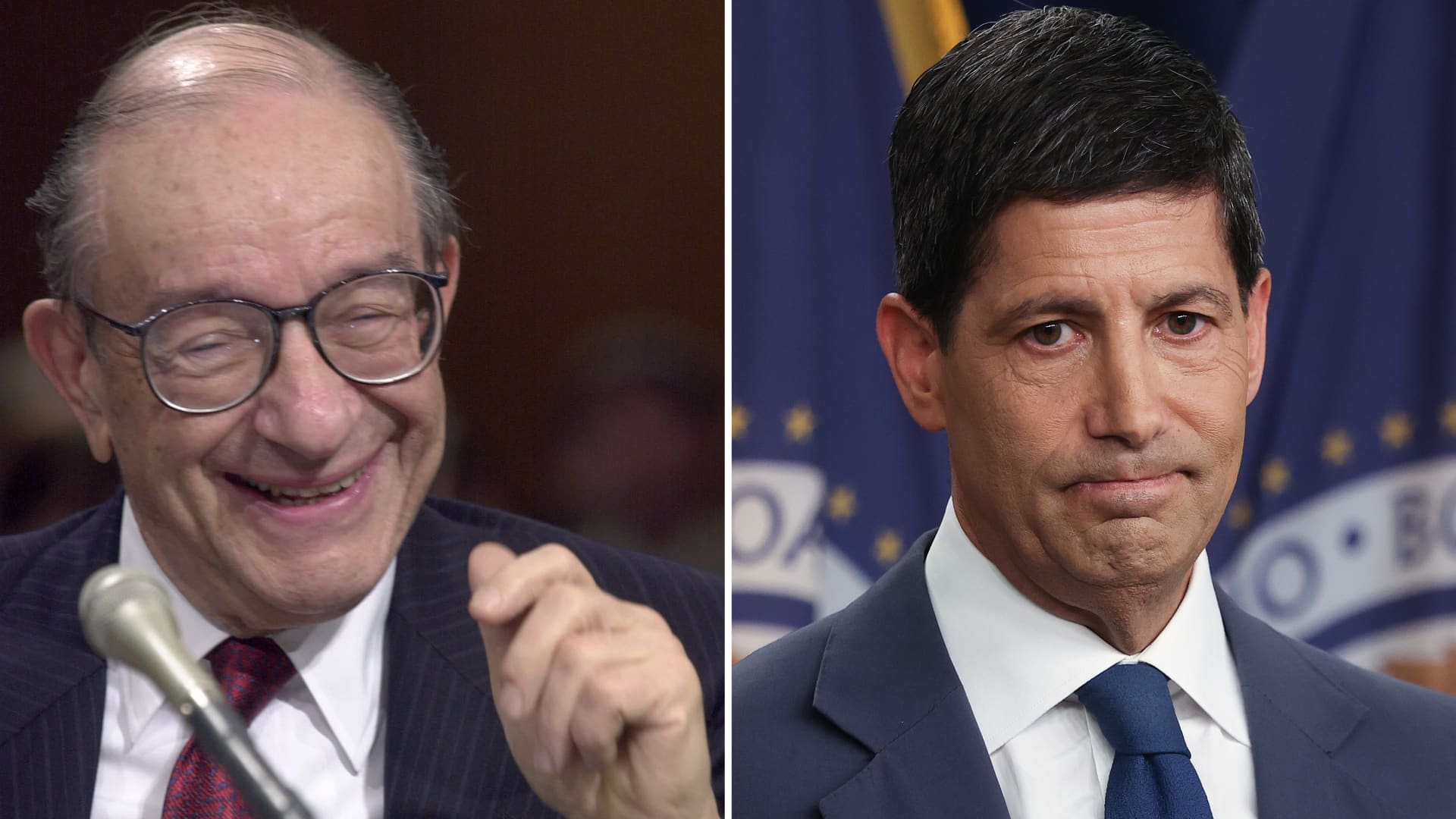
During a recent segment on CNBC’s Halftime Report, a pivotal question emerged regarding current Federal Reserve Chairman Kevin Warsh’s ability to maintain interest rates similarly to former Chairman Alan Greenspan during the early dot-com era. Greenspan infamously resisted the inflation concerns from committee members in the mid-1990s to uphold rates amid robust economic growth, driven by the burgeoning internet revolution. Unlike Greenspan’s era, Warsh finds himself navigating a markedly different landscape characterized by escalating inflation and significant government stimulus.
Comparative Overview of Economic Conditions
The economic conditions that Warsh faces today are not only distinct from those during Greenspan’s tenure but are starkly defined by the following factors:
- Interest Rates: The nominal federal funds rate was notably higher in 1995 compared to today. During that time, the real, inflation-adjusted funds rate stood at 3.75%. Presently, the real rate hovers around zero, indicating that the Fed is potentially stimulating economic growth rather than containing it.
- Inflation Rates: Inflation, as measured by the personal consumption expenditures price index, was approximately 1.99% in the mid-90s, which was close to the informal target. Present figures indicate inflation rates have surged to 3.8%, indicating a significant deviation from target rates and an upward trend.
- Investment Trends: The landscape of capital investments has also shifted dramatically. In 1995, investment in information technology rose by 15% year over year. By 2025, an anticipated growth spurt suggests expenditures may ascend by 60% in just the third quarter, reflecting a boom that far surpasses historical comparisons.
- Government Spending: In 1995, the government deficit accounted for 2.2% of GDP. Today, that figure has ballooned to 6.2%, compounded by higher oil prices, increased tariffs, and recent tax incentives aimed at accelerating investment depreciation.
The Implications of Current Economic Dynamics
The magnitude of capital expenditures on technologies such as artificial intelligence hints at potential future productivity gains. However, the current face of infrastructure investment appears to be exerting inflationary pressures on an already strained economy. This situation represents a reversal of what Greenspan faced, as he navigated challenges amidst a more stable inflation environment.
Conclusion
In conclusion, the current trajectory for the Federal Reserve suggests that significant interest rate hikes may be necessary. Warsh’s context is characterized by critical differences from Greenspan’s era at the dawn of a crucial technological evolution. As inflation continues to rise and government stimulus remains substantial, the Federal Reserve’s actions will invariably shape the nation’s economic future.
