


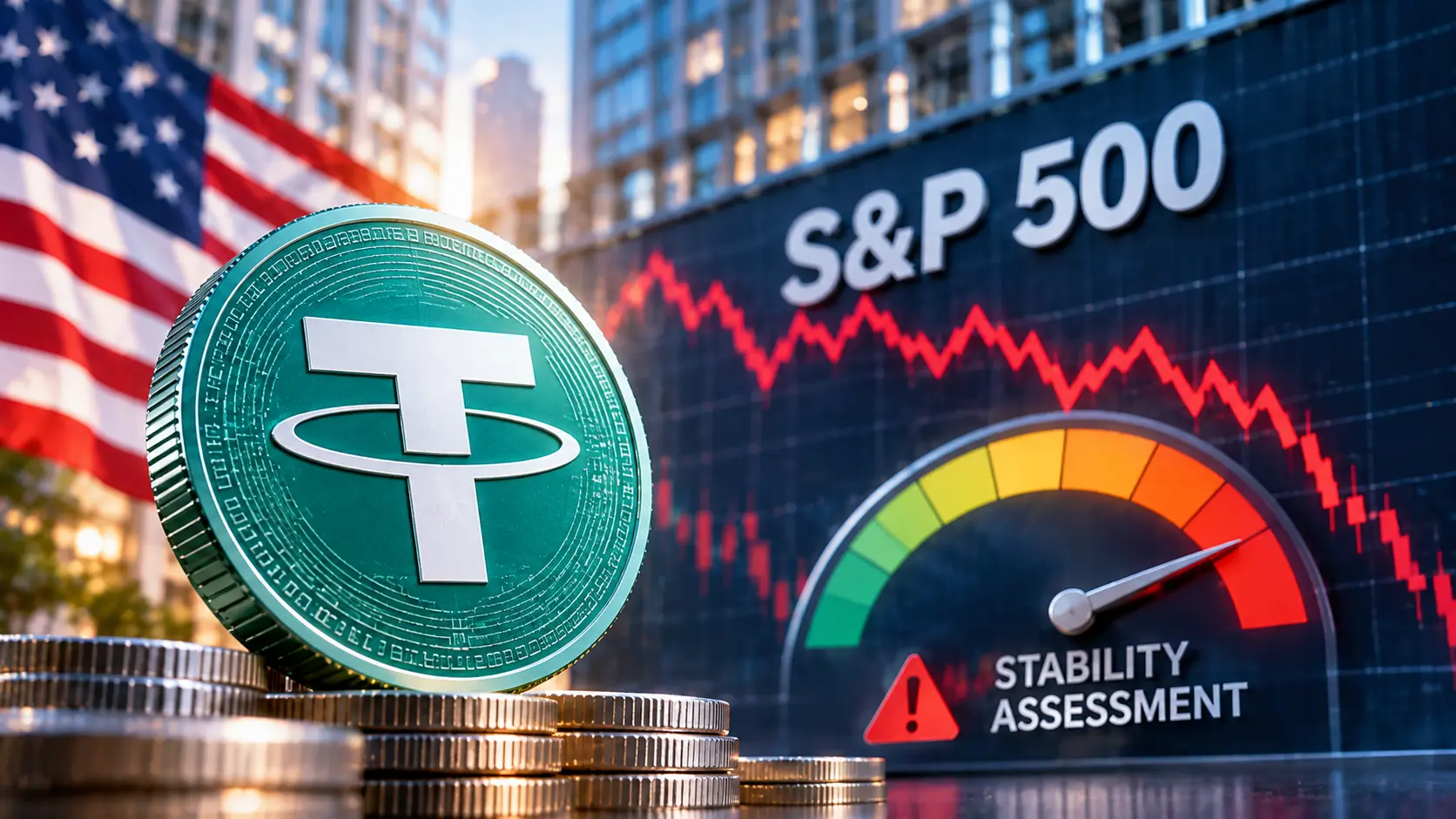
Tether has responded firmly to the recent assessment by S&P Global Ratings, which kept its stability rating for USDT at a lowly five (the weakest tier) on its scale. This rating has persisted since the downgrade in November 2025 amid growing concerns about the stablecoin’s reserve composition and transparency practices.
Concerns Over High-Risk Assets in Tether’s Reserves
According to S&P’s assessment released on November 18, Tether’s risk exposure has increased significantly. The report highlighted that as of September 30, approximately 28% of USDT’s reserves consisted of high-risk assets such as Bitcoin, gold, corporate bonds, public stocks, and collateralized loans. This figure is an increase from 24% the previous year, indicative of Tether’s expanding commitment to more volatile asset types.
S&P Global expressed apprehension that a downturn in the values of these assets could critically weaken USDT’s ability to maintain its dollar peg, particularly if multiple reserves begin to lose value concurrently.
In response, Tether criticized the rating firm’s framework for valuating its reserve assets, stating that the issues lie more within the assessment methods of S&P rather than within the composition of their reserves. Tether’s financial disclosures, certified by BDO, show total assets of around $191.5 billion against liabilities of approximately $183.5 billion—yielding a surplus of about $7.95 billion.
Regulatory Scrutiny and Oversight Challenges
Expanding on its concerns, S&P scrutinized the regulatory framework under which Tether operates, particularly following its relocation to El Salvador in January 2025. The National Commission for Digital Assets mandates that 70% of reserves must be in liquid assets within a 30-day time frame. However, S&P noted that this regulation permits assets like Bitcoin and gold, which are subject to significant price fluctuations, thus raising risks.
Another critical point raised was the lack of requirement for Tether to segregate its reserve assets from other holdings. According to S&P, stronger safeguards are expected by regulators in the U.S. and Europe, and without clear public information on asset protection, it is challenging to evaluate how safeguard protocols mitigate corporate risks.
Audit Disclosure and Opacity Issues
The audit process for Tether was also highlighted as a concern. KPMG performed what Tether referred to as its first fully independent audit for the financial year of 2025 and released an unqualified opinion in August 2026. However, S&P pointed out that the audit reports have not been publicly disclosed, which hampers independent verification of Tether’s financial health.
Furthermore, S&P remarked that Tether’s reserve reports do not specify who holds or manages their assets, raising transparency issues. While Tether’s quarterly reports are regular, some competitors opt for monthly updates, suggesting that the data available may not be as timely as that of other issuers.
Despite maintaining its lowest possible score, S&P recognized that USDT has demonstrated strong price stability, particularly over the past year. This raises the question: can Tether adequately address regulatory concerns by enhancing reserve transparency and limiting exposure to risky assets? As the stablecoin landscape evolves, will USDT’s established performance in maintaining its dollar peg continue to outweigh the scrutiny on its financial structure?

bitcoinist’s editorial process focuses on providing thoroughly researched, accurate, and unbiased content. We adhere to strict sourcing standards, and each page is carefully reviewed by our team of top technology experts and experienced editors. This process ensures the integrity, relevance, and value of your content to your readers.
