


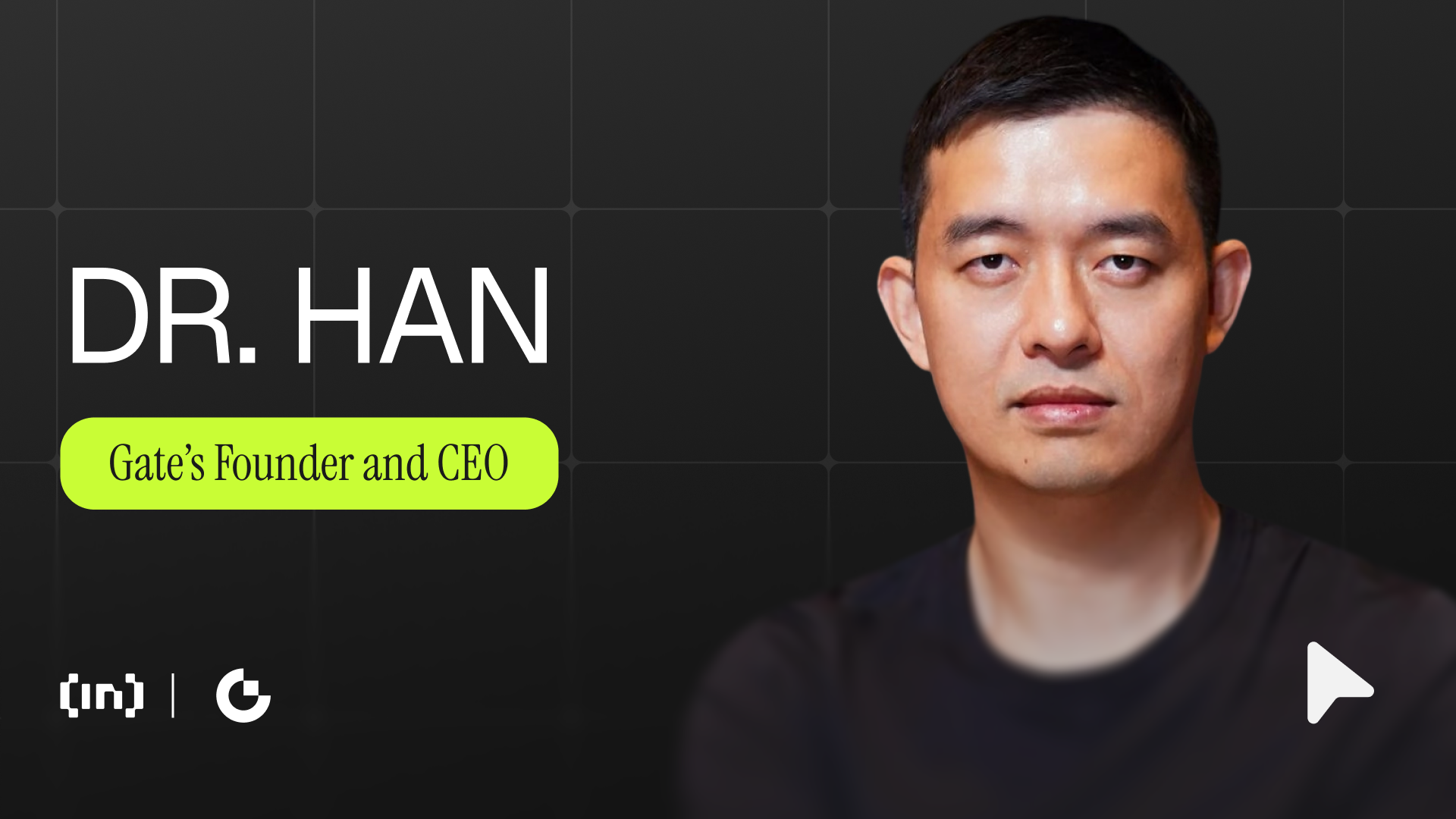
Gate has quietly become one of the world’s largest crypto exchanges. Founded in 2013 as a personal project by Dr. Lin Han, the platform currently serves over 49 million users, has over 2,000 employees, and lists over 5,000 tokens along with a growing suite of traditional financial products.
In an interview with BeInCrypto, Dr. Han talked about what’s driving its growth, why he believes the lines between cryptocurrencies and traditional assets are disappearing, and how artificial intelligence is poised to reshape the way people transact.
From solo developer to global platform
Dr. Han started Gate himself, originally launched as Bter.com. Thirteen years later, the exchange offers more than 50 products and services. But he is quick to downplay that number.
“Numbers don’t really matter. The most important thing is that when you make a product, you have to polish it well. An 80% score is not enough. You need 90% to 95% quality. You always have to be number one in your product,” he said.
Its product-first philosophy was extended to its asset range early on. In 2013, Gate was one of the first exchanges to actively list altcoins, offering over 100 altcoins at a time when most platforms were stuck with a few. “At that time, we were the only company that could do that,” Dr. Han recalls.
The next stage of growth will come from regulated markets, he says. Gate currently holds licenses across 80 jurisdictions, including 44 states in the United States, and under MiCA covers more than 20 countries in Europe. The platform also holds licenses in Dubai, Japan and Australia.
“We launched our platform for regulated regions last year, and this year we hope to expand our users in regulated regions,” Dr. Han said, acknowledging that competition from existing local companies in Europe and other regions remains a challenge. “In some areas, there are local players who have been there for many years. We are new players. We need more people to know about us.”
Breaking down the barrier between cryptocurrencies and traditional finance
Gate is expanding beyond crypto-native assets into what is widely referred to in the industry as TradFi integration. The exchange currently offers tokenized stocks, gold, silver, commodities, and stock indices, all available for 24/7 trading on the same platform where users manage their crypto portfolios.
Dr. Han explained two limitations of traditional markets that drove this movement: regional restrictions that prevent users from many countries from opening U.S. brokerage accounts, and limits on trading hours on traditional stock exchanges.
“With cryptocurrencies, we can provide a very accessible system. They can trade anywhere, in any country, 24/7. They have all kinds of cryptocurrencies and traditional assets together and manage them in the same way. It’s much easier for them,” he said.
He also pointed to practical benefits in portfolio construction. Cryptoassets tend to be highly correlated, and when Bitcoin falls, most altcoins follow suit. The addition of uncorrelated traditional assets like gold and US stocks provides meaningful diversification for users within a single platform for the first time.
“Previously, people could only trade cryptocurrencies and most assets were correlated. For traditional assets, there are other options. Gold definitely has nothing to do with Bitcoin. You can choose silver, commodities, US stocks. There are many options to manage your portfolio and lower your risk,” Dr. Han explained.
Looking further ahead, he sees the distinction between crypto assets and traditional assets fading completely. “In the future, you won’t need to know which are cryptocurrencies and which are traditional assets; you will be able to see them all as your own assets. It will change the way you think about how users manage their portfolios.”
AI: From interface to infrastructure
The conversation turned to artificial intelligence, and Dr. Han described what he called the “Intelligent Web3,” a vision of replacing the complex interfaces that currently define cryptocurrency transactions with AI agents.
The way he sees it, the problem is straightforward. Crypto products have become too complex, especially for beginners. “You see so many numbers and buttons: spot trading, futures trading, options, earnings, etc. Which one should I use? How do I get started? It’s too difficult for people,” he said. “And Web3 is even more difficult. There are over 10,000 DApps. Millions of tokens are issued every year. You don’t know which one to choose.”
The gate approach unfolds in two stages. The first is already live and uses an AI agent to help users navigate existing interfaces. This means checking your token information, explaining the platform’s features, suggesting trading strategies, and more. The second phase is more ambitious and completely replaces the traditional interface.
“They don’t have to use old interfaces or old tools anymore. They just tell the AI agent what they want, and the AI agent does all the other work,” Dr. Han said. “If they want to buy Bitcoin, they just say, ‘Help me buy Bitcoin.’ If they want to earn interest, they tell the AI, ‘I want to deposit my Bitcoin to earn interest.’ The AI will find the optimal yield and you’re done. ”
He expects this shift to be visible within a year, and widespread change within two years. He believes this timeline is more realistic than the five-year period often quoted in the industry.
“I don’t think it’s five years. Two years at most,” he said.
Beyond user experience, Dr. Han sees AI reshaping the way capital moves in markets. He argued that human-driven capital allocation is inherently inefficient, leaving people with assets idle and promising projects underfunded. AI agents that operate around the clock and process information at scale have the potential to improve that flow.
“I can’t guarantee that it will be profitable for any one person, but it certainly will be beneficial for the whole ecosystem,” he says. “AI does the labor work for you. You can put your energy into other areas. Tap into your real intelligence.” Gate has already started applying AI internally. According to Dr. Han, nearly all of the company’s front-end coding is now handled by AI, and back-end development will soon follow.
