


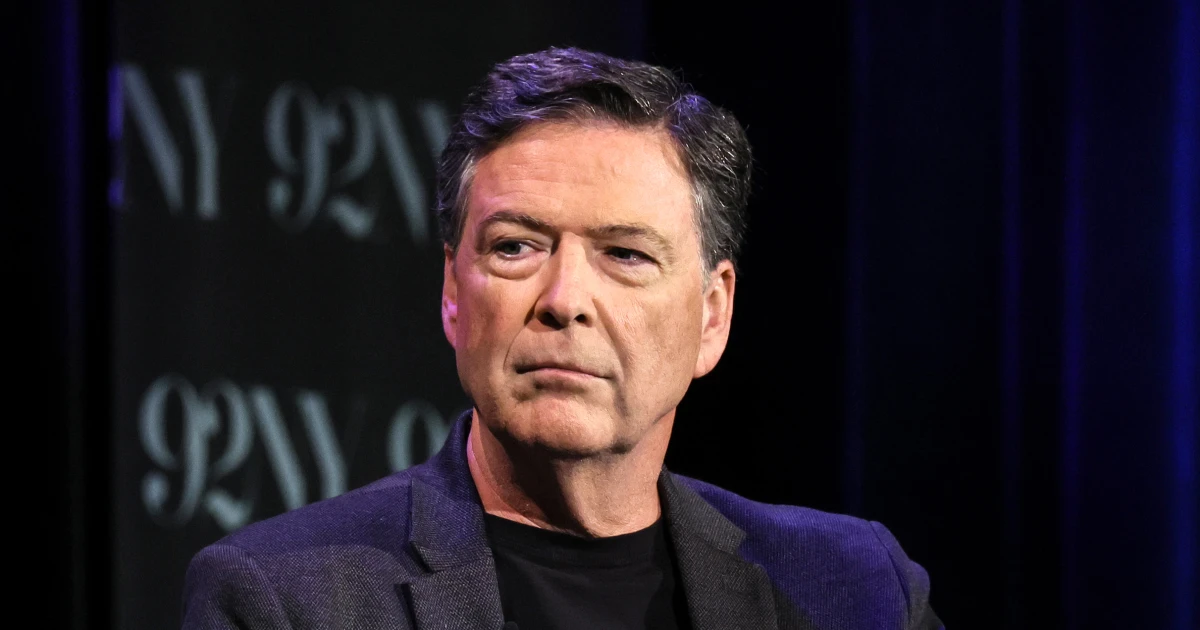
On Friday, attorneys representing former FBI Director James Comey are scheduled to appear in court to request the dismissal of the latest federal criminal case brought against him by the Trump administration. Comey has been under scrutiny by former President Donald Trump since his dismissal nearly a decade ago and is now facing allegations related to actions taken during the 2016 election cycle. Comey’s legal team argues that the case should be invalidated due to a failure to secure a grand jury indictment before the expiration of the ten-year statute of limitations.
This marks the third legal action targeting Comey since September 2025. The initial case, which emerged from the Eastern District of Virginia, was dismissed after it was revealed that attorney Lindsey Halligan, who orchestrated the indictment, acted improperly as a federal prosecutor. Subsequently, Comey faced charges in what has been termed the “seashells case,” stemming from an Instagram post in which he used seashells to spell out “8647.” Prosecutors interpreted this as a potential threat, while Comey’s defense insists the number had no threatening context, highlighting its common usage within the restaurant industry to indicate that a dish is no longer available. The trial associated with this case has been postponed until 2027 as the court deliberates Comey’s motion to dismiss.
Drew Angerer / AFP-Getty
The allegations currently against Comey involve his alleged authorization of staff communications with a New York Times reporter in October 2016 to clarify previously reported information concerning classified materials. This case was initiated on October 5, precisely ten years after a New York Times article highlighted Yahoo’s compliance with a covert order from the Foreign Intelligence Surveillance Court that permitted the extensive scanning of email accounts belonging to its users.
Importantly, this case arose not from a grand jury indictment, but through a criminal information document filed directly by the government, bypassing judicial agreement, leading to concerns over the procedure used. Comey’s team has indicated that they believe the intention behind this method may have been to facilitate an arrest on the Friday preceding the Columbus Day weekend, thereby ensuring Comey would spend an extended period in custody. Legal analysts have raised questions regarding the appropriateness of this approach, with former federal prosecutor Sarah Krissoff commenting on the troubling nature of the actions taken by the Justice Department: “If they had a case, then they should have written out the charges in a complaint and gotten a judge to sign it, or they could have presented it to a grand jury.”
Krissoff further remarked on the broader implications of this case, expressing that there appears to be external pressure guiding the prosecution’s decisions, calling the entire situation “disturbing.” As the case unfolds, U.S. District Judge Trevor McFadden has ordered the case unsealed and has scheduled a hearing for Comey’s dismissal motion.
This hearing for Comey coincides with a significant week in federal court, where a grand jury declined the Trump administration’s efforts to indict Cassidy Hutchinson, a key witness for the House committee investigating the January 6 events. Additionally, separate proceedings have been ongoing regarding charges leveled against two former FBI employees who have been subjects of attacks from Trump affiliates.
Reflecting on the legal landscape, Krissoff noted the importance of maintaining judicial integrity, stating, “We have grand juries that are holding tight to the rule of law and actually asking questions most likely and requiring real evidence to be presented to them.” In her view, the federal judiciary plays a critical role in upholding the principles of the nation.
