


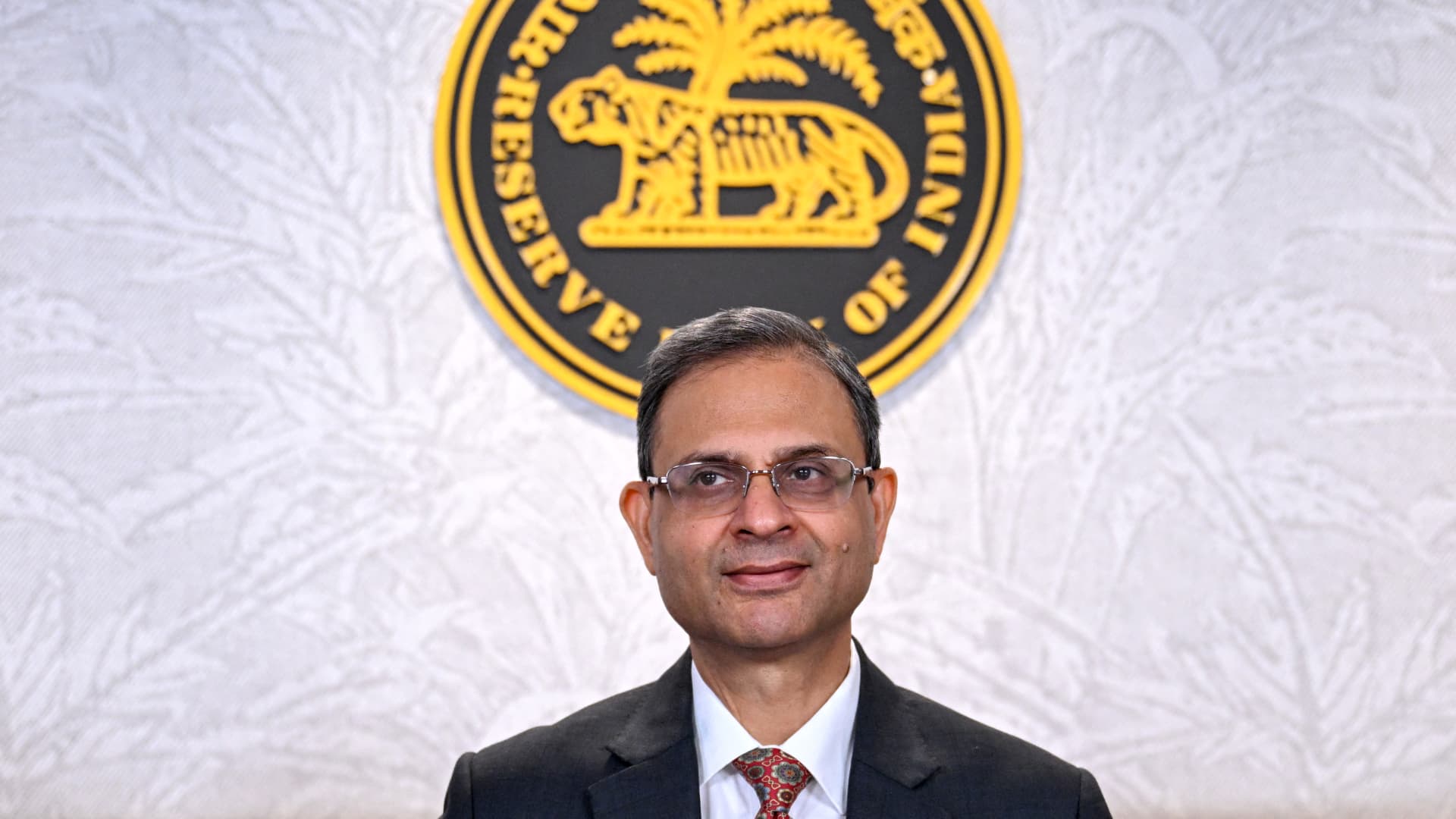
The Reserve Bank of India (RBI) announced an increase in interest rates for the first time in 2023, joining the trend among major global central banks that are implementing tighter monetary policies to combat rising inflation.
In a recent meeting, the RBI raised the benchmark repo rate by 25 basis points to 5.50%, marking the highest level in a year and aligning with the forecasts of several economists surveyed by Reuters.
RBI Governor Sanjay Malhotra highlighted the resilience of India’s economic growth despite various global economic challenges. During his address, he emphasized, “inflation and its outlook are not benign, as they were last year,” indicating growing concerns about inflationary pressures.
The Monetary Policy Committee has shifted its policy stance to “calibrated tightening,” according to Malhotra. This adjustment comes in response to retail inflation that has consistently surpassed the central bank’s medium-term target of 4%, reaching 4.8% in August—its highest rate over the past ten months.
The RBI anticipates core inflation for India to stabilize at 4.4% by the end of the financial year in March 2027, while projecting headline inflation at 5.2%. Malhotra remarked that, based on current economic conditions, “rate cuts are off the table in the near term,” with future policy actions likely limited to further rate hikes or maintaining the current rate.
Analysts from HSBC and Goldman Sachs predict that the RBI may increase interest rates again in December. HSBC’s report urges the RBI to ensure a convincing rate hike that reflects its capability to address inflation effectively. Any perception of a dovish stance might diminish India’s attractiveness to international investors.
In light of the robust economic activity, the RBI has updated its growth forecast to 7.1%, a revision up by 40 basis points, although it acknowledges that ongoing geopolitical tensions, trade challenges, tightening financial conditions, and rising international commodity prices could hinder this growth trajectory.
India remains particularly vulnerable to supply chain disruptions, particularly from the current conflict in Iran, which is affecting oil supply routes. The country imports approximately 85% of its fuel, with the Strait of Hormuz being a crucial passage for these supplies.
The impending risk of El Niño adds another layer of uncertainty. The World Bank has reported that India experienced its fourth-driest June-August period since 1960, which could lead to an increase in food prices.
According to recent World Bank forecasts, India’s economic growth is expected to slow to 7.1% for the financial year ending March 2027, a decline from 7.8% in the previous year. Despite trade and geopolitical uncertainties, the report indicated that India has demonstrated better-than-expected economic resilience, although a moderation in growth is anticipated over the upcoming quarters.
During the June quarter, India recorded a surprising economic expansion of 7.8%, contrasting with a general cooling in growth seen across major economies like the U.S., China, and Japan, which have all been grappling with adverse trade conditions and high energy prices.
In recent global trends, the U.S. Federal Reserve raised interest rates for the first time in over three years, while Japan’s central bank elevated rates to a 31-year high, reflecting the worldwide push to combat increasing inflation fueled by high energy costs. Additionally, South Korea and several European central banks have followed suit with rate hikes in recent months.
Following the RBI’s decision, yields on the benchmark 10-year government bond rose by 5 basis points to 7.243%, whereas the Nifty 50 stock index saw a decline of 0.7%.
