


Governor Race in Iowa: Key Issues and Candidate Positions
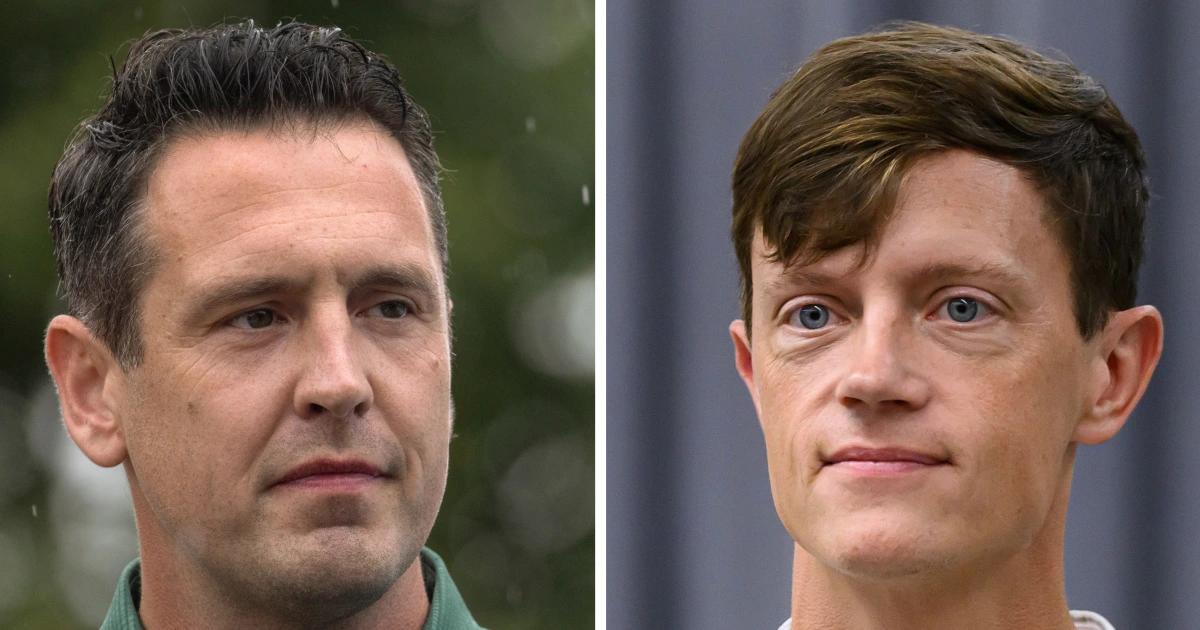
The race for Iowa’s governorship intensified during the recent debate between Republican candidate Zach Lahn and Democrat Rob Sand, with a particular focus on Lahn’s residency history raising questions among voters. Both candidates are vying to succeed incumbent Republican Governor Kim Reynolds, who is stepping down.
With the context of a Republican-dominated state and the absence of a Democratic governor since 2010, Sand aims to position himself as a fresh option against Lahn, whom he described as a “career politician” embracing radical liberal views on pressing issues like taxes and immigration.
Throughout the debate aired on NBC affiliate KWQC, questions surrounding Lahn’s past voting records in Kansas, including votes in the 2018, 2020, and 2022 elections before registering in Iowa this year, were prominent. Lahn addressed these concerns, asserting, “I’m a sixth-generation Iowan. I live in Iowa today. I have lived in Iowa.” He elaborated that the topic stemmed from his blended family situation, with children who physically split their time between homes in Iowa and Kansas.
The debate initially shifted to education, where Sand advocated for increased teacher salaries and stringent oversight of school funding. In contrast, Lahn argued for improved auditing of school voucher systems, proposing to limit such programs to lower-income families. He stated, “I want to be the biggest advocate for public school kids in the state.” This assertion prompted Sand to counter that Lahn’s actions—highlighting an advertisement portraying Marxist influences in Iowa’s education—suggested a disconnect from the state’s educational climate.
Polling data indicates Sand is currently leading, partly due to the ongoing scrutiny of Lahn’s residency. During the debate, Lahn launched a series of accusations against Sand, labeling him a “liberal billionaire” financially supported by his wife’s family, which has contributed over $12 million to his campaigns through the Lauridsen Group, a prominent food and health product company.
Focusing on economic policy, both candidates presented contrasting approaches to tackling Iowa’s low economic growth rate. Lahn emphasized supporting local businesses and criticized large, out-of-state projects that don’t necessarily benefit local employment. However, he did show support for a substantial $15 billion steel mill project recently announced, indicating conditional approval of government tax incentives. In contrast, Sand proposed capping utility fees, ending Medicaid privatization, and advocating for a minimum wage increase to $12 an hour, diverging from the current state minimum of $7.25, which has not seen an increase since 2009.
Lahn, on the other hand, remained non-committal about raising the minimum wage and reiterated his focus on deconsolidating industries and lowering taxes, responding to Sand by asserting, “We’ve had some great efforts to lower taxes for the people of Iowa, and Rob, you’ve opposed those efforts at every step.” Sand refuted this claim, emphasizing his stance against tax increases.
Key public health issues were also discussed, particularly concerning rising cancer rates in Iowa, attributed in part to environmental factors related to agriculture. Sand remarked on Iowa’s simultaneous challenges with economic stagnation and heightened cancer rates, asserting, “Iowa is at a point where we are at the bottom for economic growth; we’re at the top for cancer growth.” Lahn echoed these sentiments, calling cancer rates a “crisis of our generation” and prioritizing it within his campaign agenda, while advocating for initiatives like Iowa’s IWiLL program to address water quality problems caused by nitrates.
As the November election approaches, both candidates are solidifying their platforms, focused heavily on contrasting narratives surrounding economic growth, education, and health issues facing Iowans. The debate has illuminated the candidates’ differing approaches and priorities as they seek to earn the trust and votes of the electorate.
