

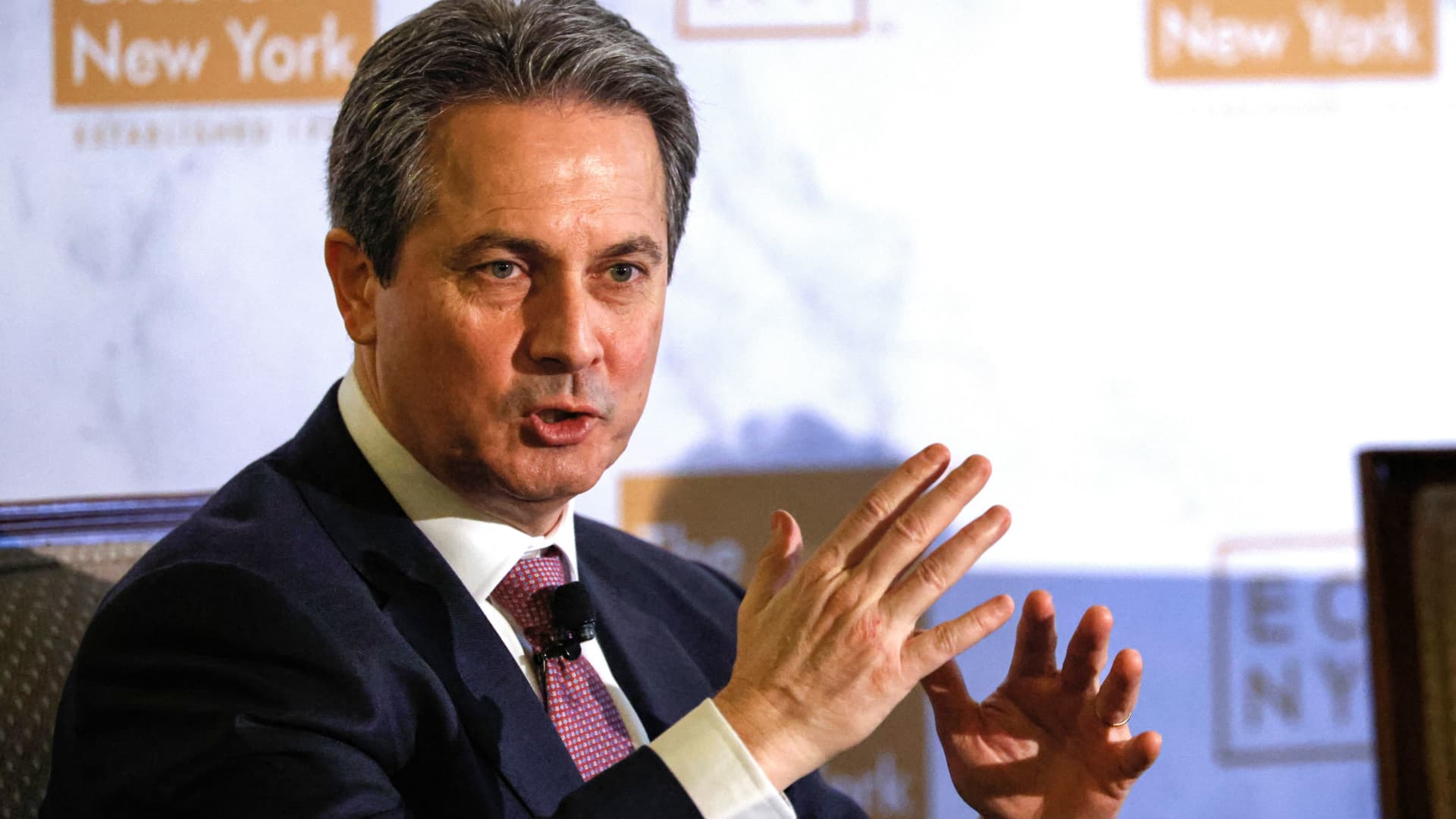
In a recent address in Argentina, Alberto Musalem, President of the St. Louis Federal Reserve, articulated the need for increased interest rates to combat rising inflation. He suggested that the central bank may implement as many as four rate hikes in the near future—marking one of the most assertive stances taken by a Federal Reserve official regarding inflation control measures.
Economic Activity and Future Projections
Musalem emphasized that the current monetary policy framework is not adequately constraining economic activity. To achieve the Fed’s targeted goal of 2% inflation in a timely manner, he proposed that a series of interest rate increases be necessary in the months leading up to spring 2027.
Targeting the Real Policy Rate
In his estimates, Musalem stated that the real policy rate—calculated by adjusting the Fed’s target rate for inflation—should ideally be positioned between 2% and 2.5% by the next spring. He pointed out that the existing rate is currently about one percentage point below this preferred range, suggesting that the Fed might need to raise rates during its upcoming meetings scheduled for December, January, March, and April.
Musalem’s Role in Rate Decisions
While Musalem does not possess voting rights on the Federal Open Market Committee (FOMC) during this critical period, he can contribute his insights and influence the dot plot, which reflects members’ individual projections for future rate changes. His voting rights will resume in 2028.
Alternative Scenarios
Despite his firm outlook on the need for rate hikes, Musalem did acknowledge the presence of a less likely yet feasible scenario in which no additional hikes would be required. He remarked, “Falling energy prices and lower shipping costs, or an increase in potential output growth driven by higher productivity growth, might ease inflation pressures such that inflation moves toward target in 18 months.” He further noted a possible deceleration in demand, particularly as investments in artificial intelligence might slow.
Challenges Ahead
Nevertheless, Musalem opined that the more probable outcome involves persistent strong demand coupled with ongoing supply constraints that could keep inflation elevated, thereby necessitating further increases in the federal funds rate from its current standing of 3.75% to 4%. He remarked, “It would be preferable for a higher real policy rate to happen in a balanced way, driven both by lower inflation and a higher nominal policy rate. However, the nominal policy rate may need to do most of the work.”
