


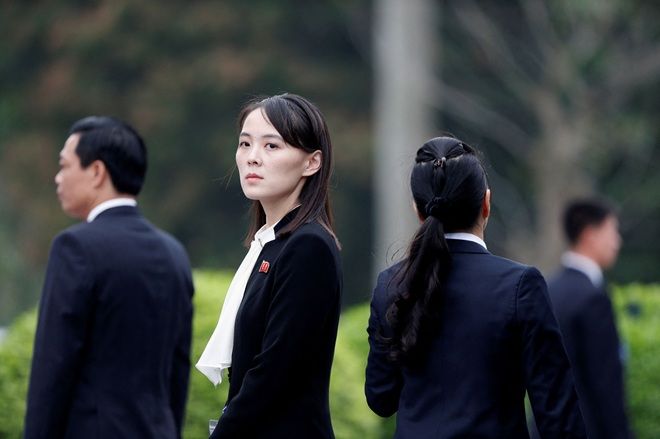
SEOUL—North Korea has firmly rebutted allegations from the United States that it was involved in the theft of $6 billion in cryptocurrency from the Binance exchange, labeling the accusations as “absurd rhetoric.” Kim Yo Jong, the sister of North Korean leader Kim Jong Un, expressed the nation’s discontent through state-run news agency KCNA, suggesting that the claims demonstrate the ongoing hostility from Washington.
The FBI recently implicated North Korea in the massive heist, believed to be one of the largest financial thefts in history. Kim Yo Jong stated that the U.S. claim is part of a campaign to portray North Korea as a “cyber criminal state,” emphasizing that such allegations are not only misleading but also politically charged provocations against the Democratic People’s Republic of Korea (DPRK).
Despite the serious nature of the allegations, North Korea has not publicly engaged with U.S. President Donald Trump’s offers to resume summit diplomacy. Kim emphasized that the U.S. assertions lead her country to “reconsider” certain unspecified matters, reflecting the impact of perceived aggressive stances by the U.S.
Background on the Cryptocurrency Theft
The Binance platform, recognized globally as the largest cryptocurrency exchange, recently became the target of a sophisticated cyber operation. According to reports from cybersecurity experts, North Korean hackers have emerged as significant players in the world of cyber thefts, with estimates indicating that North Korea has amassed $7.6 billion in stolen cryptocurrency just this year—marking an all-time high.
Analysts from Elliptic, a blockchain analytics firm, suggest this uptick in cybercrime is primarily aimed at funding North Korea’s weapons programs, which have faced intense scrutiny and condemnation from the international community. Lim Eul-chul, a professor at Kyungnam University’s Institute for Far Eastern Studies, noted that such operations have become one of the key mechanisms through which North Korea secures finances amidst comprehensive sanctions.
Implications of U.S. Accusations
Following the U.S. allegations, experts have suggested that future efforts to disrupt North Korean revenue channels—especially those linked to cryptocurrency—could intensify. The FBI highlighted that members of a North Korean state-sponsored hacking group, identified as TraderTraitor, were behind the attack, with plans to convert the stolen assets into Ethereum to facilitate laundering the money further.
According to a report by Chainalysis, a notable increase in cyber theft attributed to North Korea has been observed, with the organization accounting for approximately 89% of reported cryptocurrency losses in 2026, a significant surge from just 15% in 2021. The average loss per hack has escalated dramatically, emphasizing the heightened risks associated with cryptocurrency exchanges.
Financial Overview
The central bank of South Korea has projected North Korea’s gross domestic product (GDP) to reach 47.18 trillion won (approximately $35.09 billion) by 2025. Comparatively, the Binance theft represents a staggering loss, estimated at nearly one-sixth of North Korea’s anticipated economic output.
Despite being one of the world’s most impoverished nations, North Korea has continued to allocate resources into its military capabilities, including nuclear and missile programs, largely funded through illicit activities that violate United Nations sanctions.
Future of U.S.-North Korea Relations
The rhetoric surrounding the hacking allegations points to broader implications for U.S.-North Korea relations. Experts contend that Pyongyang’s quick and assertive response suggests a desire to manage the narrative surrounding its international image and to avoid having cybersecurity issues leveraged against it in diplomatic discussions.
Hong Min, a senior researcher at the Korea Institute for National Unification in Seoul, articulated that the crux of North Korea’s message lies in its opposition to the exploitation of cyber theft allegations as pressure tactics during negotiations. As North Korea awaits further developments in U.S. policy, the ongoing tensions continue to underscore the complexities in addressing cybercrime and international diplomacy.
