


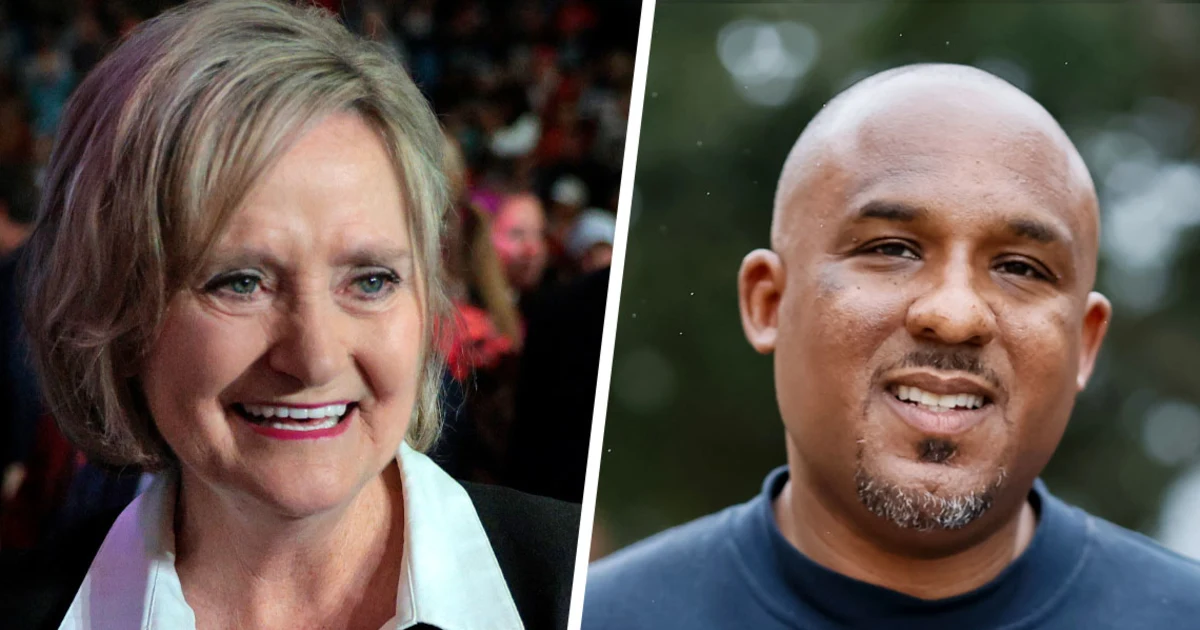
The Mississippi Senate race is shaping up to be one of the tightest contests in recent history, with Democratic candidate Scott Colom currently holding a narrow lead over incumbent Republican Senator Cindy Hyde-Smith by just 65 votes. As the vote counting continues, the outcome remains uncertain, hinging on a substantial number of outstanding ballots that could impact the final tally and possibly trigger a recount process.
This close contest marks a departure from Mississippi’s recent electoral history, which has largely avoided contentious vote counts. Colom’s strong performance reflects a broader trend in which Democrats have made significant gains in traditionally Republican states. Despite not requiring a flip in Mississippi to maintain a Senate majority, a Democratic win here would represent a notable shift in a solidly red state.
In the wake of this unexpected election outcome, support from national Democratic operatives has surged in Mississippi. Staff from the Democratic Senatorial Campaign Committee and legal experts from Elias Law Group have mobilized to oversee the vote-counting process and address potential legal challenges. According to a source familiar with the campaign’s strategy, this assistance is aimed at ensuring all votes are accurately counted.
Colom, who has experience as a local prosecutor, emphasized his campaign’s preparedness, stating, “We’re prepared to litigate, though we were prepared for this for months… We have an army of lawyers… to make sure the process is followed according to the law.” His campaign, along with that of Hyde-Smith, acknowledges that there are “thousands” of ballots still to be processed, but the exact quantity remains uncertain.
As of the latest reports, approximately 6,000 mail ballots distributed have not yet been returned. Under Mississippi law, mail ballots that are postmarked by Election Day can be counted if received by 5 p.m. on November 10. Additionally, there are provisional ballots, often referred to as affidavit ballots, which are pending. These ballots are issued to voters lacking proper identification or who are not listed in the voter registration records.
Mikell Bolden, the executive director of the Mississippi Democratic Party, noted a sharp increase in calls to the party’s election hotline, with around 2,000 inquiries from voters who had to cast affidavit ballots. Many voters expressed certainty about their registration status but encountered issues at the polls due to identification problems. Compounding these challenges, the Mississippi Secretary of State’s website experienced outages, preventing voters from checking their registration statuses.
To address these issues, the local Democratic party, along with the Colom campaign and national party representatives, is actively reaching out to voters through various communications to ensure that those affected by the affidavit ballot process submit their ballots correctly by the November 10 deadline.
As counting progresses, county election officials have until November 13 to report the results to the Secretary of State. Meanwhile, indications suggest that Republicans are also preparing for potential legal challenges. Hyde-Smith’s campaign manager, Jake Monssen, assured supporters that they are closely monitoring the situation and remain confident in the incumbent’s chances. Similarly, a spokeswoman from the National Republican Senatorial Committee stated their commitment to ensuring that every lawful ballot is counted.
While attention focuses heavily on the uncounted ballots, the slight margin also raises the question of a potential recount. However, legal experts like Ben Griffith, an attorney specializing in voting rights, clarify that options for challenging results are limited in Mississippi. The state’s election laws do not provide for a statewide recount mechanism for U.S. Senate elections. Candidates may contest results on a county-by-county basis, but this method may be logistically impractical, given the state’s 82 counties.
In summary, the unfolding events in the Mississippi Senate race are poised to test the resilience of the electoral process in the state, offering both challenges and opportunities for candidates and voters alike.
