


In a significant development for the world of blockchain finance, JP Morgan has announced that it will be moving its tokenized dollar deposit, known as JPM Coin (JPMD), from the Base Layer 2 solution to the Ethereum mainnet. This transition, confirmed by Kinexys, the bank’s blockchain division, signals an important step for institutional crypto transactions.
Currently, JPMD supports transactions over the Ethereum Virtual Machine (EVM) network, which includes both Base and Ethereum. However, it is essential to note that access to JPMD remains limited to approved institutional clients, meaning that retail customers cannot purchase these tokens.
News: JPM Coin (JPMD), @jpmorgan’s USD deposit token, is now available on @ethereum.
JPMD extends from Base to Ethereum L1, offering institutional customers a native on-chain cash that lives alongside the assets, collateral, and counterparties they already trade.
JP Morgan is now… pic.twitter.com/fNYAGoT3Pb
— Ethereum Institution (@ethereuminsti) October 19, 2026
Exclusive: Unlock AI trading strategies and the best crypto AI trading bots at BloFin
Reasons Behind JP Morgan’s Shift to Ethereum
The primary driver for JP Morgan’s decision to transition to Ethereum seems to be liquidity. Emma Landriault, the global head of Kinexys Labs, emphasized the “established on-chain liquidity and depth of tokenized assets” on Ethereum as compelling reasons for this shift. She stated that JPMD would not only facilitate payments for crypto firms but also help financial institutions settle transactions and use it as collateral for tokenized assets.
Tokenized financial infrastructure is no longer theoretical
This movement was not sudden; JPMD initially launched on Coinbase’s Base Layer 2 in November 2025, following a pilot program earlier in June that involved test issuances and redemptions with partner firms including Coinbase and Mastercard. Additionally, JP Morgan has been proactive in tokenized finance, as evidenced by its launch of the first tokenized money market fund on Ethereum in December 2025.
The banking giant’s blockchain capabilities have been impressive, with Kinexys reporting over $4 trillion processed since its inception, averaging around $7 billion daily, although specific figures for JPMD have not been disclosed. Furthermore, in January, Kinexys announced plans for JPMD’s integration into the Canton network, slated for implementation in 2026.
For context, the structure of JPMD leverages traditional banking principles. Each token represents a claim against US dollars held by JP Morgan, distinguishing it from stablecoins, which are issued and backed by third parties. Key differences lie in the regulatory and accounting treatment of tokenized deposits, which allow banks to manage them similarly to traditional deposits.
Understanding JPMD and Its Users
The JPMD serves as a tokenized bank deposit, allowing clients to hold tokens through blockchain accounts. Access to these tokens is strictly controlled, catering only to authorized users even on open networks like Ethereum. This selective distribution is critical for maintaining security and regulatory compliance.
Interestingly, the advantages of employing a public blockchain include 24/7 operations and programmability. Kinexys has highlighted its intraday repo product, exemplifying how blockchain can reduce the time taken to execute repo transactions from days to mere minutes. This efficiency allows banks to optimize their cash management strategies.
While recognizing the role of public blockchains, Kennedy, a co-head of Kinexys, predicts a coexistence between traditional banking systems and blockchain technologies for many years. This suggests that the landscape of tokenized finance will significantly evolve over the next five to ten years.
Potential Impacts on ETH Pricing
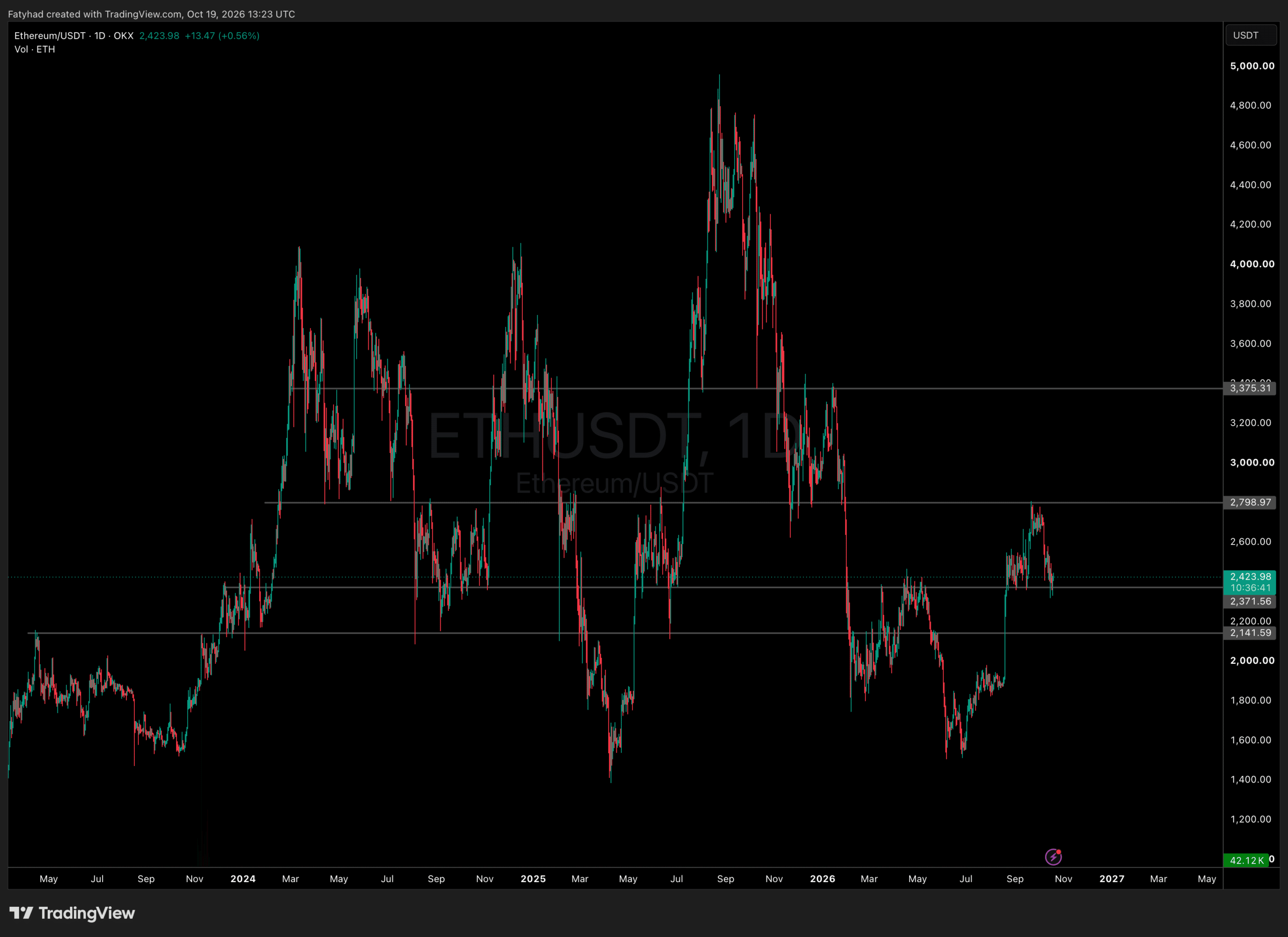
Reflecting on Ethereum’s current market dynamics, ETH is trading at approximately $2,423, with a slight increase of 0.14% in the last 24 hours but a decline of 4.94% over the week. The announcement regarding JPMD’s integration into Ethereum has not had a notable immediate impact on price fluctuations.
Long term, the demand for Ethereum’s blockspace may be enhanced, with around $50 billion already locked in Ethereum-based applications. The successful integration of corporate deposits is likely to bolster claims for tokenized finance conducted on the Ethereum network.
Market analysts observe that ETH is situated between its 50-day and 200-day exponential moving averages, suggesting potential pricing targets of $2,546.66 if closing prices remain above the 50-day MA, alongside major support levels represented by the 200-day MA.
As Wall Street continues to embrace tokenized deposits, it remains to be seen how these developments will affect ETH’s price trajectory in a continually evolving financial landscape.
Stay informed about market trends by following 99Bitcoins on X for timely updates, and check out our YouTube channel for expert analysis.
The content of this article is based on the original publication from 99Bitcoins.
