


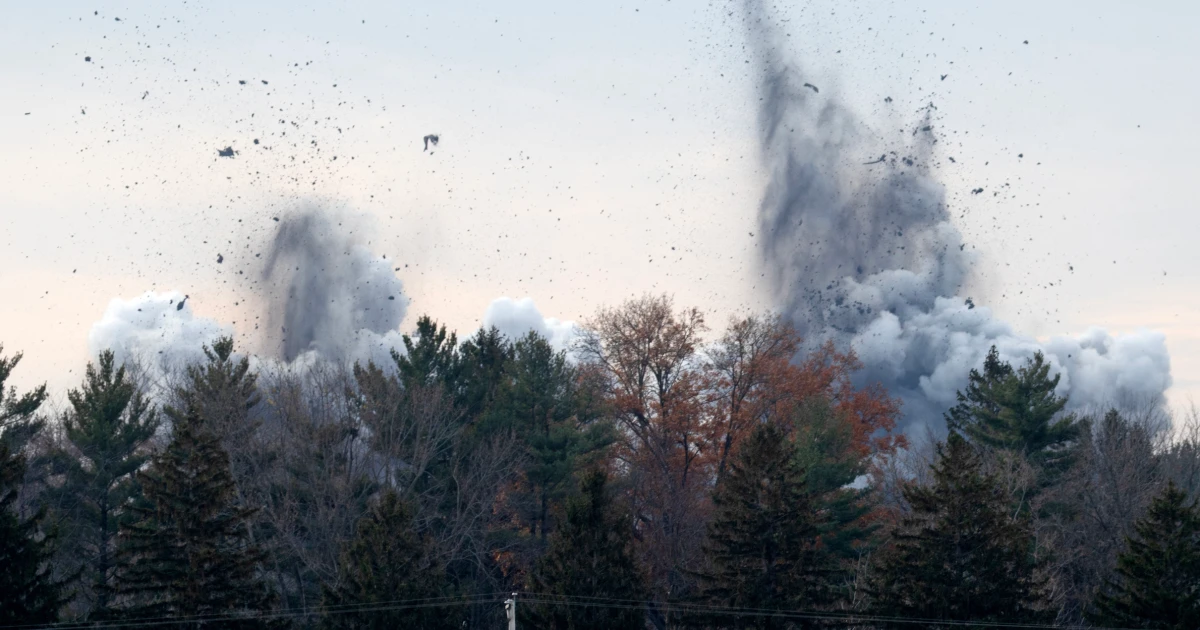
Federal efforts to ensure safety in Middletown, Iowa, intensified following a controlled detonation of lead azide—a toxic compound previously stored at the Iowa Army Ammunition Plant. The event occurred just before the Thanksgiving holiday, prompting concerns among local residents about potential environmental impacts.
In the aftermath of the explosion, the Environmental Protection Agency (EPA) mobilized over 300 personnel, including employees and contractors, to conduct extensive environmental testing. According to EPA Administrator Lee Zeldin, the team collected more than 1,000 samples from various sources, including air, soil, and water across the community. Zeldin assured that results would be made public within one to two days.
The detonation of the 68 drums of lead azide, used in bomb manufacturing, was executed due to safety concerns regarding the stability of the compound. Army officials noted that the decision to carry out the controlled explosion was precautionary, given the potential for the material to spontaneously detonate as winter approached.
Community members welcomed the EPA’s proactive approach. For example, Tim Thomann, hosting 15 family members for Thanksgiving, observed ongoing monitoring activities near his home and expressed hope for continued testing to ease safety concerns. In contrast, other residents, such as Blaine Dial, undertook precautionary measures by sealing their homes in anticipation of health risks linked to lead azide exposure, particularly for vulnerable groups like children and pregnant women.
Initial assessments from the Army indicated that the detonation was successful, with no significant fallout detected on local farms or residential areas. EPA monitoring revealed no lead contamination in the air following the blast. Maj. Gen. Eric Shirley, overseeing the operation, emphasized that measures, such as earthen barriers and water application, effectively mitigated risks associated with the explosion.
Despite the reassurances, many residents, including Kevin and Linda Ross, took it upon themselves to conduct independent testing for contamination around their property. Initial results from their tests did not indicate lead presence, but they remained cautious, postponing their Thanksgiving celebration in light of recent events.
Concerns about the long-term implications of the detonation persist. Environmental engineering expert, Andrew Whelton, highlighted the need for detailed laboratory testing on air and soil samples to ascertain potential health risks fully. He noted that findings could lead to varying guidance for neighboring communities based on their proximity to the detonation site.
Following the explosion, an alert was issued to local residents indicating a return to normal activities. This announcement was supported by the Federal Emergency Management Agency (FEMA), which declared the area safe. Both local officials and state leaders have commended the Army’s response efforts and the successful containment of the detonation.
As the situation develops, ongoing environmental monitoring remains crucial. Colin Wellenkamp, director of the Mississippi River Cities and Towns Initiative, confirmed that water treatment facilities would be regularly checking for any contamination spikes within the region.
The incident serves as a reminder of the careful balance between safety and potential environmental hazards associated with military storage practices. As discussions about why the lead azide allowed to deteriorate continue, stakeholders emphasize the importance of vigilance and community engagement in addressing such challenges.
