


The cryptocurrency sector has faced significant turmoil recently, particularly following a substantial fine levied against Binance, the world’s largest cryptocurrency exchange. The U.S. government imposed a penalty of $4.3 billion (£3.4 billion) on Binance for its involvement in money laundering activities.
This action mandated that Binance adopt stringent surveillance measures and also required its CEO, Changpeng Zhao—often referred to as CZ—to step down and pay a personal sanction of $50 million. CZ has gained recognition as a highly influential figure within the crypto industry.
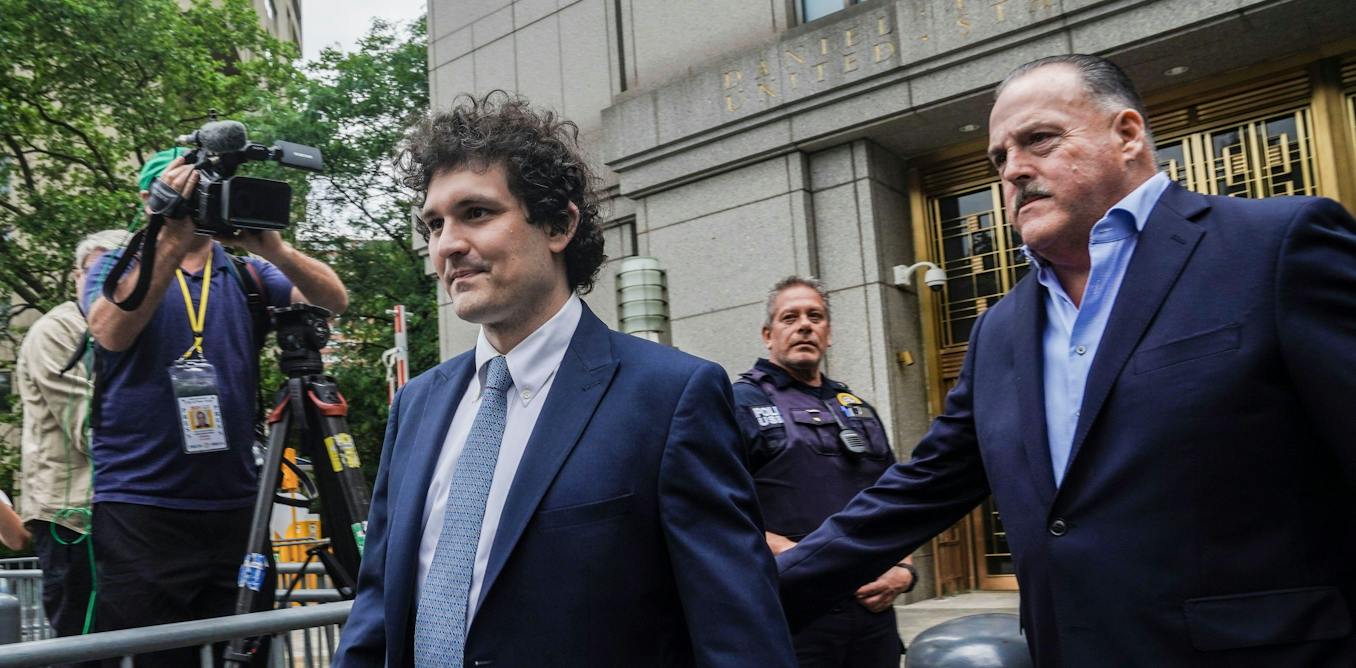
The ramifications for the sector are further compounded by the recent conviction of Sam Bankman-Fried (SBF), once a prominent competitor and the head of the now-defunct FTX exchange. Found guilty of seven counts of fraud and conspiracy in early November, Bankman-Fried could face over a century in prison during his sentencing set for March 2024. This environment has led to scrutiny not just of these high-profile leaders but of other former top executives from the crypto world who are currently under investigation.
The recent events reflect a stark contrast between governmental regulation and the cryptocurrency landscape—resulting in a noticeable advantage for state authorities. With increasing regulation on one side of the Atlantic, questions arise about the path forward for crypto regulation in the UK.
UK Government’s Crypto Regulation Strategy
Against this backdrop, the UK government has expressed its ambition to position the country as a leading global cryptocurrency hub. The new minister for the City of London, Bim Afolami, reinforced this message and advised regulators to tread carefully. At a Financial Times event addressing global banking issues, he asserted, “If you’re regulating a market… there’s no point in having the safest graveyard.” He stressed the importance of not generalizing every cryptocurrency business by tarnishing them with the same brush as FTX or Binance.
Such viewpoints may pose challenges for the UK’s Financial Conduct Authority (FCA), which has been criticized by former chair Charles Randell for the government’s approach of equating crypto with traditional financial investments. He warned that doing so could inadvertently normalize a sector characterized by deep-rooted fraud.
Shifts in Public Opinion on Financial Regulation
The government argues that its stance reflects democratic principles since the FCA is not an elected body. However, public sentiment appears to lean towards stronger regulation following revelations of misconduct in the financial sector. Research conducted through the Banklash project demonstrated that exposure to financial scandals provokes a desire amongst the public for stricter regulatory measures.
In parallel, a separate study co-authored by Harvard professor Taeku Lee and myself illustrates how the fallout from investigations into financial institutions has galvanized public support for regulatory reforms. Post-2010 Dodd-Frank Act discussions reveal how political dynamics shifted in response to financial misdeeds when public awareness increased.
In our ongoing research into British attitudes towards cryptocurrency, preliminary findings suggest that the FCA might better resonate with public sentiment than the government itself. Among the countries surveyed in March 2023, British respondents demonstrated the highest levels of support for crypto regulations. Comparatively, Americans exhibited the least support, while public opinion in France and Germany fell somewhere in between.
Moreover, media coverage of the FTX debacle significantly heightened the call for regulatory frameworks in the UK, fueling a desire for oversight even among an already predisposed population.
Future Perspectives on Cryptocurrency Regulation
The recent actions involving both Zhao and Bankman-Fried are likely to precipitate a stricter attitude among the public regarding cryptocurrency regulation. While many view cryptocurrency as complex and esoteric, surveys indicate that voters are forming clear opinions.
Miguel A. Lopes/EPA-EFE
As the UK gears up for an upcoming election, policymakers should remain aware of the evolving landscape of public opinion regarding cryptocurrency. Engaging with these perspectives could be crucial as the regulatory path ahead becomes increasingly complex.
