


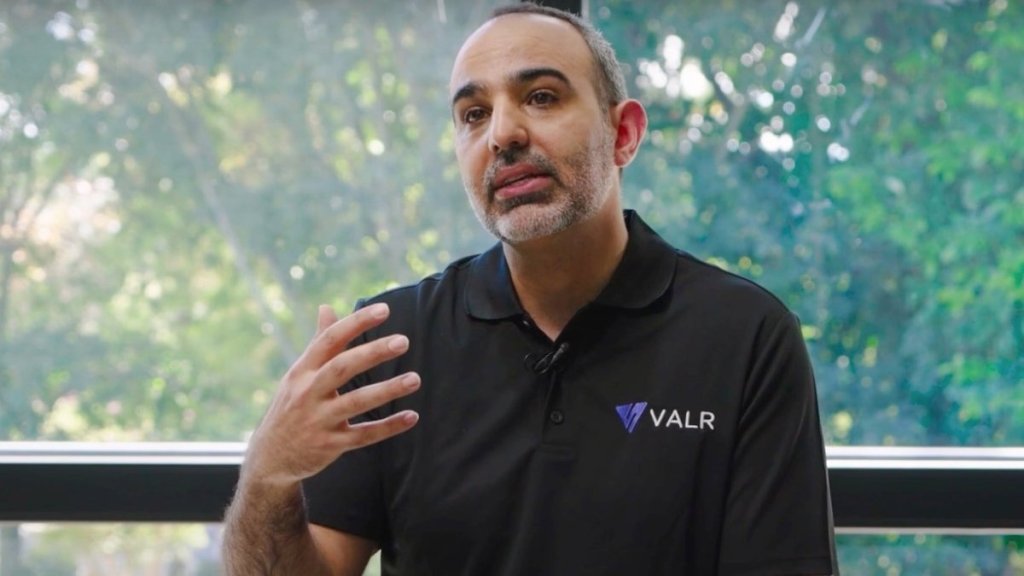
Tightening cryptocurrency regulations may increase compliance costs for crypto asset service providers (CASPs), but it is highly unlikely that the cost advantage of cryptocurrency-based financial products will disappear. And that resilience is due to the structural efficiency of cryptocurrencies, say South Africa’s leading industry voices.
According to Luno’s South Africa country manager (Christo de Wit) and VALR co-founder and CEO (Farzam Ehsani), crypto-based services are structurally more efficient than traditional financial services, even under regulatory pressure.
“Blockchain and cryptoassets represent a paradigm shift in how finance works,” Ehsani said.
“Crypto services such as payments cost a fraction of the cost of traditional financial services and will become increasingly adopted around the world over time.”
Ehsani said that even with the added compliance overhead, crypto-asset services will bring about a “major change” in the efficiency of financial services, especially in terms of the speed and cost of global payments.
De Witt echoed similar sentiments, stressing that crypto products are “structurally designed” to outperform traditional finance.
Reality check | Why African customers are moving away from traditional banking
Self-management: a key differentiator
Beyond cost and speed, another big advantage of cryptocurrencies is that they allow individuals and institutions to self-custody their digital assets. Mr. Ehsani emphasized that this is an important difference from traditional finance.
“With crypto assets, everyone has the option of self-custody, without the need for a trusted intermediary,” he said, noting that this is “not possible in traditional finance, where any asset…by definition must be held by a trusted intermediary.”
He added that intermediaries like VALR will continue to serve those who prefer them, but the mere existence of self-custody fundamentally changes the way people hold and manage value.
(Explanatory Guide) How to keep your self-custodial wallet safe
Regulations – including travel rules – probably do not destroy voluntary custody
Asked if evolving regulations aimed at complying with global requirements on anti-money laundering (AML) and countering the financing of terrorism (CTF) could lead to the self-custody option being phased out, Mr de Wit acknowledged there was already increased “friction” and pointed out that South Africa had implemented its own version of the Travel Rules from 30 April 2025. Based on the rules, financial institutions involved in virtual asset transactions must provide sender and beneficiary information for each transaction.
Regulation | Travel Rule comes into effect in South Africa, regulated virtual currency exchanges must comply
These regulatory burdens don’t necessarily require users to return to traditional financial rails, he argued. Rather, the added steps are a “necessary friction to comply with global AML/CTF processes and protect consumers.”
He said that the structural efficiency of cryptocurrencies remains robust even under compliance overheads, and that with proper reporting, blockchain continues to be more efficient than traditional systems such as cross-border transfers via SWIFT.
The Coming Convergence — Where Banks and Cryptocurrency Converge
Looking ahead, Ehsani predicted a future where the lines between traditional banking and crypto services fade, blockchain infrastructure is integrated into financial institutions, and crypto services become ubiquitous.
He noted that VALR already has agreements in place with Mukuru, Africa’s leading remittance operator (serving over 17 million customers) and two of South Africa’s largest banks, and further collaborations are expected.
Press Release | VALR and Mukuru partner to advance USDC stablecoin savings in Africa
See also
This suggests that “there is no financial institution that will not offer crypto services within the next few years” and that VALR is positioning itself as an infrastructure provider to provide those services, he argued.
Meanwhile, the fact that Discovery Bank recently announced a first-of-its-kind partnership with Luno to integrate crypto services directly into its mobile banking app reinforces the idea that crypto and traditional finance are already starting to converge.
Ehsani compared this to banks’ initial skepticism about the Internet. Just as most banks have finally embraced online services, he believes the same will happen with cryptocurrencies.
“It is only a matter of time before traditional finance and crypto finance merge to become the future of finance.”
Expert opinion | Stablecoins are expanding the definition of what we call “money”
Stay tuned to BitKE for cryptocurrency development across Africa.
Join our WhatsApp channel here.
Follow us on X for the latest posts and updates
_____________________________________________
