


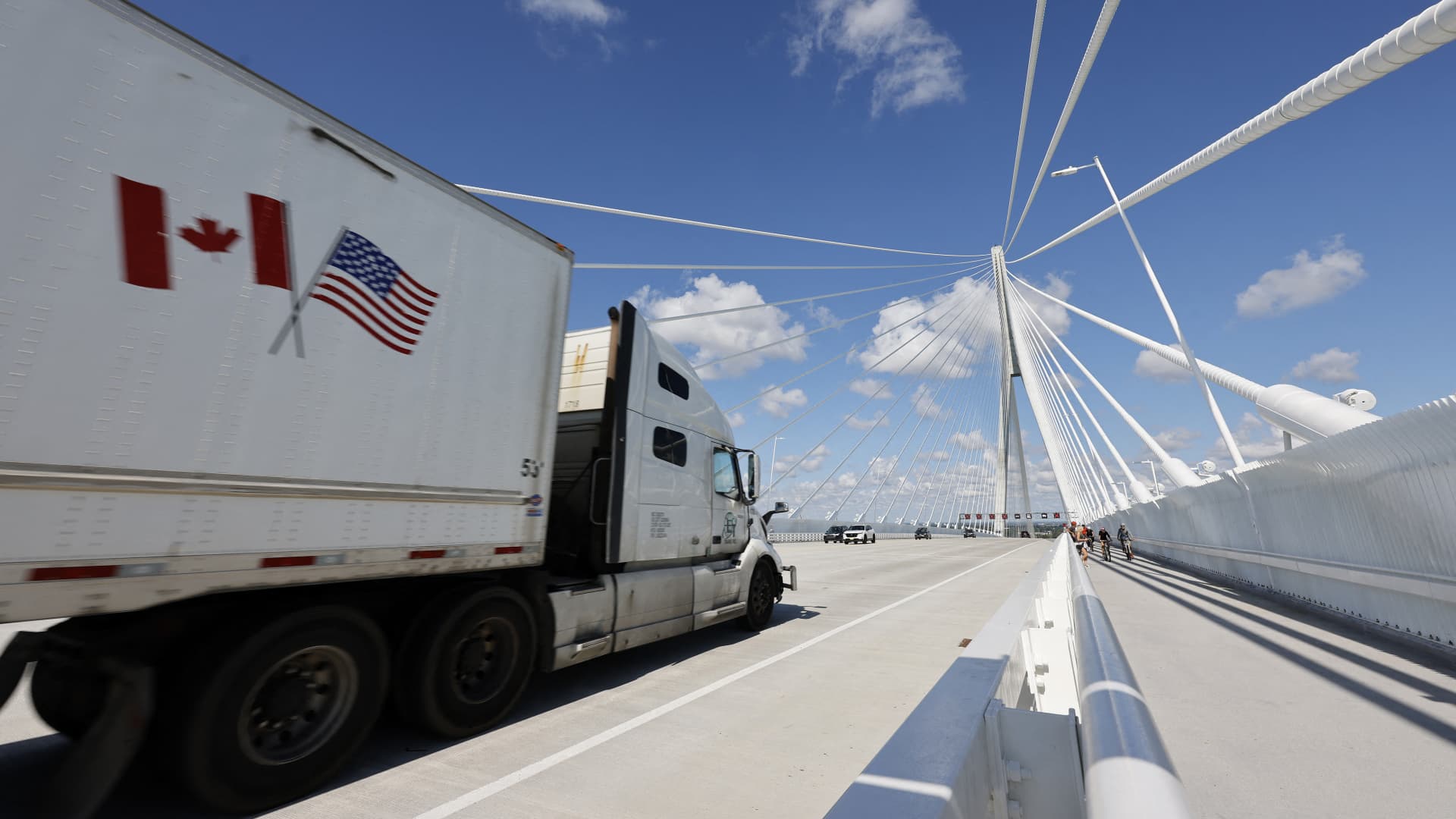
In a significant trade development, the White House instituted a ban on select Canadian imports, including vehicles and various agricultural and alcoholic products. Announced recently, this measure reflects ongoing tensions in U.S.-Canada trade relations.
The scope of the ban encompasses a range of goods valued at approximately $19.9 billion. Specifically, the list includes motorcycles and mopeds with engines exceeding 800cc, certain dairy items like whey products and molasses, as well as a variety of alcoholic beverages tailored for direct consumption, which ranges from beer and cider to wine and distilled spirits such as whiskey and vodka.
This import prohibition is part of a broader dispute characterized by retaliatory tariffs between the U.S. and Canada. President Donald Trump, while addressing the media, expressed optimism for a swift resolution, stating, “I think what’s going to happen is over the next three to four weeks they’re going to come to us and they’re going to say, ‘We’re going to get rid of all the tariffs.’ We’re going to win everything.” However, recent official communications suggest a lack of significant advancement in negotiations.
U.S. Trade Representative Jamieson Greer indicated that there was no rush to finalize a trade agreement, emphasizing that the U.S. is still effectively engaging in substantial trade with Canada, particularly in areas like oil, gas, and potash.
Canadian Response to U.S. Tariffs
In response to its neighboring country’s tariffs, Canadian Trade Minister Dominic LeBlanc labeled them as “illegal and unjustified,” asserting that these measures are inflicting considerable hardship on Canadian businesses and workers. He reiterated Canada’s commitment to negotiating a favorable agreement but emphasized the importance of maintaining the country’s economic sovereignty, stating, “We will sign an agreement when we think there is one that is in the interests of Canada’s sovereignty and Canada’s economy … but we’re not waiting by the phone.”
Despite imposing counter-tariffs that affect approximately CAD 27.6 billion (USD 19.45 billion) worth of U.S. exports including steel and agricultural products, Canada has refrained from announcing additional retaliatory actions since the tariffs were implemented on September 8.
Prime Minister Mark Carney has been actively seeking stronger ties with the European Union amid these trade tensions, suggesting that the U.S. is “weaponizing” its economic policies for coercive purposes.
As the trade feud continues, the ramifications are anticipated to impact critical sectors like manufacturing and automotive production on both sides of the border. Small and medium-sized enterprises may also experience notable setbacks due to the ongoing standoff and escalating tariffs.
Furthermore, the Bank of Canada has indicated that the uncertainty created by these new tariffs may affect the country’s economic growth outlook and could lead to increased inflation risks.
