


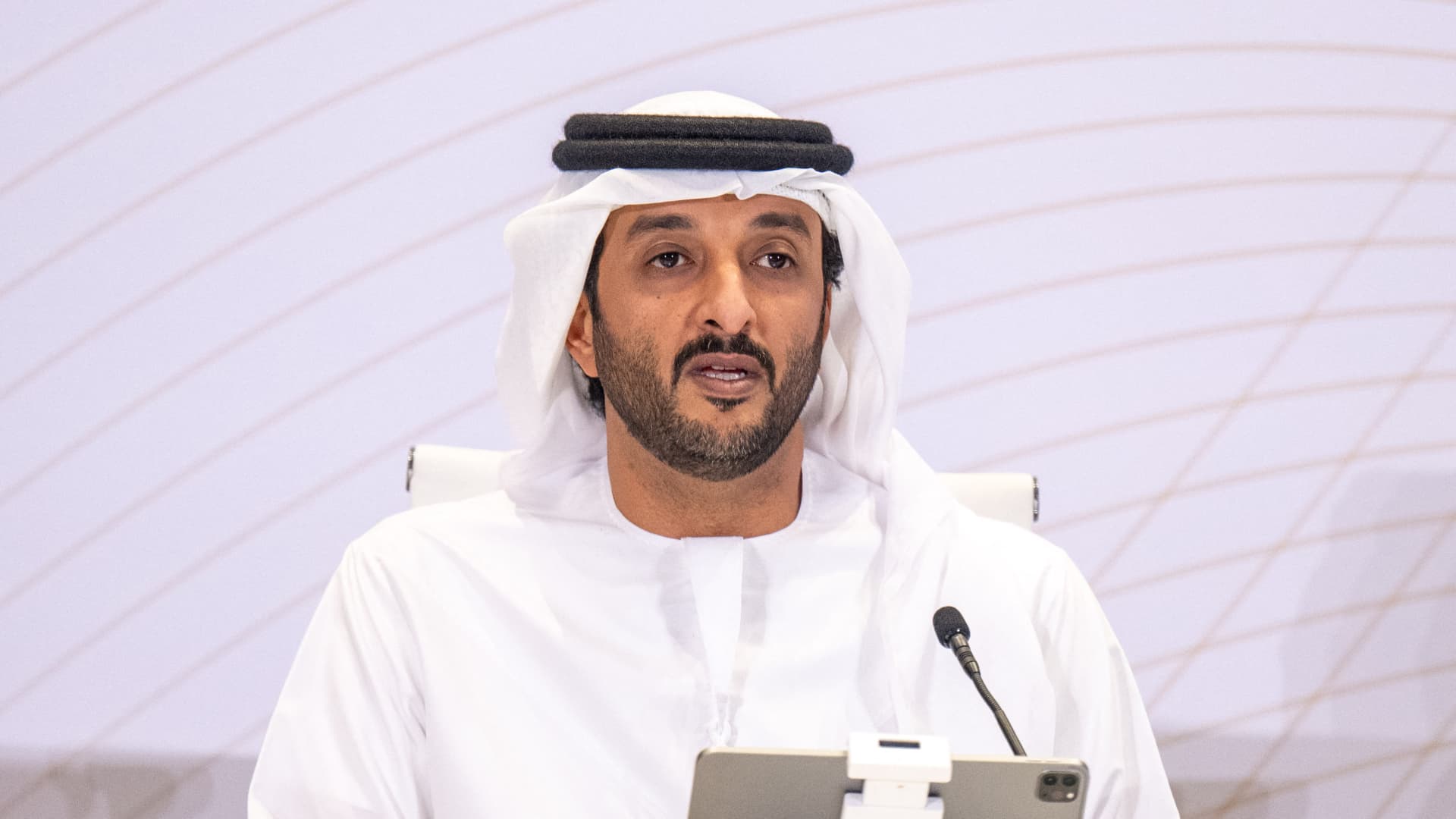
The United Arab Emirates (UAE) is expressing strong optimism for its economic prospects in the coming year, with officials projecting a growth rate between 7% and 8%. This statement comes from Abdulla bin Touq Al Marri, the UAE’s Minister of Economy and Tourism, who shared insights with CNBC following a recent update from the International Monetary Fund (IMF).
Notably, the IMF adjusted its forecast for the UAE’s real GDP growth, predicting a modest increase of 0.2% for 2026. This marks a significant recovery from a previous forecast that anticipated a contraction of 3.9%. “The UAE is coming back, and that adjustment within one month shows that there is a huge potential aspect when it comes towards the end of the year,” Al Marri stated during his interview with CNBC’s Dan Murphy.
The tourism sector in the UAE is already showing signs of rebound, with hotel occupancy rates approaching pre-pandemic levels. International airlines, including British Airways and Air France, are actively increasing their flight routes to the UAE, further fueling the recovery in this critical sector. Al Marri indicates that he expects the economic growth to exceed the IMF’s projections of 0.2% for the current year.
However, the ongoing conflict in Iran has introduced challenges to the UAE’s economic environment. The region has faced missile and drone attacks, alongside disruptions in maritime activities, adversely impacting vital sectors such as energy trade, tourism, aviation, and confidence in the private sector.
Despite these challenges, U.S. President Donald Trump recently indicated that further military actions against Iran might be “highly unlikely” if negotiations yield a strong agreement. Conversely, he also warned that if diplomatic efforts falter, Tehran could face renewed strikes in the upcoming year, as reported by Fox News.
Minister Al Marri emphasized the resilience of the UAE’s economy, stating, “We can’t promise that there won’t be any storms that will land on our shores, but we can always promise that the UAE’s economy is ready for any storm.” He also noted that the economic model of the UAE is set to evolve in the coming year, shifting towards investments in manufacturing and essential infrastructure needed during crises.
The World Bank, in its October assessment, projected that the UAE’s economy would rebound next year, supported by increased oil production and exports as well as a resurgence in tourism, trade, transportation, financial services, and construction. However, the institution cautioned that the pace of recovery is highly contingent on the ongoing conflict in Iran, with a quicker resolution likely to benefit services exports and private-sector growth.
