


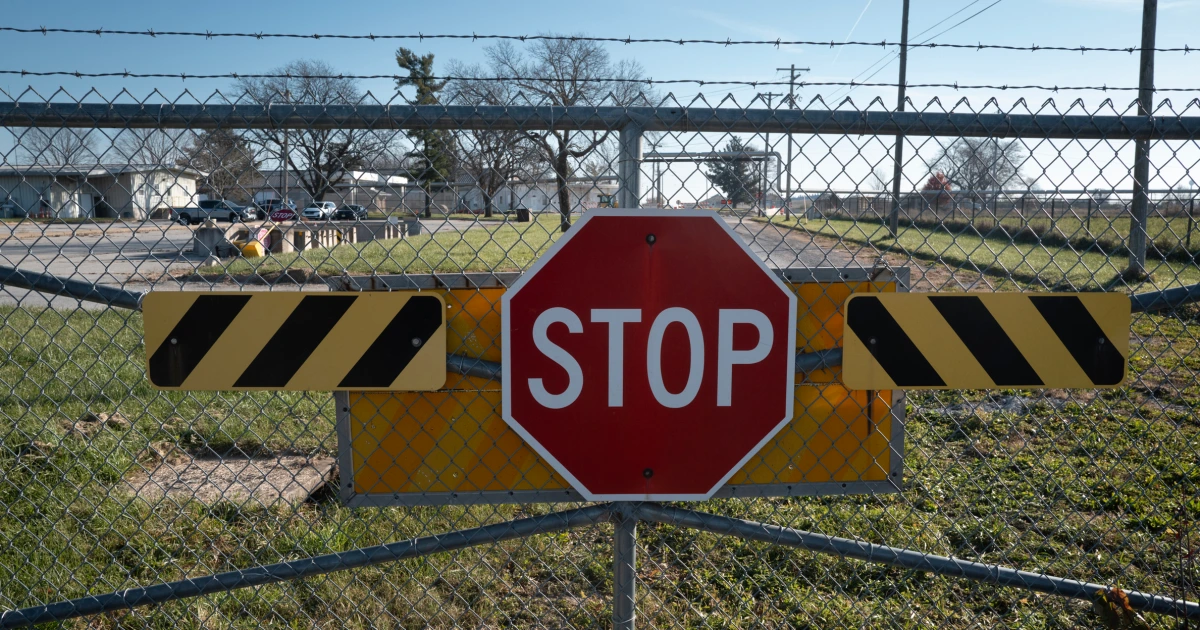
The U.S. Army is preparing for a controlled detonation of approximately 9,700 pounds of unstable lead azide explosives at the Iowa Army Ammunition Plant in Middletown, Iowa. The planned event, set for 9 a.m. CST on Wednesday, is seen as a necessary measure to avert the risk of accidental explosion due to the chemical’s deteriorating condition.
Officials have reported that the lead azide, stored in 68 drums, has undergone a process known as “recrystallization,” which significantly increases the likelihood of a spontaneous blast. To ensure public safety, evacuation orders have been issued for Middletown and a 5-mile radius to the southwest of the plant.
To facilitate the evacuation, Army personnel went door to door on Tuesday to inform residents. The Federal Emergency Management Agency (FEMA) is stepping in to provide temporary hotel accommodations for affected individuals through Friday.
Weather forecasts for the day of detonation indicate that the resulting cloud of lead dust may extend as far as 100 miles to the southwest, potentially reaching northeastern Missouri. This projection has raised considerable alarm among locals. Community members expressed frustration over what they perceive as insufficient notice regarding the detonation. Many have altered their Thanksgiving plans, taped up windows, protected gardens, and gathered cleaning supplies in preparation for the fallout.

Lead is known to be a neurotoxin, posing serious health risks, particularly to children. Exposure can lead to a myriad of issues, including developmental disabilities, reproductive problems, and various mental health concerns. Once lead particles settle on surfaces or in soil, they can remain for extended periods without removal.
Army representatives assert that a planned detonation, paired with safety measures, is preferable to the unpredictability of an accidental explosion. Iowa Governor Kim Reynolds underscored the gravity of the situation, stating, “I take the Army’s warning seriously that the choice is between a planned detonation and an uncontrolled explosion.” She has declared a disaster emergency encompassing three counties that could potentially be affected.
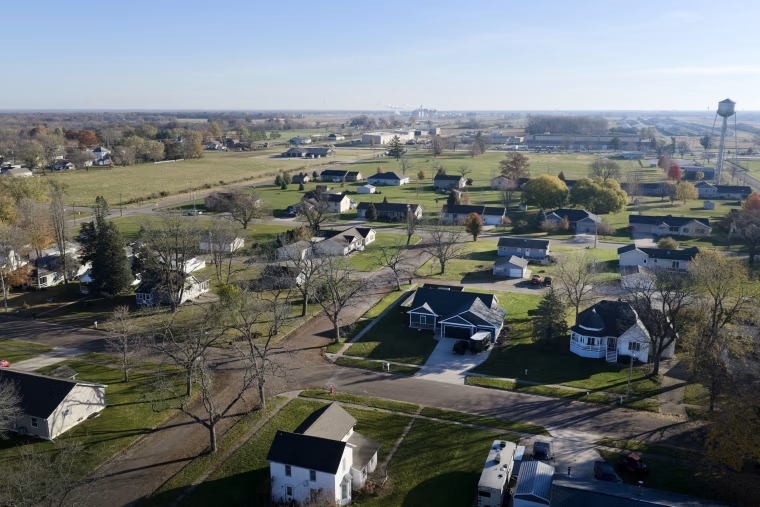
The Army has implemented multiple strategies aimed at containing lead dust during the detonation. This includes constructing two stories of “HESCO” barriers—modular structures filled with sand—around the blast site, as well as utilizing water sprays during the explosion to capture airborne particles. Additionally, mitigation tools such as aqueous foam blocks, gel blocks, and two water walls, each made up of four tanks containing 16,000 gallons of water, will be used to absorb the impact.
Following the detonation, environmental monitoring teams will track the lead dust plume’s trajectory, collecting soil and surface samples to assess contamination levels against pre-established baselines. If any property exceeds the threshold of 200 parts per million of lead, the Army will undertake remediation efforts at no cost to the property owners, including soil removal and surface cleaning.
Despite these assurances, detailed planning for the monitoring and remediation process has been criticized for its lack of clarity. Andrew Whelton, a civil and environmental engineering professor at Purdue University, noted the inadequacies in the Army’s emergency permit documents regarding the safety of homes and businesses after the detonation. He questioned why the lead azide stockpile had not been addressed more effectively before escalating to this crisis situation.
Peter Thorne, a pulmonary toxicologist at the University of Iowa’s College of Public Health, highlighted the importance of independent monitoring to assess the extent of airborne lead dust and its potential health impacts. He stated, “We have monitoring equipment out there that’s going to tell us the extent of lead that’s become airborne and moved with the wind.” This ongoing evaluation will be vital in determining the necessary responses to safeguard public health following the detonation.
