


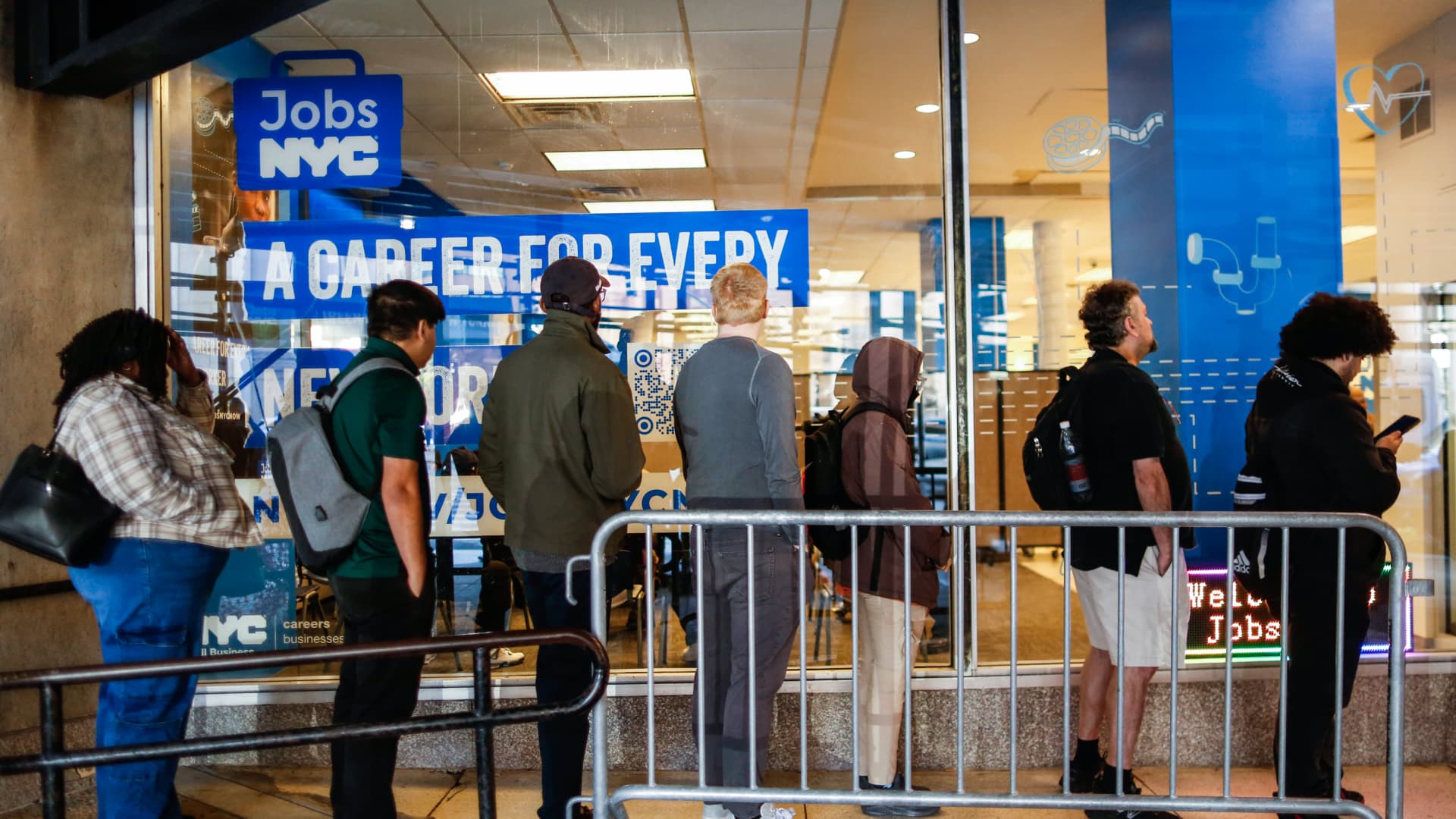
As job stability continues to fluctuate across the United States, those facing unemployment are encountering a new set of challenges. Recent data from the Bureau of Labor Statistics (BLS) indicates that the average duration of unemployment has now exceeded 27 weeks. This marks a significant increase, representing a job search that can extend up to nearly seven months—the longest duration since 2016, not counting the pandemic period.
Currently, approximately 2 million Americans are classified as “long-term unemployed,” a category that comprises 27.6% of all jobless individuals as of October. This share is the highest recorded since late 2021, reflecting a troubling trend in the labor market.
Cory Stahle, a senior economist at Indeed, stated, “This is a series that can be noisy from month to month. But if you look over a longer time horizon, there is no mistake in the trend,” highlighting the persistent nature of long-term unemployment.
The current labor market is characterized by a “low-hire, low-fire” mentality, where companies are reluctant to let go of employees but are also not actively expanding their workforce. This stagnation can have detrimental effects on individuals who find themselves stranded on the sidelines. Studies suggest that long-term unemployment can lead to reduced savings, lower earning potential, and increased mental health challenges.
A concerning aspect of prolonged unemployment is its potential to perpetuate itself. Research from the Federal Reserve Bank of Richmond indicates that extended periods without work can diminish job seekers’ chances of finding new employment. The findings suggest that skills may degrade, professional networks may weaken, and long durations of unemployment may deter employers.
Compounding this issue, many individuals lose access to government unemployment benefits after 26 weeks. As such, the increasing number of long-term unemployed contributors partially explains the persistently low initial and ongoing jobless claims. Stahle emphasized, “Now, the average unemployed person takes longer to find a job than their benefits would last. That is a really key point of this.”
Mixed Indicators in the Labor Market
Despite the grim statistics surrounding long-term unemployment, the overall labor market demonstrates some resilience. Recent employment reports reveal that nonfarm payrolls exceeded economists’ projections in October, adding 165,000 new jobs. Additionally, the unemployment rate dropped to 4.1%, slightly below expectations.
Data on job openings also surpassed forecasts, with September showing a significant increase. Furthermore, the number of workers voluntarily leaving their jobs—a sign of confidence in obtaining new positions—rose to levels not seen since March 2025.
The BLS noted a decrease in layoffs and discharges, which have reached their lowest levels in over a year. However, high-profile cuts from major corporations could temper optimism about labor market recovery. Notable examples include Disney’s plans to eliminate thousands of jobs and American Express’s announcement of a 5% workforce reduction as the company pivots towards artificial intelligence.
Elizabeth Renter, lead economist at Life360, commented, “It’s difficult to separate what’s happening to you or the people around you from the big picture. When your LinkedIn is filled with layoffs and your social circle features a few folks who have been job seeking for several months, positive narratives about the labor market can seem jarring.”
