


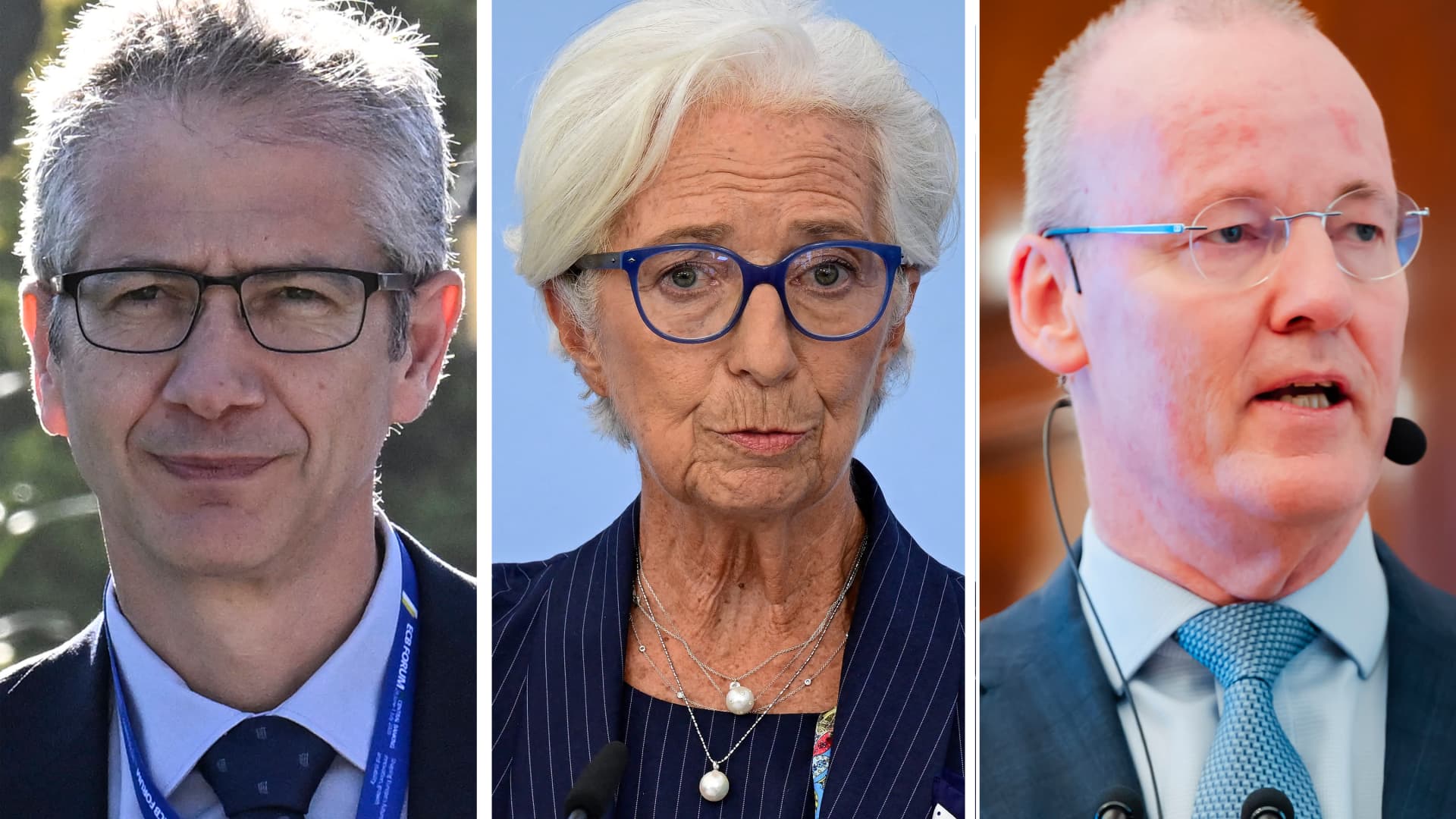
Christine Lagarde, the notable President of the European Central Bank (ECB), has announced her decision to resign from her position effective February 7, 2027. This announcement marks the commencement of a significant succession process amid concerns over political maneuvering and France’s fiscal challenges.
Lagarde has held the ECB presidency since July 2019, during which she has navigated numerous economic crises, including the fallout from the Covid-19 pandemic, the ongoing Russia-Ukraine conflict, and significant energy price surges that propelled inflation in the European Union above 11% in 2022. Her leadership also coincided with the end of a prolonged period of negative interest rates following the Financial Crisis.
Reasons for Lagarde’s Departure
In a Thursday press conference after the ECB’s October interest rate meeting, Lagarde confirmed media speculation regarding her early departure, citing a desire for greater freedom to express her political opinions, particularly in light of the upcoming French presidential election in spring 2027. She remarked, “The reason I’m anticipating the end of my term by leaving in February 2027 instead of October is… because I want to have the freedom of speech, the freedom of expression and the freedom to engage on matters that are not monetary policy matters.”
Lagarde also elaborated on the constraints imposed on her by the role, emphasizing her commitment to neutrality as a necessary element of the ECB’s independence. She stated that her ability to influence debates on vital issues has been hampered by this obligation, explaining, “I don’t think that I can remain neutral; I don’t think that I can be comfortable in that neutrality at the present time.”
This early exit will mean that the newly elected French president will not participate in selecting Lagarde’s successor, a crucial factor given the current political and financial instability in France.
Succession for ECB Leadership
With Lagarde’s departure, discussions on potential successors are already underway. Notably, both Philip Lane, the ECB’s chief economist, and Isabel Schnabel, a key executive board member, are also set to step down in the coming year, adding urgency to the selection of new leadership.
While the ECB maintains institutional independence, leadership appointments are influenced by political negotiations involving the European Council and the European Parliament, complicating the process. The new ECB president will need to navigate the delicate balance of representing national interests while maintaining financial stability across the euro area.
Among the leading candidates to replace Lagarde are Spain’s Pablo Hernández de Cos and the Netherlands’ Klaas Knot. De Cos, who recently completed a term at the Bank for International Settlements, and Knot, who has experience as the Dutch central bank governor, are both viewed as strong contenders. Analysts believe that Knot’s previous role as chair of the G20’s Financial Stability Board may give him an advantage in dealing with potential financial shocks.
With the risks associated with the rise of far-right politician Marine Le Pen in the forthcoming French elections, the ECB’s next leadership decision becomes increasingly pivotal.
Implications of Leadership Changes
Knot is perceived as a more hawkish candidate, having previously cautioned about the ECB’s response to inflationary pressures, which could suggest significant policy shifts. In contrast, a De Cos appointment may offer a sense of continuity, focusing on financial stability amid ongoing economic uncertainties in the eurozone.
Carsten Brzeski, ING’s global head of macro, noted that nationality will play a crucial role in the decision-making process, with the support from Northern European governments potentially favoring Knot while De Cos might find backing from Spain’s current administration.
Christine Lagarde: A Legacy of Leadership
Upon announcing her resignation, Lagarde received a standing ovation from the Governing Council, underscoring the respect she garnered during her tenure. She expressed pride in her service, stating, “It has been a source of great pride to serve this institution. I thank all of those who have supported me on this journey over the past seven years.” European Council President Antonio Costa acknowledged her steady leadership, contributed to safeguarding the euro area’s stability.
Prior to her presidency at the ECB, Lagarde broke multiple barriers in her career, becoming the first female Finance Minister of a G7 nation and the first woman to lead the International Monetary Fund. While her tenure at the ECB faced criticism in a staff survey in 2024, it will be remembered for her navigation through extraordinary challenges.
There is speculation that Lagarde could transition to the role of chair at the World Economic Forum, highlighting her continuing influence in global economic governance.
