


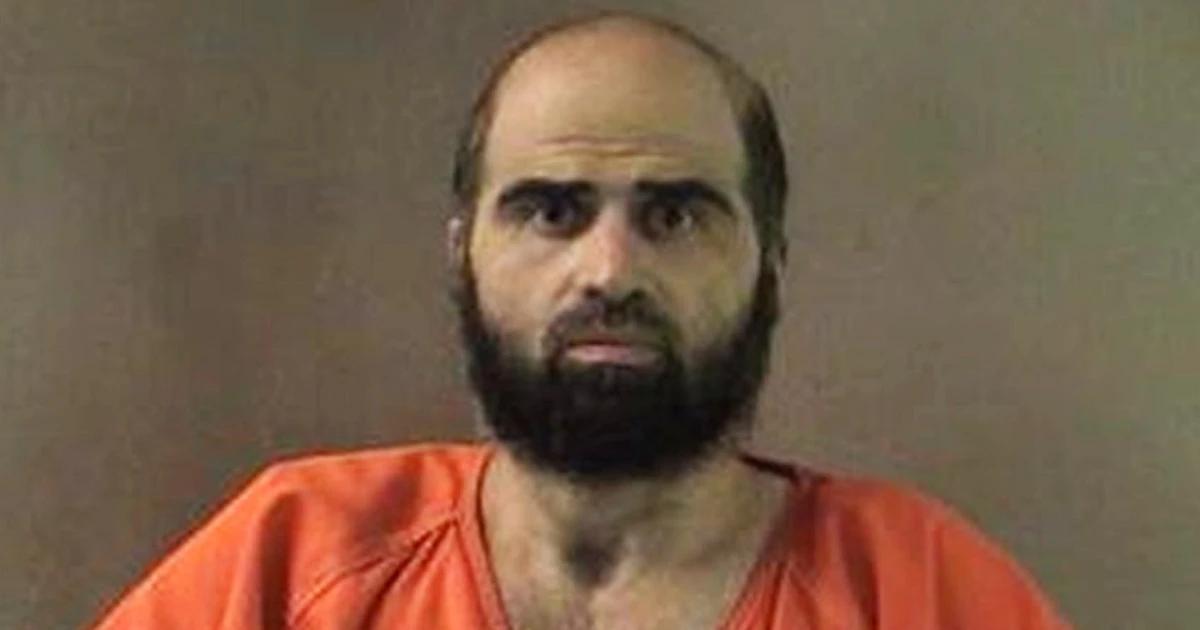
President Donald Trump announced on Thursday that the U.S. government will not livestream the execution of Nidal Hasan, the former Army major convicted of the 2009 Fort Hood shooting. This decision reverses an earlier statement made by Defense Secretary Pete Hegseth, who had suggested the execution might be broadcast.
In a post on Truth Social, Trump acknowledged that while livestreaming the execution could serve as a deterrent, many individuals would prefer not to witness the event. He stated, “He will die, as scheduled, by firing squad, but this event will not be streamed.” Families of Hasan’s victims will have the opportunity to attend the execution in person, scheduled for December 3.
Hasan was sentenced to death in 2013 for the shooting that resulted in 13 fatalities and 32 injuries at Fort Hood, making it one of the deadliest incidents of gun violence on a military base in U.S. history.
Trump’s decision comes in response to significant backlash from both Republican and Democratic lawmakers after Secretary Hegseth’s original comments. Some critics expressed concern that a public execution could inadvertently bolster Hasan’s worldview of martyrdom, while others argued that it contradicted American values related to decency.
Early signs of a reversal began to surface shortly after Hegseth’s announcement. Vice President JD Vance questioned the feasibility of a livestream, indicating uncertainty about the plan’s viability. Speaking to reporters, President Trump emphasized that he would ultimately be responsible for the decision, considering both viewpoints on whether to show the execution publicly.
“There are two thoughts: don’t show it and show it. Because by showing it, maybe other people won’t be doing what he did,” he remarked, reflecting on the implications of a public execution.
House Speaker Mike Johnson voiced apprehensions that footage of Hasan’s execution could be exploited by terrorist organizations for recruitment purposes. He noted the need for careful consideration of the broader policy implications surrounding such an event, stating he would not personally watch any broadcast if it were to air.
Johnson also mentioned his intent to relay the sentiments of Republican colleagues in Congress, noting a diversity of opinions on the issue, with not everyone supporting the idea of a livestream.
It is noteworthy that the last military execution took place in 1961, and the last by firing squad occurred in 1945, underscoring the rarity of such events in U.S. military justice.
