


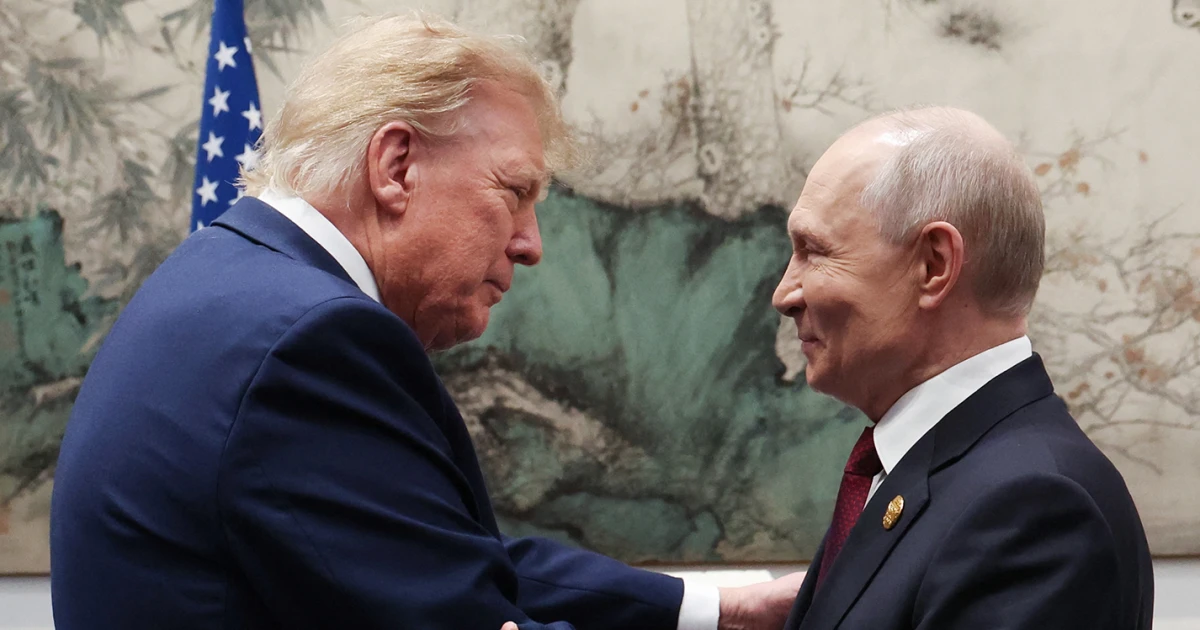
The geopolitical landscape has been significantly influenced by recent comments made by former President Donald Trump regarding Russian President Vladimir Putin during the Asia-Pacific Economic Cooperation summit in China. Trump’s acknowledgment of Putin as “my friend” has raised eyebrows and sparked concern among U.S. allies, particularly in Europe. This statement comes at a time when Putin is facing allegations of war crimes from the International Criminal Court and is widely condemned for his aggressive actions in Ukraine.
Polish Prime Minister Donald Tusk expressed alarm following Trump’s remarks, stating on the platform X, “God, protect us from such friends.” Poland’s Foreign Minister, Radosław Sikorski, echoed a sentiment of unease, questioning Trump’s loyalty in a hypothetical scenario of choosing between Putin and Poland. He pointed out the implications of such comments, particularly given Poland’s proximity to both Ukraine and Belarus.
Trump’s commendation of Putin arrived shortly before significant security concerns were raised in Poland, where defense officials reported a likely airspace violation by Russian objects. In response, Estonia announced the closure of its road border crossings with Russia for security reasons, reflecting the fragility of regional stability.
The reactions to Trump’s friendship declaration were not solely Polish; various European leaders voiced their apprehensions. Concerns arose about the potential normalization of Putin’s actions among Russian, U.S., and Chinese leadership, further complicating international relations and security strategies aimed at countering Russian aggression.
The collaborative statement issued by Trump, Putin, and Chinese leader Xi Jinping following their meeting notably omitted any reference to the ongoing conflict in Ukraine while instead condemning the International Criminal Court’s actions against Putin regarding the alleged unlawful deportations of Ukrainian children.
Danish Prime Minister Mette Frederiksen labeled Trump’s meeting with Putin as “very incomprehensible,” while German Chancellor Friedrich Merz cautioned against framing such meetings in a manner reminiscent of the Yalta Conference of 1945, where World War II leaders made crucial territorial decisions.
On a more measured note, some leaders, including British Prime Minister Andy Burnham, addressed Trump’s comments with caution. In response to speculation about Trump’s susceptibility to Putin’s influence, Burnham remarked that Trump had discussed the devastating consequences of the war, underscoring the human cost of the conflict.
During a call with European leaders and Ukrainian President Volodymyr Zelenskyy, Trump suggested that Putin was amenable to ending the conflict in Ukraine. Trump advocated for negotiations that would allow European nations to divert funds from military aid to Ukraine back to their domestic needs. Jared Kushner, Trump’s son-in-law, confirmed Trump’s commitment to collaborative diplomacy with Europe regarding any potential agreements with Russia.
Trump’s comments have elicited strong reactions in the United States as well. Senate Minority Leader Chuck Schumer criticized Trump’s portrayal of Putin as “embarrassing, despicable, and quite frankly pathetic.” Other senators echoed similar sentiments, emphasizing the dangers of normalizing relations with a leader widely viewed as a “murderous war criminal.”
Notably, Russian relations have been a central issue during Trump’s previous terms, with his previous comments about Putin ranging from humorously referring to him as a “new best friend” to calling his initial actions in Ukraine “genius.” However, this most recent encounter marked the first time Trump explicitly referred to Putin as a friend in a public setting.
Jonathan Eyal from the Royal United Services Institute pointed out the stark difference between Trump’s past discussions about Putin and this direct address in front of the cameras, suggesting it came across as particularly authentic and concerning. Eyal emphasized the implications of this shift in diplomatic rhetoric in an interconnected global landscape.
As international responses continue to unfold, the ramifications of Trump’s remarks on U.S.-Russia relations and Putin’s standing on the world stage remain a topic of acute interest and scrutiny. Ukrainian President Volodymyr Zelenskyy’s silent resignation to the situation during a news conference illustrates the complexities and challenges facing Ukraine as it navigates not only the war but also international perceptions and alliances.
