


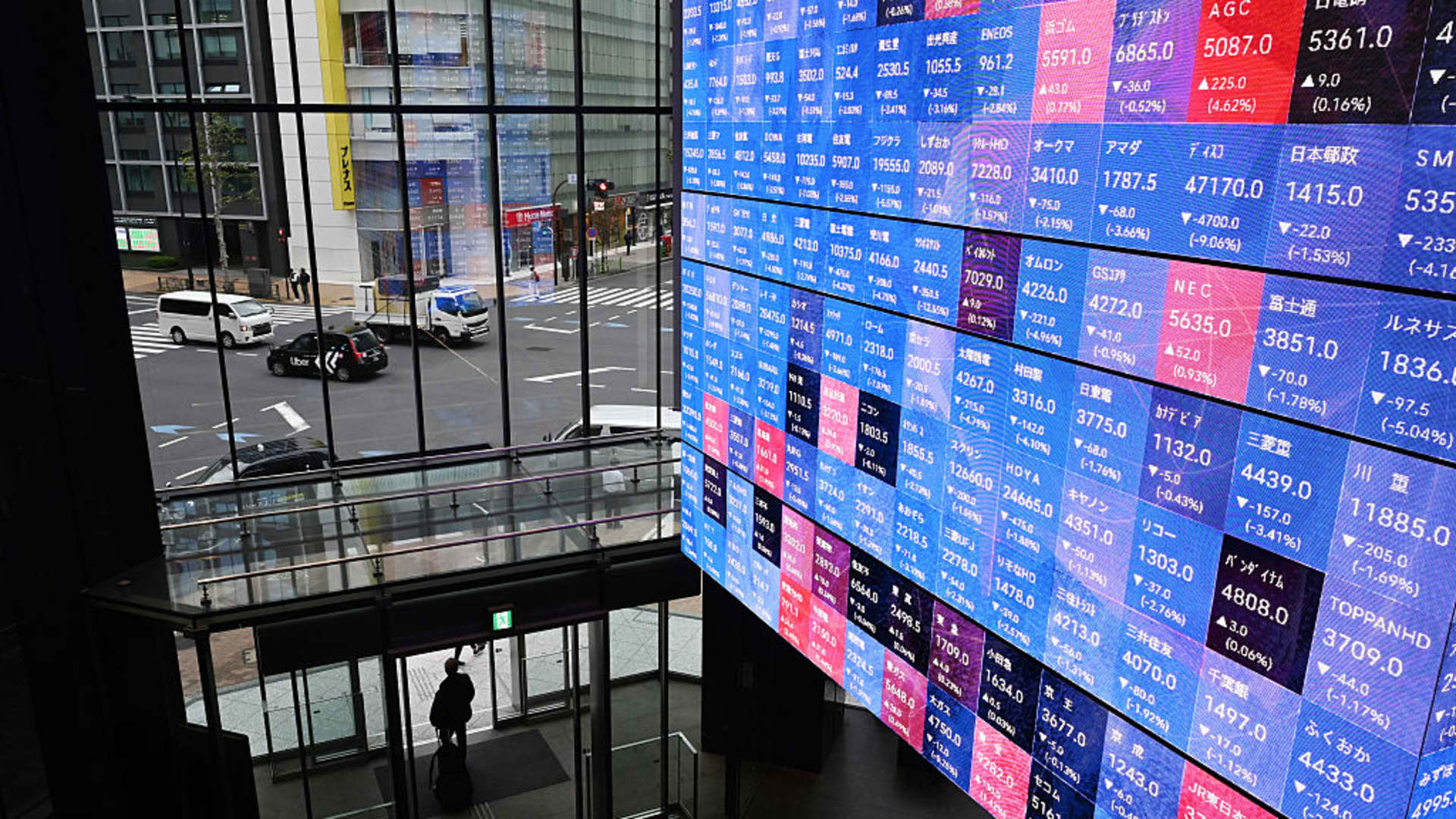
On Friday, the Japanese financial markets exhibited a surprising reaction following the Bank of Japan’s (BOJ) decision to increase its benchmark interest rates to a level unseen in 31 years. Contrary to the typical market response expected with such policy shifts, the yen depreciated, bond yields decreased, and stock prices diverged positively.
The yen fell below 157 against the U.S. dollar, illustrating a marked weakening. Concurrently, the yield on the 10-year Japanese Government Bond experienced a decline, while the Nikkei 225 index climbed 1.5% in the wake of the BOJ’s announcement to elevate its policy rate to 1.25%.
This interest rate hike marked a significant milestone, elevating the rate to its highest since 1995, just three months after the bank’s last adjustment. Analysts attributed the unusual market behavior to the split vote among BOJ board members regarding the hike, suggesting an absence of a strongly hawkish stance from the central bank.
“The two dissenting votes in favor of keeping rates unchanged came as a surprise,” remarked Hirofumi Suzuki, the chief FX strategist at Sumitomo Mitsui Banking Corporation. The voting concluded with a 7-2 split, where board members Toichiro Asada and Ayano Sato expressed their preference for maintaining current rates.
Asada argued that with the core inflation rate below 2%, the economic climate did not appear robust enough to necessitate a rate increase. For reference, Japan’s core inflation rate was recorded at 1.7% for August, a slight dip from July’s figure of 1.8%. Similarly, Sato emphasized that neither economic nor price developments had significantly accelerated recently.
Another reason for the market’s unexpected response is that the rate adjustment was announced without an accompanying updated economic outlook report, which would have potentially reinforced a more aggressive monetary stance, according to Masahiko Loo, a senior fixed income strategist at State Street Investment Management. Loo’s perspective was echoed by Shigeto Nagai, head of Japan economics at Oxford Economics, who indicated that the dissenters communicated a reluctance by the BOJ to adhere too closely to U.S. monetary policy pressures.
Reportedly, U.S. Treasury Secretary Scott Bessent highlighted the importance of higher BOJ rates during discussions with Japanese Finance Minister Satsuki Katayama in May. Furthermore, Loo noted that the overall tone of the BOJ’s announcement closely resembled that of the quarterly outlook report released in July, leading to lesser expectations for aggressive rate increases.
Implications for Future Rate Increases
Looking ahead, experts suggest another interest rate hike may occur as soon as December. Loo anticipates that BOJ Governor Kazuo Ueda will stress the significance of upcoming meetings in determining future rates.
- “The debate is no longer whether the BOJ hikes, but how far rates ultimately go,” Loo added.
The BOJ has indicated its commitment to further rate hikes as economic and inflationary conditions evolve, while acknowledging potential deceleration in growth due to rising oil prices fueled by ongoing geopolitical tensions in the Middle East. Sam Jochim, an economist at EFG International, anticipates rates could rise approximately every three months as core inflation approaches the target of 2%. Jochim estimates a terminal rate, or peak level, to be reached between 1.75% and 2% by 2027.
While the BOJ has yet to specify a terminal rate, it maintains that its monetary policy will adapt appropriately to achieve stable inflation at the 2% target. Meanwhile, Stefan Angrick, head of Asia-Pacific economics at Moody’s Analytics, predicts further increases around year-end, though he cautions that weak demand-driven inflation and disappointing wage growth may restrict more frequent adjustments.
— CNBC’s Lisa Kim contributed to this report.
