


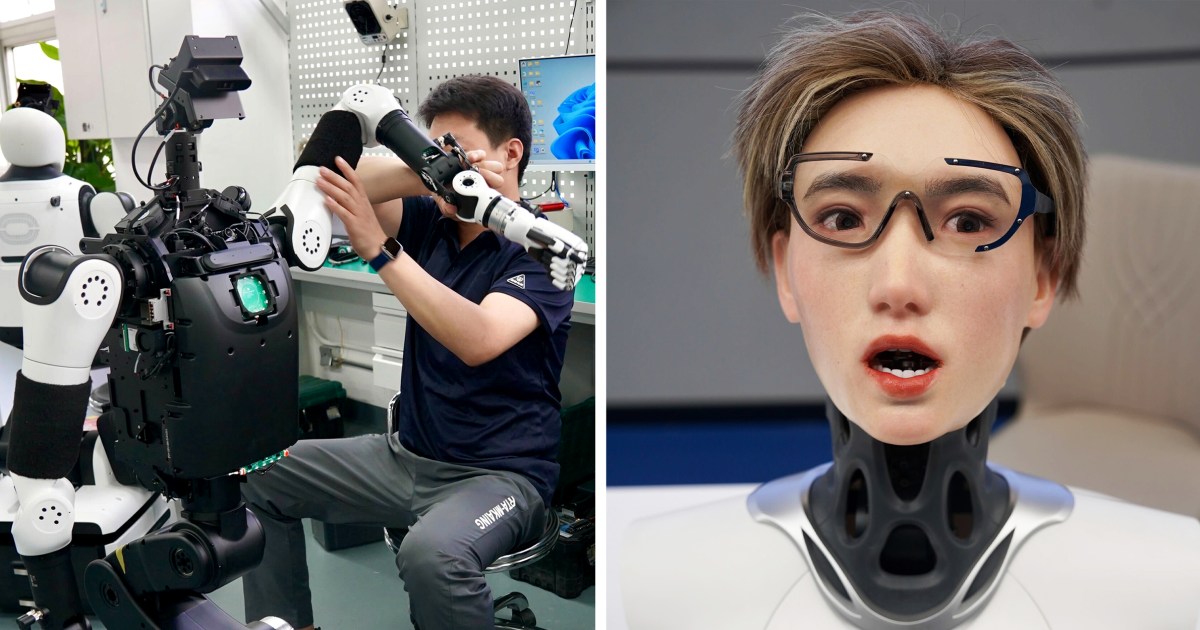
Elon Musk, whose Tesla company also makes humanoid robots, called Chinese robots “cool.” Musk was in Beijing this week as part of President Donald Trump’s state visit. President Trump said his meeting with President Xi Jinping went well and expressed hope for further U.S. cooperation with China.
However, there is still a lot of room for improvement in what these robots can do physically and autonomously, that is, without remote instructions.
“What the robot industry needs to improve is in the brains of these robots, in the software that allows these robots to actually do what we want them to do,” said Joanna Stern, chief technology analyst at NBC News.
Before these robots can wash dishes or fold laundry, manufacturers need vast amounts of real-world data to train them. Several companies, including one in the United States, are now offering cash to people who want to strap an iPhone to their body and record their every move.
At X-Humanoid, Gao added that while his robots are powerful, the company doesn’t want them to become militarized, but there is real value in emergency or dangerous tasks.
At the facility, robots go through the stages of production: assembly, testing, and programming. X-Humanoids are designed to crawl through tight spaces and trudge over rough terrain, and they say they’re built for jobs humans don’t want to do. The company emphasizes that evacuation is not the goal.
“We want robots to help people and take them out of this dangerous, harsh, repetitive work environment,” she said, referring to tasks such as power inspection.
In one corner of the facility, dozens of half-finished humanoid robots were lined up in a grid, waiting to have their heads attached. They lacked legs, but instead had tapered bodies into boxy, wheeled units.
