


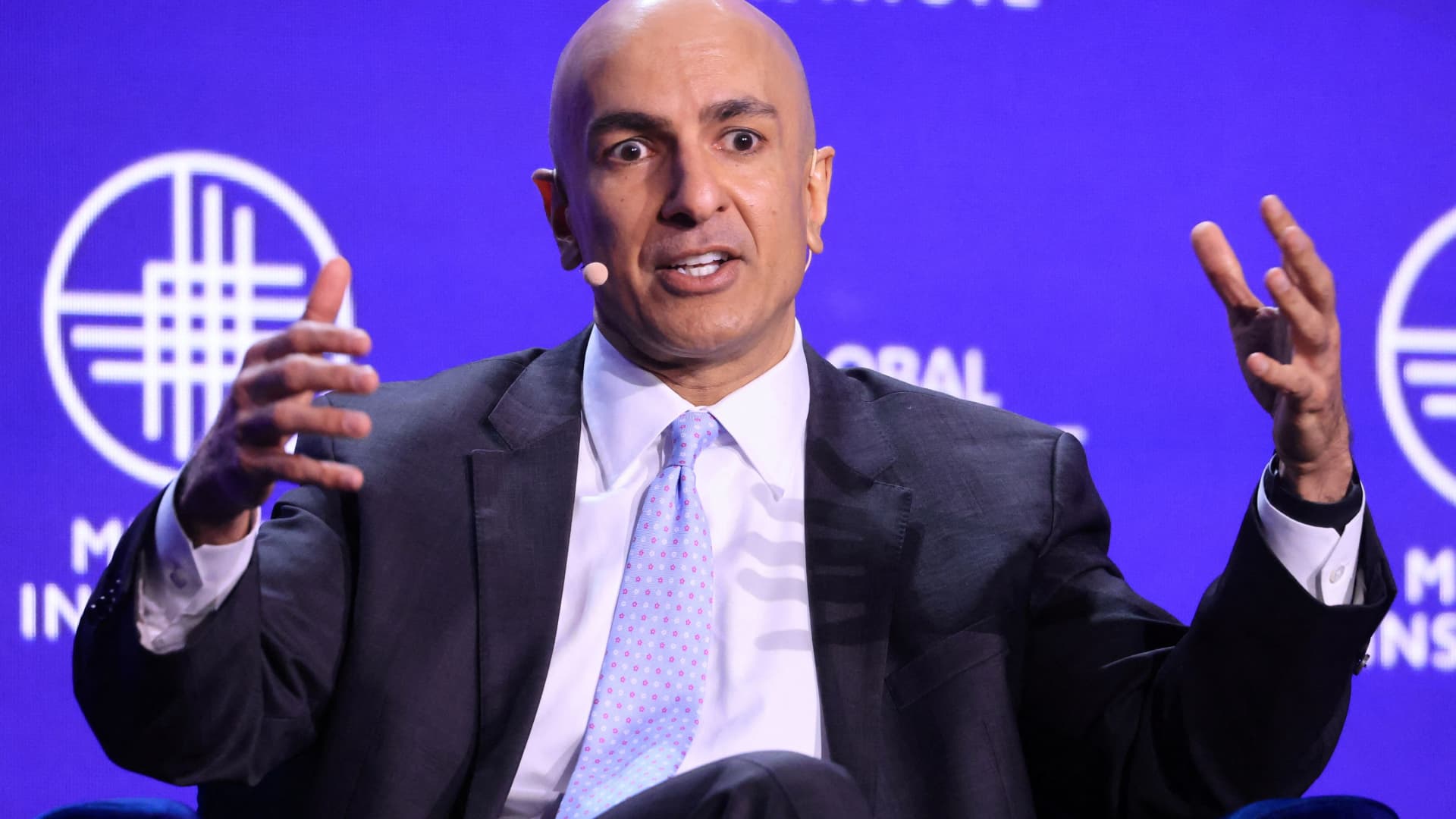
Neel Kashkari, President and CEO of the Federal Reserve Bank of Minneapolis, speaks at the Milken Conference 2024 Global Conference Session at the Beverly Hilton in Beverly Hills, California, USA, May 7, 2024.
David Swanson | Reuters
Minneapolis Fed President Kashkari said Thursday that curbing U.S. inflation remains a top priority and warned that consumer prices remain “too high.”
Kashkari told CNBC’s Kaori Enjoji at the Bank of Japan’s IMES conference that the U.S. central bank will continue to take a “balanced approach” to its dual mandate of price stability and full employment.
Still, he noted that inflation has been above the Fed’s 2% target for more than five years and the labor market is currently in “decent shape.”
“My focus is on inflation. I’m not ignoring the labor market at all. We need to pay attention to both sides, but while the labor market is in decent shape at the moment, inflation is simply too high,” he said.
Kashkari added that the longer inflation stays high, the less anchored inflation expectations become and the greater the risk of them rising.
“If that happens, we will need to be more aggressive, and we would be far better off doing what is necessary to anchor inflation expectations.”
The US headline inflation rate was most recently 3.8% in April. Core CPI, which excludes food and energy, rose 0.4% and 2.8%, respectively.
Kashkari said global inflationary pressures are being accelerated by the coronavirus pandemic, tariffs, the Ukraine war and the current conflict in Iran.
Asked about the main factors behind the recent spike in inflation, Kashkari said there was a “tailwind from surpluses earlier” but blamed the current spike on energy and fertilizer prices.
“These inputs affect other categories as well, so what I want to focus on is when energy prices affect the broader economy and inflation in the broader economy.”
AI and FRB
Kashkari was also asked about the impact that artificial intelligence would have on the Fed’s policy trajectory, and said that if AI truly leads to sustained productivity gains, the economy is so productive that interest rates could remain elevated.
However, he cautioned that it is difficult to judge the impact at this point, so we need to wait and see how AI leads to sustained productivity gains.
“I talk to companies all the time, especially large American companies, and they all say they’re using it and finding useful ways to leverage it to increase their productivity or provide features they didn’t have before,” he said.
“I’m bullish about the long-term prospects for AI, but what are the near-term and even longer-term implications for monetary policy? I think it’s too early to know.”
This is the latest news. Please check the latest information.
