


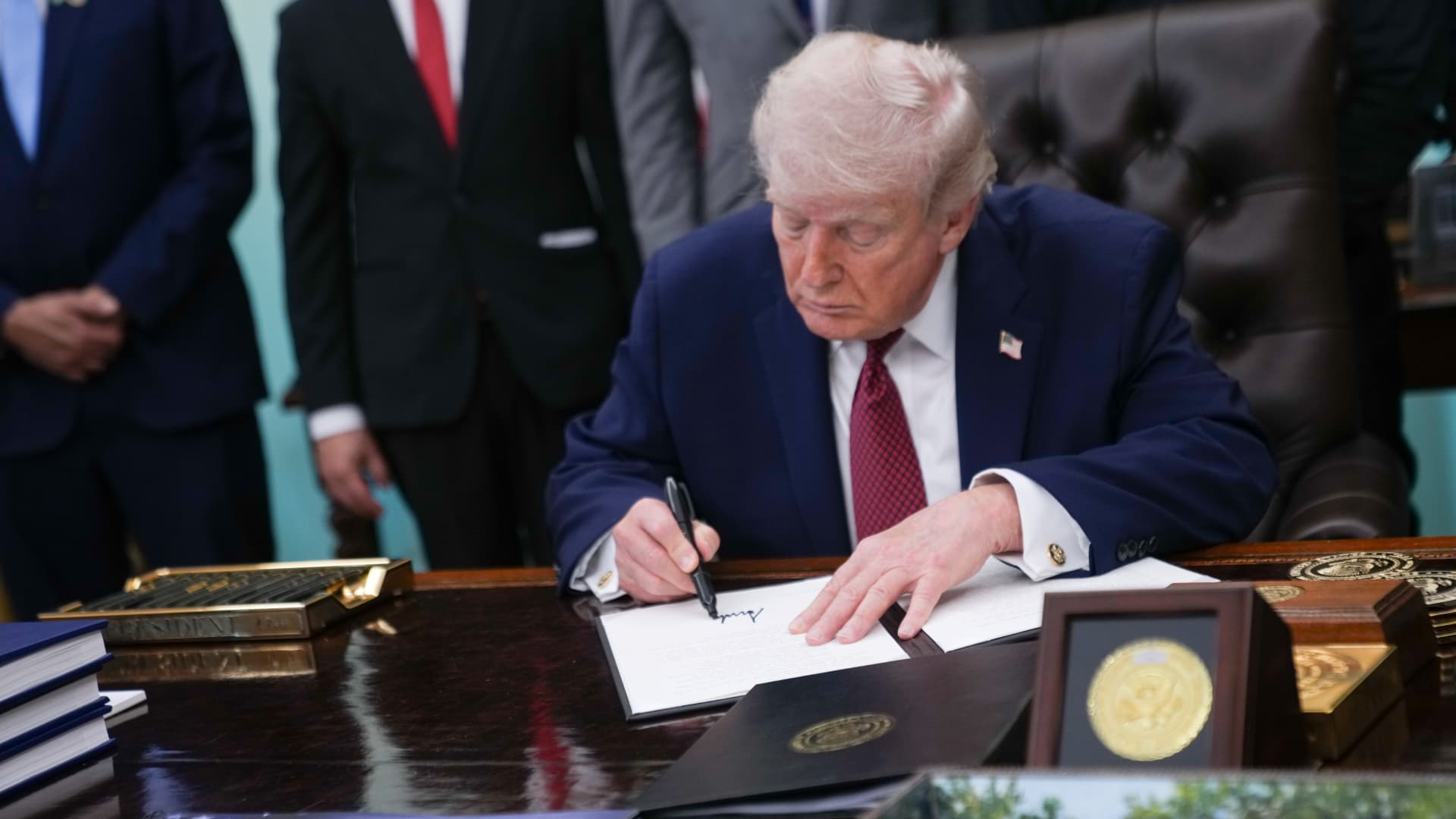
U.S. President Donald Trump signs an executive order on research into the effects of psychedelics in veteran treatment on Saturday, April 18, 2026, in the Oval Office of the White House in Washington, DC.
Washington Post | Washington Post | Getty Images
President Donald Trump said generic drugs imported into the United States would be subject to zero tariffs for two years starting August 1, after which a 100% tax would take effect in August 2028, rising to 200% a year later.
In a social media post on Tuesday, President Trump said the phased schedule is aimed at encouraging generic drug makers to move production domestically, calling the expansion a “penalty” for companies that don’t build factories or facilities in the U.S. during the grace period.
President Trump said tariffs on patented and branded drugs will remain unchanged. On April 2, the President imposed a 100% tax on patented drugs and ingredients under Section 232, while exempting generic drugs, biosimilars, and related ingredients. Big drug companies were given 120 days for the 100% tariff rate to take effect, and small drug companies that rely on contract manufacturers were given 180 days for the rate to apply.
More than a dozen major pharmaceutical companies, including Eli Lilly, Pfizer, and Novo Nordisk, have signed agreements with President Trump to lower the prices of new and existing drugs. These agreements are part of the president’s “most-favored-nation” policy, which ties U.S. drug prices to lower drug prices overseas and exempts companies from tariffs for three years.
President Trump has used tariff threats and most-favored-nation pricing to pressure drug companies to charge Americans the same prices as patients in other high-income countries.
The stakes are high for India, as Indian drug companies supply nearly 50% of the generic drugs consumed in the United States. The United States accounts for about a third of India’s annual drug exports, mostly cheaper versions of popular medicines. Chinese companies have a monopoly on the upstream supply of pharmaceutical ingredients such as amoxicillin and heparin.
