


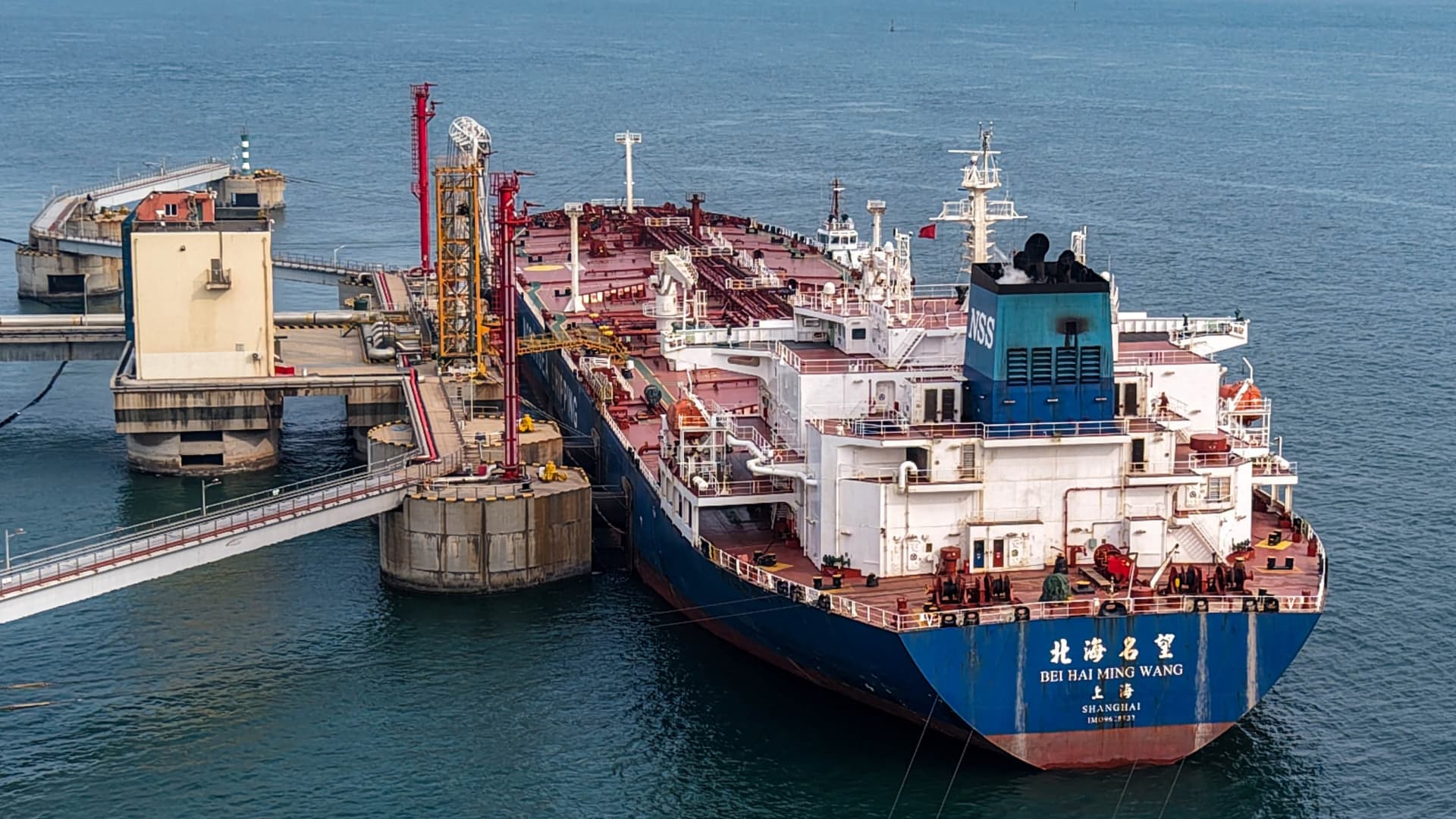
An oil tanker unloads crude oil at a port terminal in Qingdao, eastern Shandong province, China, March 11, 2026.
– | AFP | Getty Images
Chinese industrial companies saw profits soar in the first two months of the year as authorities pushed ahead with efforts to curb the impact of industry overcapacity and weak consumer demand.
Data from the National Bureau of Statistics on Friday showed industrial profits rose 15.2% year-on-year in the January-February period, a sharp rebound from December’s 5.3% rise.
Yu Weining, chief statistician at NBS, attributed the notable increase to an acceleration in factory activity and higher product prices in the first two months of this year.
Yu highlighted that the high-tech manufacturing sector led the profit increase, with industrial profits increasing 58.7% year-on-year, driven by strong revenue growth of companies that make unmanned aerial vehicles and semiconductors.
Raw material manufacturers such as non-ferrous metals and chemical manufacturers also reported significant profit increases, with profits increasing by 148.2% and 35.9%, respectively.
Spread risk
Without directly addressing the Middle East conflict, Yu warned that while the recovery across sectors remained uneven, spillover risks from “escalated geopolitical tensions” could weigh on China’s growth prospects.
For all of 2025, China’s industrial profits rose 0.6% from a year earlier, the third consecutive year of decline, as authorities reined in fierce price competition and companies doubled exports to tap overseas demand.
Beijing has sought to contain the fallout from disruptions to oil shipments in the Middle East sparked by the U.S. and Israeli attacks on Iran. The Iranian government has since closed the Strait of Hormuz, a critical waterway for energy flows, to most commercial ships, upending global energy markets.
China raised retail price ceilings for gasoline and diesel oil earlier this week as rising global oil prices began to impact the domestic economy, but limited the increase to about half the normal adjustment to soften the impact on consumers.
However, the world’s second-largest economy is expected to be less affected by rising energy prices than most other countries because of its vast oil reserves and alternative energy sources. Iran has also continued to ship millions of barrels of oil to China since the war began.
