


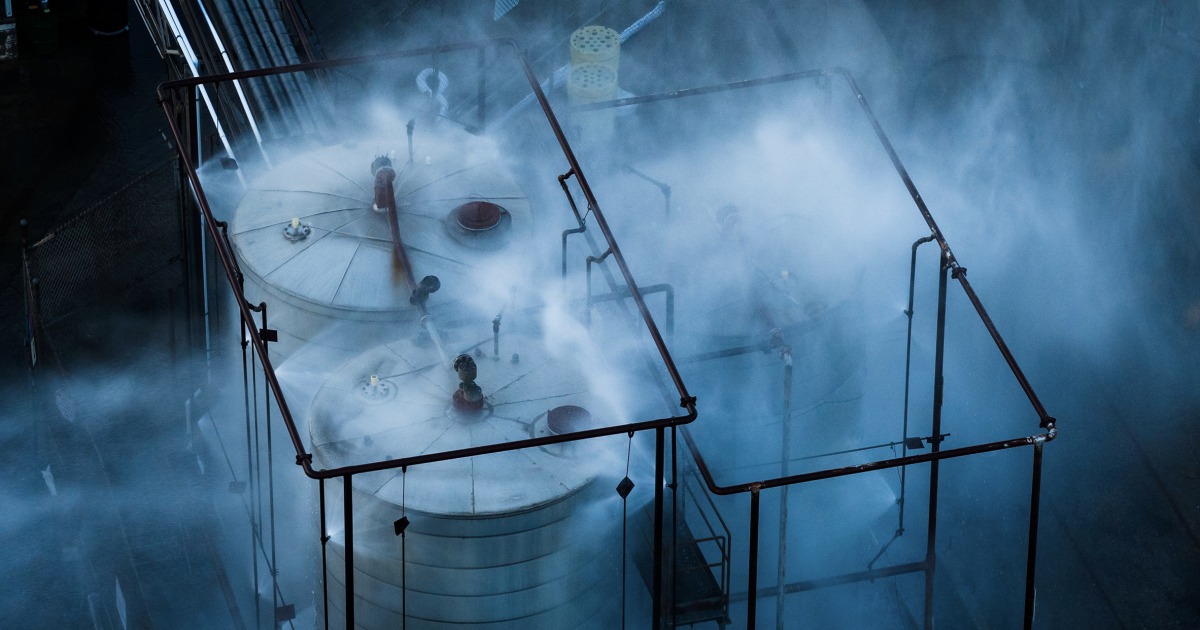
Firefighters were trying to cool down a chemical tank literally on the “brink” of exploding in Southern California to avert a dire “worst-case” scenario, the incident commander said Saturday.
Subscribe to read this story without ads
Get unlimited access to ad-free articles and exclusive content.

A 7,000-gallon tank containing methyl methacrylate, a toxic chemical used in the manufacture of resins and plastics, could later cause an explosion in a nearby 15,000-gallon tank containing the same substance, Orange County Fire Authority (OCFA) Incident Commander Chief Craig Covey told NBC News on Saturday.
“What we’re talking about may be one of the worst chemical accidents in California history,” he said.
Gov. Gavin Newsom on Saturday declared a state of emergency in Orange County and directed the Office of Emergency Services and other state agencies to assist affected residents.
Covey said the problems that prompted authorities to evacuate tens of thousands of people from parts of Garden Grove, Calif., and nearby cities included loss of valve control and rising heat in the tanks, which were already in the volatile range of 90 to 100 degrees Fahrenheit.
These temperatures are a precursor to “thermal runaway” that could lead to an explosion, he said.
“We are literally on the brink,” he added.
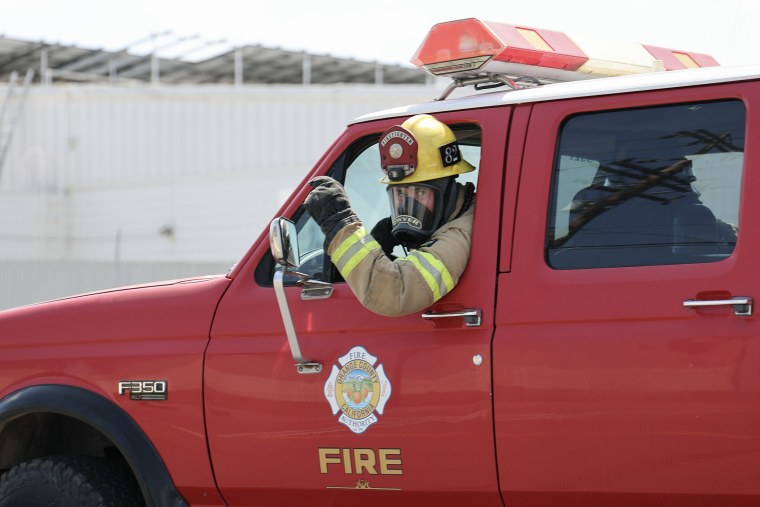
Firefighters continued to use sprinklers and hose lines Saturday to cool the facility. They hope this process will cause the chemicals to “harden” and further slow warming enough to prevent an explosion.
Covey said a “worst-case scenario” is that all three tanks on the property, including a 4,500-gallon tank, could explode.
OCFA said in a statement that the hazardous materials event began Thursday with a “vapor release” in a 7,000-gallon tank at an aerospace manufacturing facility.
GKN Aerospace first responders may have initially taken false temperature readings because they took temperature readings from outside the tank’s 1-inch-thick steel walls, Covey said. On Saturday morning, some fire personnel took the risk of getting close to the stored chemicals and noticed internal temperature readings that were much higher than anything they had seen before, he said.
Covey said a new assessment measured the tank’s temperature rising from 77 degrees to 90 degrees on Saturday afternoon, an average of one degree per hour.
“We are doing everything we can to find ways to mitigate that,” he said. “The worst case scenario is that fireball.”
Even if an explosion is avoided, authorities fear the tank could rupture, allowing chemicals to leak into nearby storm drains and into the Pacific Ocean. Covey said officials are working on contingency plans that include potentially preventing some of the chemicals from entering storm drains and efforts to “build, dam and divert” any spills.
“This is serious,” Covey said. “This is real.”
Orange County Health Officer Dr. Regina Cincio Kwon said people outside the evacuation zone were unlikely to face any health risks, but cautioned that the incident was a “unusual situation.”
“We have no information that a similar situation has occurred,” she said at a press conference Friday.
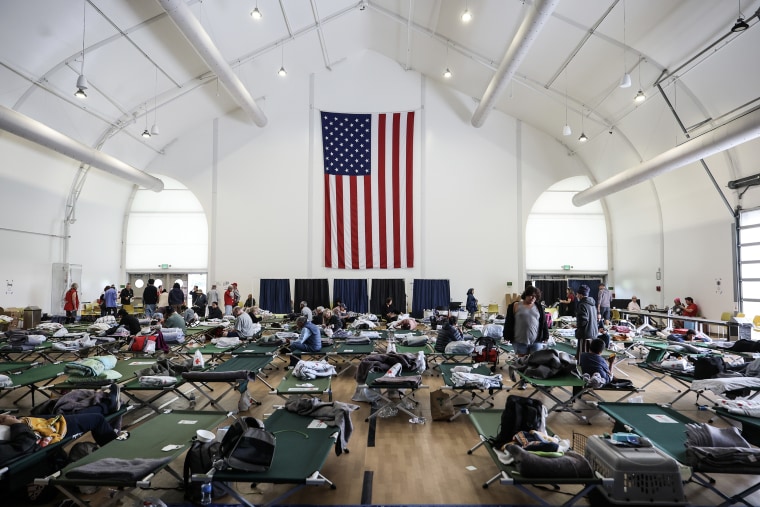
Evacuation orders have been issued for Garden Grove, about 55 miles southeast of downtown Los Angeles, as well as the nearby cities of Cypress, Staunton, Anaheim, Buena Park and Westminster. Garden Grove Police Chief Amir El Farah said Friday that the order covers approximately 40,000 residents.
Newsom’s state of emergency declaration will free up additional state resources, including federal land and amusement parks that can be used as shelter for evacuees, the governor’s office said.
