


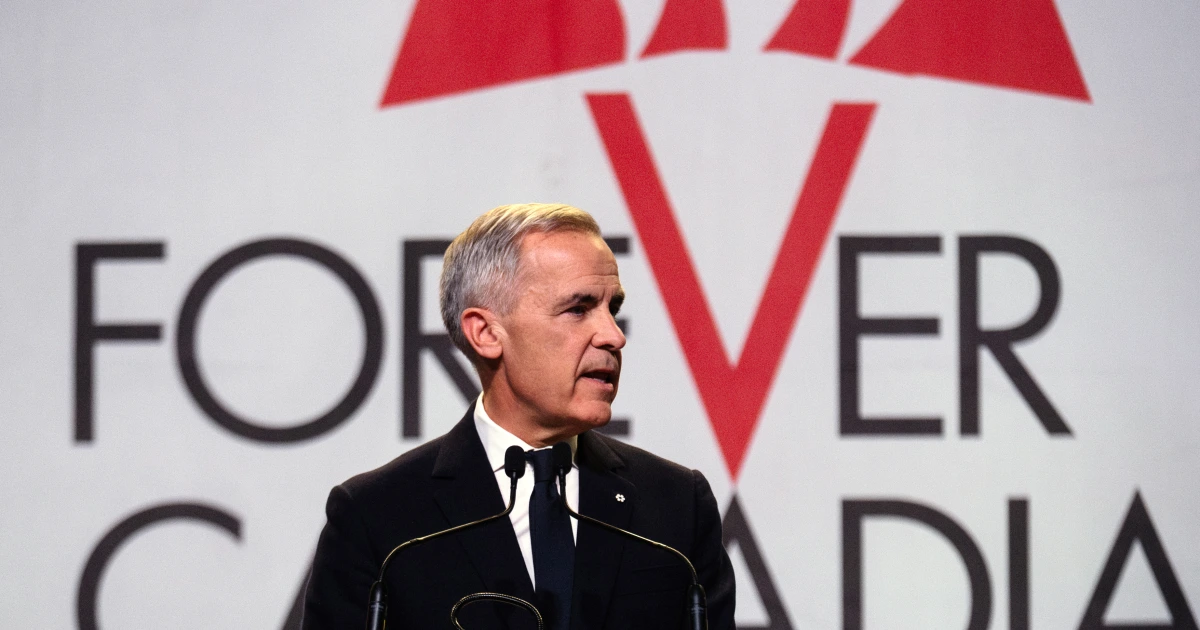
EDMONTON, Alberta – Canadian Prime Minister Mark Carney has made a poignant appeal to voters in Alberta, urging caution against the backdrop of an impending referendum concerning the province’s independence. This appeal comes in light of rising tensions and economic uncertainty stemming from U.S. policies.
During a rally in Edmonton, where Carney spent his formative years, he articulated a strong message about the risks of pursuing separation at a time when Canada’s sovereignty is under threat from U.S. trade strategies. He stated, “This is not a game. This is not poker. A vote against Canada is a dangerous bluff that will lead to years of deep uncertainty and lost opportunities for Albertans and Canadians.”
Alberta’s referendum, which takes place on Monday, does not directly vote for independence; rather, it seeks to determine whether the province should initiate the legal process towards a future referendum on separation. Throughout his campaign, Carney emphasized the critical need for voter turnout to influence the outcome, reminding citizens that the decision is far from predetermined.
Heightened Stakes Amid U.S. Tensions
Carney highlighted the increasing external pressures, particularly from U.S. President Donald Trump, whose trade confrontations and suggestions of Canada potentially becoming the 51st state pose significant risks to Canadian unity. “Some outside our borders are working to break us so they can own us. Never. Never,” he asserted, reiterating this sentiment during rallies in Calgary and Edmonton.
A Call for Unity Against Independence
Interestingly, Carney’s efforts were complemented by Alberta’s conservative premier, Danielle Smith, who is also opposed to independence. Together, they showcased a collaborative front, aiming to ally Albertans against the separation movement. Smith noted recent improvements in relations between Alberta and the federal government compared to prior years under former Prime Minister Justin Trudeau.
Concerns Mixed Among Voters
Despite these political maneuvers, sentiment among Albertans is divided. A visible protest from independence supporters greeted Carney’s rally, with flags and signs voicing dissent against his leadership. Smith herself faces challenges from those within her party who champion separation, spurred on by a growing discontent over federal policies.
In advance voting, some like retired Calgary resident Deb Lee expressed frustration towards the referendum itself, saying, “I think it’s a travesty really to be putting our province and our country through this when such a small portion of people are rabble rousing and saying they want to separate from Canada.”
Political Alliances and Their Implications
Furthermore, even Carney’s political adversary, Conservative leader Pierre Poilievre, publicly urged Alberta to remain a part of Canada, stressing the importance of solidarity among Canadians. “Don’t leave your fellow Canadians behind. Lock arms with them,” Poilievre declared.
While there is apparent unity against the notion of separation, Carney and Smith diverge on several other ballot questions regarding immigration and provincial powers, illustrating that political discourse remains complex and multifaceted.
As the referendum date approaches, the dynamics within Alberta, alongside external threats, create a charged atmosphere that will likely influence the province’s future and its relationship with Canada.
