



The BIS General Manager said that existing stablecoins do not meet the requirements for a widely accepted and used payment method.
Stablecoins remain a “niche” payment method
Pablo Hernández de Cos, general manager of the Bank for International Settlements (BIS), spoke on the topic of stablecoins at the Bank of Japan seminar in Tokyo on Monday. BIS is an international financial institution that acts as a central bank. It is owned by its constituent central banks, and there are a total of 63 central banks at the moment. The agency has been vocal about its concerns about stablecoins in the past.
A stablecoin is a cryptocurrency whose price is tied to a fiat currency. In recent years, these tokens have grown in popularity, inviting regulation from major economic hubs.
Since the stable runs on blockchain technology, it naturally offers relatively cheap 24/7 transactions. This established its primary use as a means of payment, other than as a store of value.
Stablecoins seek to imitate fiat currencies, but do they count as “money”? de Cos discussed two characteristics that determine the “value” of a commodity: unity and interoperability.
First, unity is the idea that different forms of money should be equally fully fungible across financial intermediaries and platforms. In a fiat economy, this is facilitated by the central bank. In the case of decentralized stablecoins, there is no such central settlement, which can lead to deviations.
However, these differences tend to be relatively modest. “However, as we have seen several times in the past, a confidence shock can cause the discount to widen rapidly, in which case users may refuse to accept a particular stablecoin,” Dekos said.
Another characteristic, interoperability, means users can seamlessly send and receive funds between platforms and networks. Currently, stablecoins are distributed across different blockchains, so even versions of the same token running on different blockchains are not interoperable by default.
BIS General Manager explained:
Together, these features undermine the key to money: network effects. The use of money causes its acceptance, and acceptance causes its wider use. Therefore, in their current design, stablecoins can still be considered a “niche” vehicle.
Although current stablecoin systems may not meet the requirements for widely accepted payment methods, they have the potential to significantly enhance cross-border payments, Dekos noted. However, the opportunities presented by cryptocurrencies tied to fiat currencies are not without challenges. The BIS chief warned that these assets could affect credit supply, financial stability, and monetary and fiscal policy.
While the broader digital asset sector has faced weak winds since Q4 2025, the stablecoin market has held up relatively well during this period, with market capitalization trending slightly upward, according to data from DefiLlama.
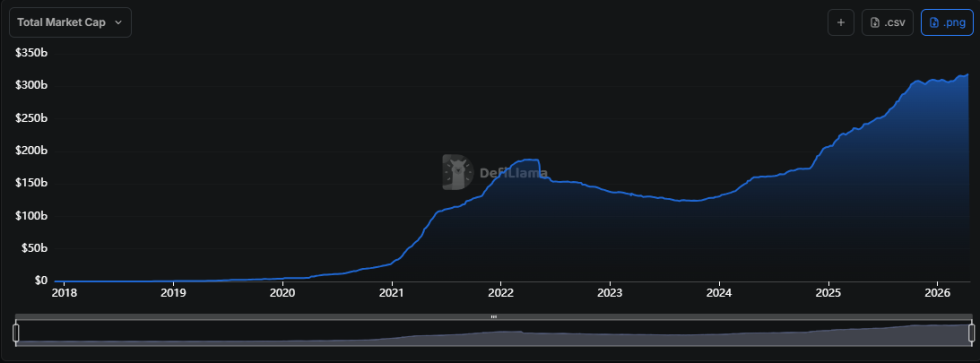
Trends in stablecoin market capitalization over the past few years | Source: Defilama
Currently, the total valuation of fiat-pegged coins is over $320 billion, an all-time high.
bitcoin price
At the time of this writing, Bitcoin is trading around $75,000, up more than 6% over the past week.
The coin’s price appears to have pulled back from Friday’s highs | Source: BTCUSDT on TradingView
Featured image from Dall-E, chart from TradingView.com

bitcoinist’s editorial process focuses on providing thoroughly researched, accurate, and unbiased content. We adhere to strict sourcing standards, and each page is carefully reviewed by our team of top technology experts and experienced editors. This process ensures the integrity, relevance, and value of your content to your readers.
