



South Korean payment giant BC Card has completed a pilot project to verify the stability and convenience of card-integrated stablecoins in cooperation with domestic and foreign digital asset companies.
BC Card completes stablecoin payment pilot project for foreigners
On Tuesday, BC Card, South Korea’s largest payment processor, announced that it has concluded a two-month pilot project that allows foreigners to use stablecoins as a payment method at domestic merchants.
The project was carried out in collaboration with blockchain finance company Wavebridge, foreign digital wallet company Aaron Group, and remittance fintech company Global Money Express.
According to BC Card, the pilot focused on “verifying whether foreign currency-based stable coins held by foreigners can be practically used in the domestic payment environment, as well as evaluating the convenience and stability of payments.”
In this project, stablecoins held by foreign users in overseas wallets with BC cards as parents were converted into digital prepaid cards that can be used at domestic merchants using QR codes, without the need for physical cards or exchange procedures.
The company used a digital prepaid card as an intermediary to integrate stablecoin payments into existing card authentication and payment structures, the statement said, adding, “This design allows both paying customers and merchants to transact in the same way as traditional card payments.”
“Stablecoins are particularly useful for cross-border payments due to their technical characteristics and have great potential to improve the domestic payment experience for foreign consumers,” said Choi Won-seok, president of BC Card.
Korean companies prepare for 2026 framework
The payments giant asserted that the pilot is not a “short-term technology validation,” but rather a “process to prepare the stablecoin payment structure for future domestic legal and regulatory changes.”
Notably, the South Korean government recently failed to submit the long-awaited second phase of the Virtual Asset User Protection Act, which would address the issuance and distribution of the Wonpeg stablecoin.
As reported by Bitcoinist, the Financial Services Commission (FSC) missed the ruling party’s December 10 deadline to submit the government’s bill to the National Policy Committee.
According to local media, the government’s bill was delayed because disagreements between the Financial Supervisory Service and the Bank of Korea (BOK) over the issuance of won-denominated stablecoins could not be resolved.
Financial authorities reportedly agree that financial institutions must be involved in token issuance, but differ on the scope of banks’ role. The central bank is pushing for domestic approval to create a consortium of banks that would own at least 51% of stablecoin issuers, but the FSC has raised concerns that giving a majority stake to banks could reduce the participation of tech companies and limit innovation in the market.
Recent reports have confirmed that the government’s proposal is expected to be announced by early next month at the latest, as the consolidation bill needs to be submitted in January 2026. “In order to protect the public’s right to know, we plan to provide a separate opportunity to explain the government’s proposal to the public when it is submitted to the Diet,” a Financial Services Agency official said last week.
Ultimately, BC Card pledged to step-by-step promote payment models that comply with domestic regulations and take the lead in building a ‘Korean-style stablecoin payment infrastructure,’ and to strengthen cooperation with related organizations while taking into consideration the flow of crypto asset legislation.
“BC Card will utilize card payment infrastructure to gradually prepare a stable stablecoin payment model that is compatible with South Korea’s legal and regulatory environment,” the company president concluded.
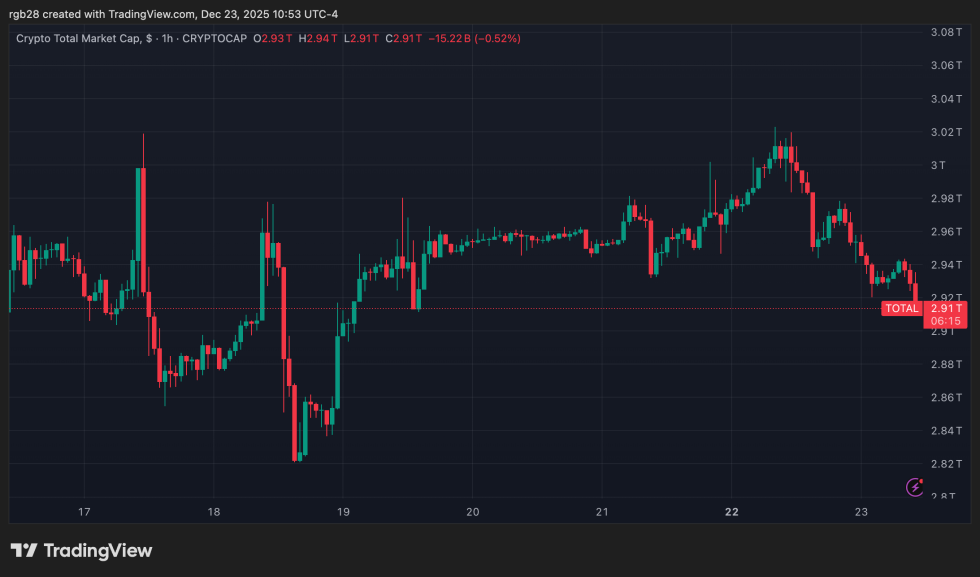
On the 1-week chart, the market capitalization of cryptocurrencies stands at $2.91 trillion. Source: TOTAL on TradingView
Featured image from Unsplash.com, chart from TradingView.com

bitcoinist’s editorial process focuses on providing thoroughly researched, accurate, and unbiased content. We adhere to strict sourcing standards, and each page is carefully reviewed by our team of top technology experts and experienced editors. This process ensures the integrity, relevance, and value of your content to your readers.
