


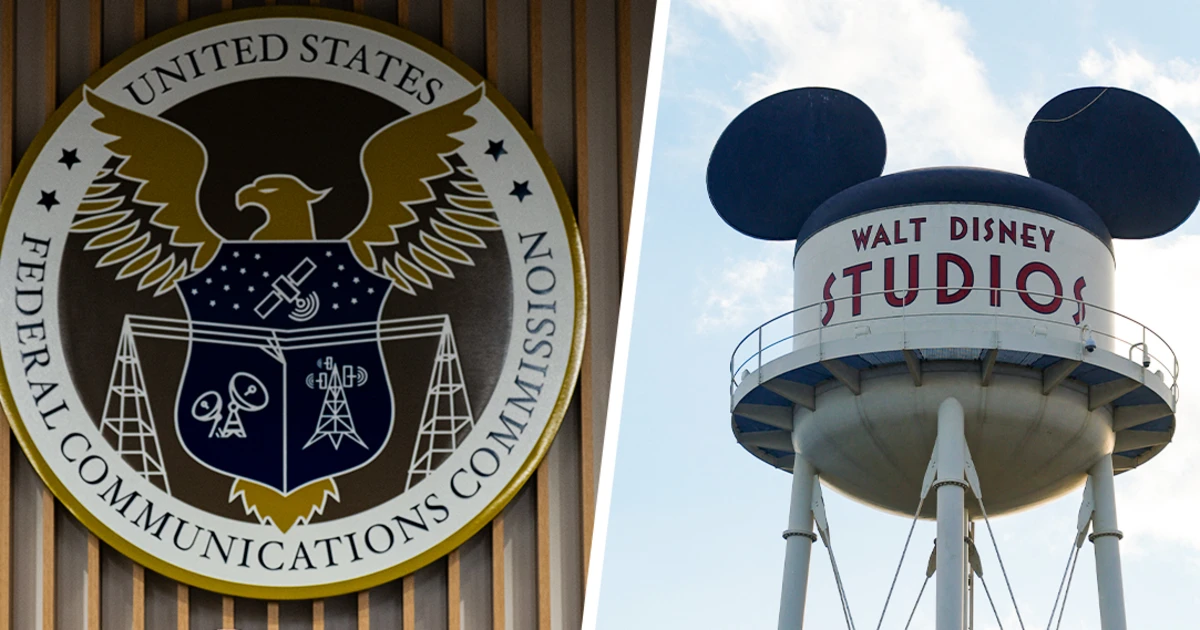
The Walt Disney Company has successfully obtained a temporary restraining order that prevents the Federal Communications Commission (FCC) from advancing an early review of ABC’s broadcast-station licenses. Disney contends that this review constitutes an infringement on free speech, stemming from actions perceived to be influenced by the Trump administration.
On October 6, U.S. District Judge Loren L. AliKhan sided with Disney during a hearing regarding the legal skirmish between the media giant and the FCC, the regulatory body overseeing broadcast licenses. Disney previously filed a lawsuit in August, asserting that the FCC’s push for an expedited review poses an “existential threat” to First Amendment rights.
During the court hearing, Disney attorney Beth Wilkinson emphasized that the FCC is attempting to “stop, censor [and] control” ABC’s content. Wilkinson described the actions taken by FCC Chairman Brendan Carr as relentless “threats and retaliation.” In contrast, FCC representatives claimed in court that the U.S. District Court lacks jurisdiction and accused Disney of sidestepping established federal regulations.
Judge AliKhan’s decision noted that Disney appears likely to prevail in its retaliation claim against the FCC. Her ruling explicitly prohibits the FCC from taking any further actions related to the early license renewal process. Additionally, the court denied the FCC’s request to dismiss Disney’s allegations against it.
AliKhan characterized the case as straightforward, highlighting that ABC stations have a significant interest in defending their free speech rights without facing retaliatory actions. In her opinion, the judge pointed out that Carr’s actions seemed aligned with President Trump’s criticisms of ABC, referencing several social media posts where Trump expressed disdain for the network. She remarked, “Starting with expressions of hostility, President Trump has set his sights on Plaintiff ABC for several years now.”
An FCC spokesperson responded to the ruling, stating that while the agency appreciates the court’s denial of part of Disney’s request for preliminary relief, they believe the court’s ruling addressing Disney’s motion is inaccurate both factually and legally. They expressed confidence in prevailing as the case moves forward, emphasizing the FCC’s obligation to ensure broadcasters adhere to public interest mandates.
Disney hailed the temporary restraining order as an “important victory for the First Amendment.” This legal battle arises from an April 28 directive by the FCC requiring Disney’s eight owned-and-operated television stations to submit their license renewals prematurely, nearly five years prior to the expected renewal date of 2028.
Chairman Carr has indicated that this early review is part of the agency’s investigation into Disney’s diversity and equity practices, which coincided with previous statements from Trump demanding ABC terminate late-night host Jimmy Kimmel following a joke he made about First Lady Melania Trump.
Judge AliKhan highlighted the timeline of events leading up to the FCC’s actions, stating, “against the backdrop of President Trump and Chairman Carr’s call-and-response, it is no coincidence that President Trump criticized Mr. Kimmel’s skit on social media and the very next day Defendants initiated the early license renewal proceedings.”
The FCC is also examining whether ABC’s show “The View” breached regulations mandating equal airtime for political candidates. Disney argues that the program qualifies as a legitimate news broadcast, exempting it from the equal-time rule.
FCC Chairman Carr, in a recent interview, dismissed Disney’s lawsuit as lacking merit, asserting it was filed inappropriately and at an ill-timed moment. Similarly, Anna Gomez, the FCC’s only Democratic member, asserted that the outcome of the court’s ruling reveals the FCC’s vulnerability when confronted with challenges to its authority. She urged other broadcasters facing similar pressures to stand firm in defense of their rights, reiterating that the First Amendment supports them.
ABC Owned Television Stations, a subsidiary of Disney Entertainment Television, operates across numerous major U.S. cities, including New York, Los Angeles, and Chicago, making the implications of this ongoing legal dispute significant for the media landscape.
