


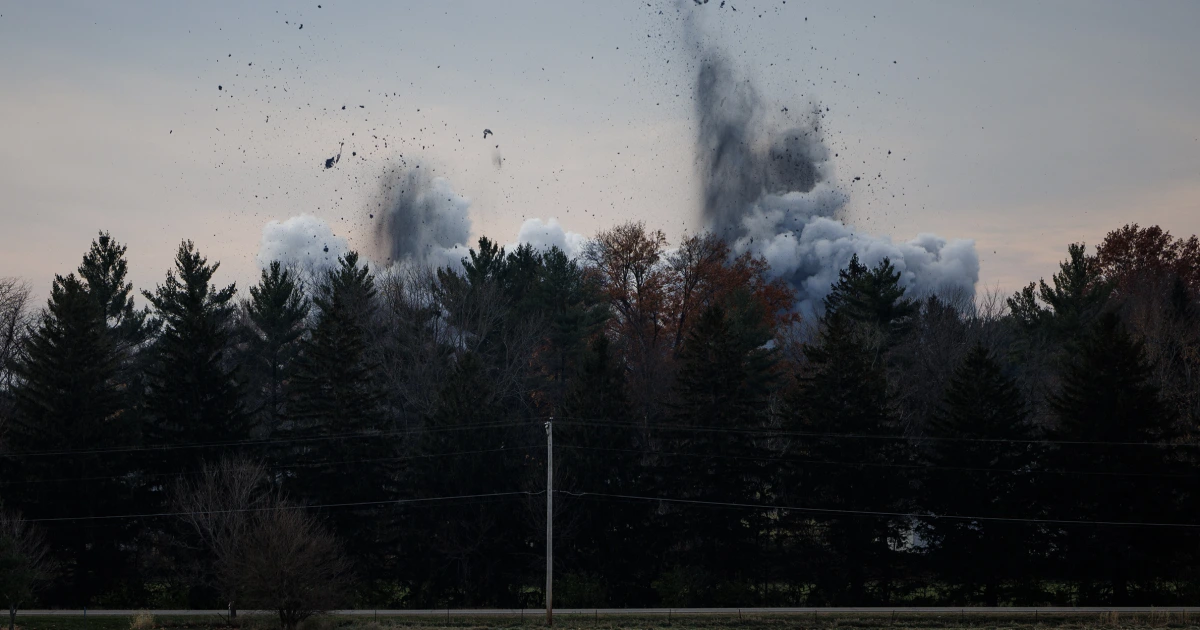
Assessing Lead Contamination After Iowa Detonation
Following a recent detonation in Iowa, concerns have arisen regarding potential lead exposure, as lead is known to be a highly toxic neurotoxin, with no safe exposure level recognized. In response, scientists from the Environmental Protection Agency (EPA) and academic institutions are mobilizing to evaluate the extent of lead dust dispersion and potential contamination across affected areas.
Current Testing Initiatives
In light of the uncertainty surrounding the risks of lead exposure, researchers have begun collecting environmental samples. Dr. Joel Kaufman, a specialist in air pollution from the University of Washington, indicates that while real-time air monitoring from the EPA is encouraging, it is essential that these initial findings are corroborated by thorough laboratory analysis of the dust samples collected.
“This is a reasonable way to test for real-time lead in the environment,” Kaufman stated, emphasizing the necessity for diverse geographic sample collection to ascertain any risks accurately.
Importance of Sample Analysis
Echoing Kaufman’s sentiments, Andrew Whelton, a civil and environmental engineering professor at Purdue University, noted the critical need for rigorous physical sampling and chemical analysis to determine lead levels accurately. “You have to collect particles that deposit and send them to a lab for chemical analysis,” Whelton explained.
As of Wednesday, the EPA reported having deployed 300 personnel to Iowa, where they previously collected 1,200 samples of air, soil, and water prior to the detonation. The agency assured the public, via social media platform X, that they are prioritizing the analysis of samples collected post-detonation.
Community Reactions
Residents in nearby Burlington are wary but hopeful. One local resident, Garrett Anthony, who evacuated his home approximately 7 miles from the explosion site, expressed cautious optimism about the monitoring results indicating no lead presence in the air. He stated, “I’m really thrilled to see that the live monitoring by the EPA is showing zero lead in the air, but the ground testing is still very, very important to me, and I want to see what happens next.” He even preserved soil samples prior to the detonation for potential testing.
Operational Transparency and Future Steps
In a letter addressed to Iowa’s governor, Jim Macy, an EPA regional administrator, highlighted the requirements set for the Army regarding communication of plume estimations following the detonation. Although the Army released air dispersal maps indicating no lead detection, the lack of immediate details raised concerns about operational transparency.
The EPA expects initial results from dust samples to emerge in the days following the detonation; however, a comprehensive review of all data will take longer to complete. Additionally, both the Army and EPA are tasked with identifying potentially affected water bodies and will engage with public water systems to ensure thorough lead assessments and provide necessary tools for safe drinking water.
Experts Call for Proactive Measures
In the lead-up to the detonation, Whelton criticized the lack of public information regarding the lead testing strategy. He pointed out that the permit documents submitted by the Army did not adequately outline an evidence-based process to ensure the safety of residences, educational institutions, and businesses in the area.
As the situation develops, the priority remains firmly on accurate sampling and prompt analysis to safeguard public health and environmental safety.
