


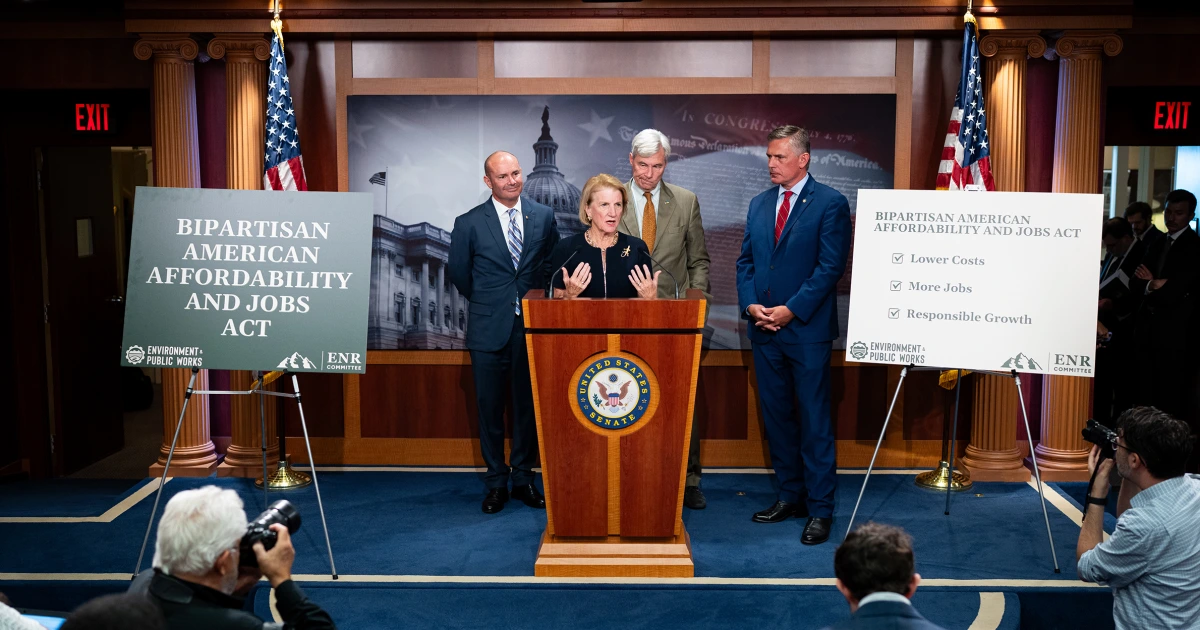
On Thursday evening, the Senate passed a significant piece of legislation, the Bipartisan American Affordability and Jobs Act, with a vote tally of 62 to 33. This bill aims to overhaul and simplify the permitting processes for energy and infrastructure projects across the nation.
A unique bipartisan coalition spearheaded the initiative, bringing together Senators Shelley Moore Capito (R-W.Va.), Sheldon Whitehouse (D-R.I.), Mike Lee (R-Utah), and Martin Heinrich (D-N.M.).
The key provisions of the bill include:
- Revised environmental reviews with stricter deadlines
- Acceleration of electricity transmission processes
- Restrictions on federal agencies’ ability to revoke current permits
- Reduction of bottlenecks related to the approval and completion of projects
Proponents argue that the bill represents a necessary step toward diminishing bureaucratic hurdles. Capito remarked, “For far too long, critical investments in our nation’s infrastructure, energy production, and economy have been forced to sit on the sidelines due to endless red tape, duplicative reviews, and regulatory uncertainty.”
From a progressive perspective, the legislation offers an avenue to facilitate long-awaited projects aimed at clean energy while also addressing rising costs. Whitehouse emphasized the urgency of the bill, stating, “Democrats are focused on lowering energy costs, reducing emissions, and stopping data centers’ free ride.” He indicated that American consumers could see relief swiftly if the bill progresses.
To address concerns surrounding data centers, the legislation stipulates that new data centers of 20 megawatts or more must cover the full incremental costs of the infrastructure they require.
Despite these advancements, the bill has drawn criticism from certain environmental organizations and Native American tribal groups. Their objections center around the easing of review and consultation processes that may affect their ability to safeguard their interests, with most Senate opposition arising from the Democratic side.
This legislative shift suggests a broader recognition among Democrats that existing permitting laws hinder their objectives, particularly regarding climate initiatives. Adam Jentleson, a key figure with experience in Senate operations, stated, “This removes a lot of the obstacles that hamstrung [Joe] Biden’s climate investments.” He noted that several projects related to the Inflation Reduction Act had stalled due to complicated regulatory frameworks.
Moving forward, the bill still requires House approval. Majority Leader Steve Scalise (R-La.) expressed optimism about Congress passing a version of the bill, indicating a desire for consensus on details. “Well, we want to see a bill pass both chambers,” he said, emphasizing the importance of achieving bipartisan support.
Senate Majority Leader John Thune (R-S.D.) reiterated that the House’s passage of the Senate’s version would likely be the most straightforward route to enactment, given its extensive deliberation thus far. “It has been litigated now for months. Continues to be,” Thune noted, highlighting the complexity of the legislative process ahead.
