


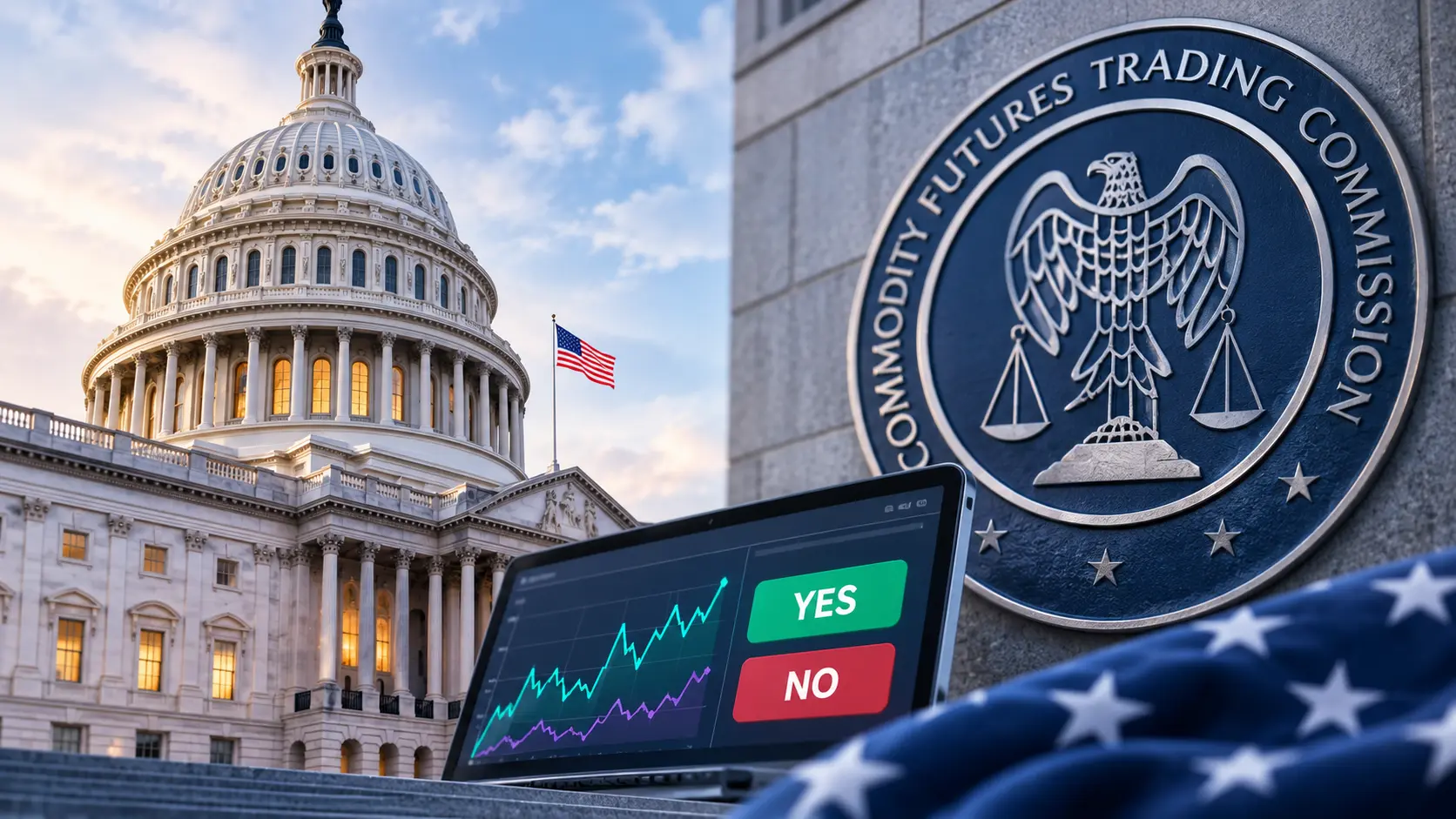
Senate Democrats are urging the Commodity Futures Trading Commission (CFTC) to withdraw its recent directive related to prediction markets. They assert that this directive compels market platforms to disregard existing state gambling laws and court rulings.
The contention arises from the CFTC’s interpretation issued on November 5, which requires designated contract markets to eliminate geographical limitations within thirty days. This ruling could obligate platforms such as Karshi and Polymarket to offer certain event contracts nationwide, even in areas where judicial orders restrict access.
Senate Democrats Demand CFTC Reversal on Geofencing Requirements
A letter spearheaded by California Senator Adam Schiff was co-signed by eight other Democratic senators, including high-profile names such as Amy Klobuchar and Maria Cantwell. The senators argue that the CFTC’s interpretation disregards state and tribal laws, compelling prediction market operators to overlook geographical restrictions set by courts in various states.
Specific cases in California, Michigan, Nevada, and Washington have exemplified this issue, where courts have prohibited these platforms from offering certain prediction contracts, thereby establishing geographic restrictions.
The lawmakers argue that the agency’s instructions clash with reported court rulings, suggesting that companies might be incentivized to present offerings that have been deemed illegal under specific gambling regulations.
The senators have requested that the CFTC either revoke this directive or halt its enforcement until the ongoing legal issues are resolved.
CFTC Defends its National Framework for Prediction Markets
Chairman Mike Selig of the CFTC has defended the agency’s stance, supporting a unified national framework for federally regulated prediction markets. He contends that platforms recognized as designated contract markets should be governed by federal derivatives law, which supersedes state-level regulations treating event contracts as gambling.
The November 5 directive specifically outlined that exchanges must remove location-based restrictions, interpreting such limitations as violations of federal fair access rules, with a compliance deadline of thirty days.
However, the Senate’s inquiry challenges this interpretation, emphasizing that registering a platform at the federal level does not inherently nullify state and tribal gambling laws. The senators cited decisions from the Sixth and Ninth Circuit Courts of Appeals, which affirmed states’ rights to enforce gambling regulations over prediction market activities.
Growing Legal Challenges for Prediction Markets in States
The regulatory challenges are escalating, notably as Louisiana has initiated litigation against a prediction market operator. Recently, a judge sanctioned measures that could impose restrictions on particular event contracts. The state’s Gaming Control Board previously argued that certain contracts, particularly those related to sports, classify as illegal gambling.
This temporary restraining order could impact several entities, including Karshi, Polymarket, Robinhood, Coinbase, Gemini, and Crypto.com. In response, the CFTC has filed lawsuits contesting state regulations, with some companies looking to partner with the federal regulator in its legal efforts.
The agency is currently facing legal disputes with roughly a dozen states, underscoring the contentious nature of prediction market regulation.
Implications for Future Regulatory Clarity
The involvement of the Senate arrives at a crucial juncture for the CFTC as it navigates challenges to its jurisdiction over prediction markets.
At present, the CFTC is authorized by a five-member commission, but only Chairman Selig is currently serving. The White House has nominated two additional candidates, Nathan Anonic and Matthew Rowland, to fill the vacancies.
As the resolution of conflicting court rulings may ultimately ascend to the U.S. Supreme Court, the clarity on regulatory frameworks for prediction markets remains ambiguous. Until definitively addressed, operators of these platforms may continue to grapple with the complexities of compliance under both federal and state laws, impacting their expansion into the mainstream financial market.
The evolving legal landscape raises critical questions: Should the CFTC hold exclusive authority over prediction markets, or should states retain the power to enforce restrictions? As legal disputes proliferate, what ramifications will there be for platforms like Calci and Polymarket seeking to navigate these turbulent waters?

Bitcoinist’s editorial process emphasizes the importance of thoroughly researched, accurate content. Adhering to strict sourcing standards, each article is meticulously reviewed by a team of technology experts and seasoned editors to ensure the integrity and relevance of the information provided.
