


A recent report from the Bureau of Labor Statistics has indicated a higher-than-anticipated rise in the costs of goods and services for October, offering new challenges for the Federal Reserve as it continues to tackle inflation. The consumer price index (CPI), a key indicator of inflation, showed a seasonally adjusted increase of 0.4% for the month. This surpasses the expectations set by economists surveyed by Dow Jones, who had predicted a rise of only 0.3%.
When excluding the more volatile food and energy sectors, the core CPI grew by 0.3%, exceeding the forecast for a 0.2% rise. The CPI had seen a sharper increase of 0.6% in September, while the core measure remained steady with a 0.3% gain.
This data arrives at a crucial moment for the Federal Reserve, which is deliberating its upcoming interest rate strategy. In remarks made on Tuesday in London, Fed Governor Christopher Waller noted that a robust inflation report could lead him to support a half-point rate increase at the Fed’s December meeting, specifically if the core CPI registered around 0.3%. Following the release of the CPI data, market traders adjusted their expectations, now fully anticipating a quarter-point rise in the benchmark interest rate during the Fed’s meeting slated for December 8-9, with the likelihood of a half-point increase estimated at 13.6%—a significant uptick from near zero before the report.
The market reacted negatively to the news, with stock prices declining and Treasury yields rising. According to Karen Manna, a fixed income investment strategist at Federated Hermes, “This was the report the market could least afford to see.” Manna expressed concern that stronger inflation figures could indicate insufficient measures taken by the Fed to mitigate price surges, thereby increasing the risk of prolonged higher interest rates.
Sector-Specific Inflation Dynamics
Notably, the BLS was unable to provide an annual inflation rate for October’s report, as a government shutdown last year affected data collection. Nevertheless, it did present annual figures for select items where data was available. For example, despite recent decreases in gasoline prices, the energy index climbed by 0.7%, with gasoline prices themselves increasing by 1%. Conversely, the natural gas index fell by 0.8%.
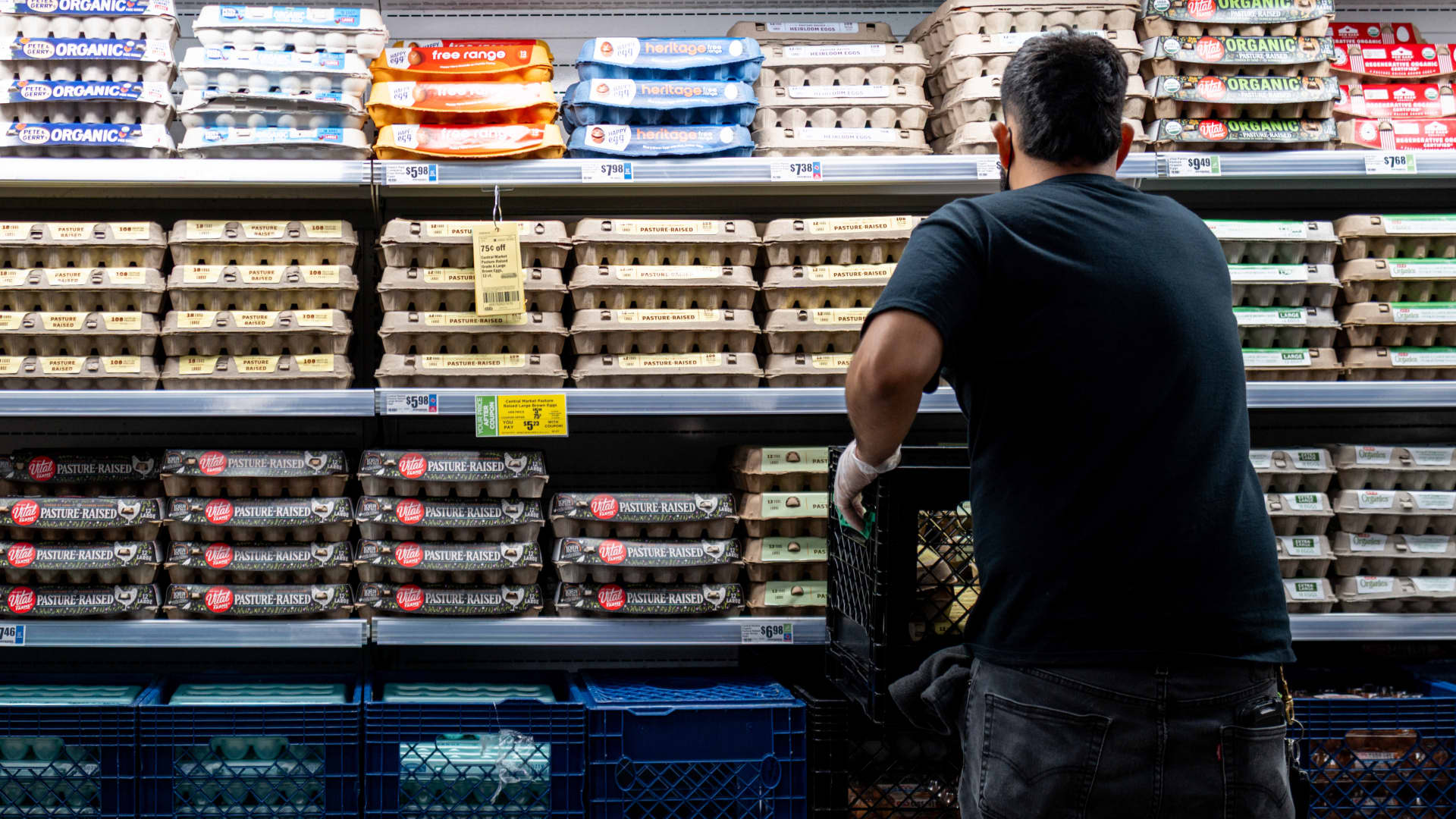
Food prices also showed a significant increase, up by 0.5%, driven by a 1% rise in snack prices and a 0.9% increase in beef prices. Transportation services rose by 0.8%, and while new vehicle prices saw a slight increase of 0.2%, used car and truck prices declined by 1.2%.
Shelter costs rose by 0.3%, contributing over 30% of the overall increase in the CPI. Other sectors included minor adjustments in retail, with apparel prices edging up by 0.1% and medical care prices climbing by 0.5%, while airline fares experienced a 0.4% boost.
The Fed’s Response and Future Outlook
During the Fed’s October meeting, members voted 10-2 to maintain the benchmark interest rate between 3.75% and 4% as they monitored forthcoming data. While market predictions had already leaned toward a rate hike, the recent inflation figures may solidify this expectation further.
Despite a recent moderation in gas prices, officials at the Fed remain wary. They have suggested that factors such as geopolitical tensions from the Iran conflict and ongoing tariffs from former President Donald Trump’s administration may be firmly embedding inflationary pressures within the economy. Inflation has remained consistently above the Fed’s target of 2% for approximately 5½ years.
Dallas Fed President Lorie Logan, addressing the inflation report, indicated the potential necessity for two additional quarter-point interest rate increases. Logan highlighted the unexpectedly high CPI and expressed concern that the Fed’s crucial inflation forecast, the personal consumption expenditures price index, might also escalate when reported later in November. She stated, “It may be possible to move more rapidly this winter than the [Federal Open Market Committee] has moved so far this fall,” referring to upcoming adjustments in monetary policy.
Moreover, inflation has been affected by ongoing investment in AI technologies, further complicating pricing dynamics; for instance, electricity prices increased by 0.9% amidst this context. In terms of consumer behavior, retail sales showed a robust increase of 0.8% in September. Additionally, a recent survey by the National Federation of Independent Business revealed that 37% of business respondents expressed intentions to raise prices in the coming months, marking the highest level since July 2022.
