


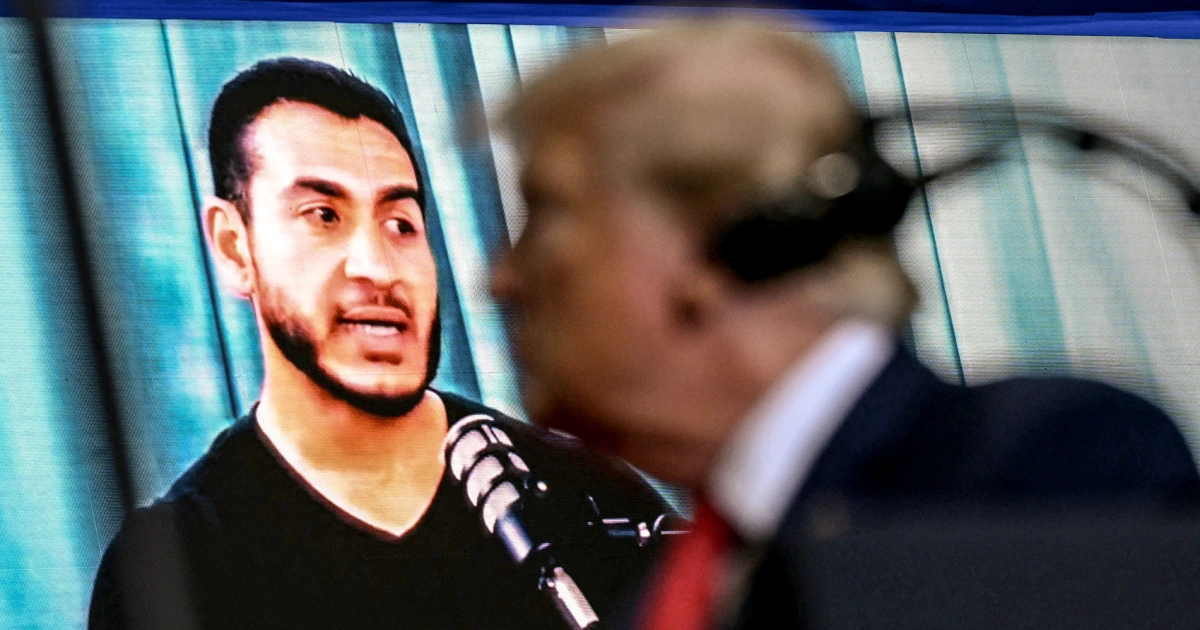
During a rally in Port Huron, Michigan, former President Donald Trump engaged in controversial rhetoric, describing the Democratic Senate nominee Abdul El-Sayed in terms that many have deemed Islamophobic. This gathering aimed to bolster support for the state’s Republican candidates, including the GOP Senate nominee and former Congressman Mike Rogers.
Trump’s remarks included labeling El-Sayed a “jihadist” and claimed that he had connections to the Muslim Brotherhood, a report he supported without providing any substantial evidence. In contrast, he presented Rogers, who is running against El-Sayed, as a quintessentially American figure, suggesting he represents ideals akin to “apple pie.”
“Anyone with that record of support for jihadists would be screened and unable to get a seat on an airplane,” Trump stated regarding El-Sayed, questioning his appropriateness for a Senate seat. “He would be the only senator that will have to go through a metal detector before he’s allowed to go into the Senate. I want him to have a metal detector,” he added, further emphasizing his claims.
Making a stark comparison between the current political climate and the September 11 attacks, Trump invoked the memory of David Beamer, whose late son Todd Beamer was a passenger on United Flight 93. “Twenty-five years later, Michigan needs to stand up and fight just like Todd did to stop a jihadist from walking into the Capitol,” Trump asserted.
Beamer amplified this rhetoric by lamenting, “What has changed? Well, one thing is 9/11 was a surprise attack. What’s going on right now in our country and here in Michigan? It’s not a surprise. We can see the attack coming.” He further claimed that the true enemy is not external but rather “local terrorists, local citizens that want to demolish our country.”
His comments included a pointed critique of El-Sayed’s American identity. “Abdul has a birth certificate,” he noted, “but a birth certificate doesn’t make you an American.” This attack on El-Sayed’s character drew upon the theme of loyalty and Americanism.
Beneath the surface of these allegations lies a historical context: both candidates were born in Michigan. El-Sayed’s campaign did not respond immediately to Trump and Beamer’s statements.
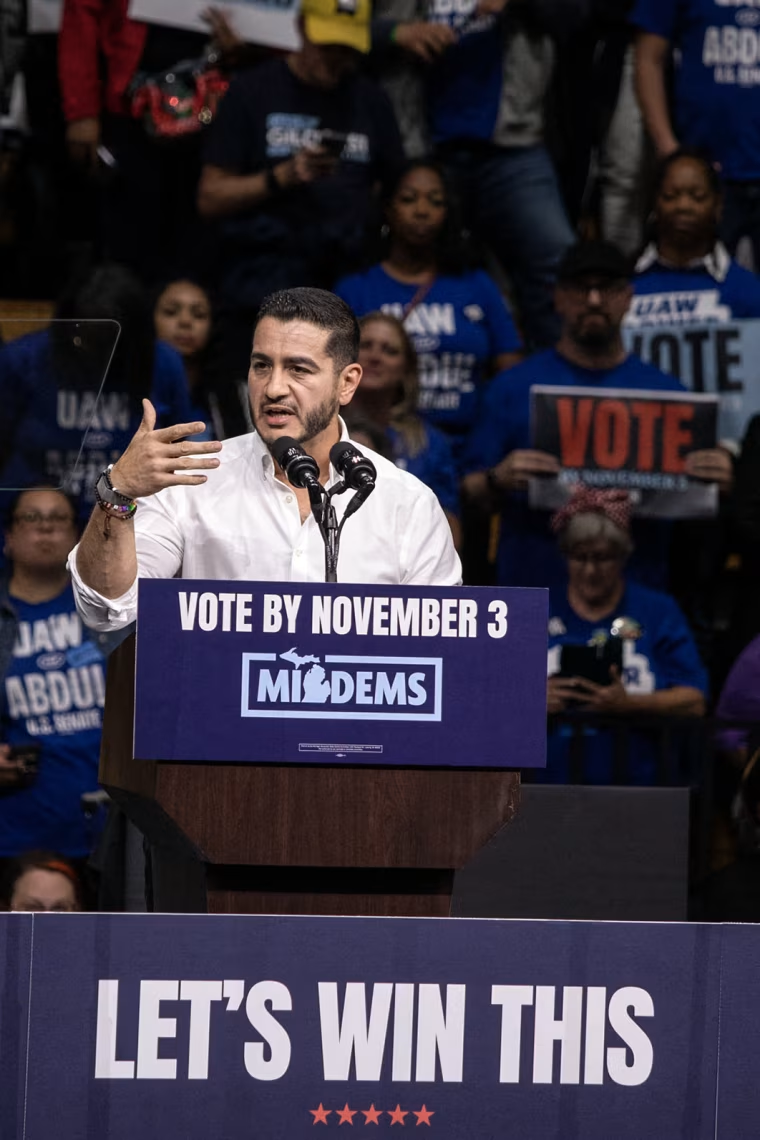
El-Sayed recently gained attention after a heated interaction with a town hall attendee, where he firmly defended his allegiance to the Constitution, stating, “You assume … that because I am Muslim that somehow I would have some allegiance to something that is not our Constitution.” El-Sayed has consistently denied alleged affiliations with the Muslim Brotherhood, which has faced scrutiny in the U.S., particularly during Trump’s presidency.
When questioned about Trump’s claims during an interview on NBC’s “Meet the Press,” Rogers maintained that the election should focus on his candidacy versus El-Sayed’s, emphasizing, “I’ve never called him a terrorist.” However, he has previously raised issues regarding El-Sayed’s mother’s past affiliations with a charity later linked to terrorist organizations.
Trump has a history of promoting unfounded conspiracy theories, such as claims regarding former President Barack Obama’s birth certificate, which he has used against political opponents including El-Sayed. During the rally, Trump referenced Obama, who had campaigned for El-Sayed the previous day, remarking, “My competitor was here yesterday … He didn’t have a crowd like this, I can tell you.”
This rally marked a significant moment in the Michigan senatorial race, highlighting the polarized atmosphere as candidates gear up for the upcoming election.
