


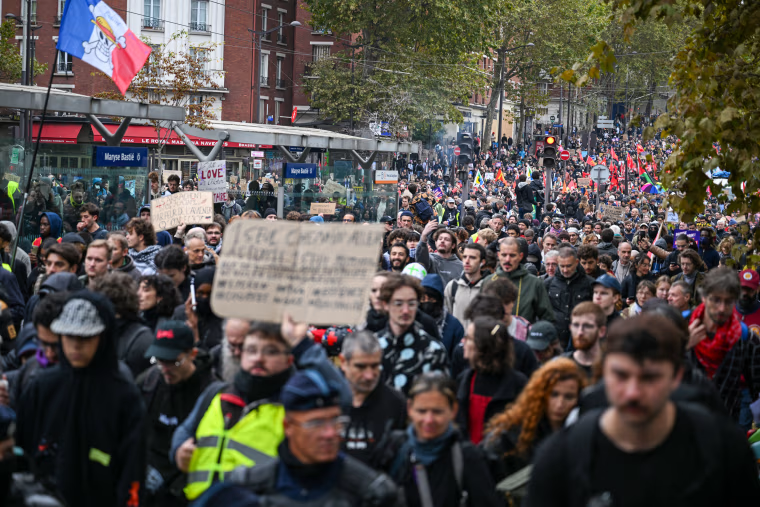
PARIS — A significant mobilization occurred this past Saturday in Paris and numerous other cities across France, as thousands of students and workers took to the streets to protest against inadequate school funding and rising living costs.
In Lyon, police enforced a ban on the rally, deploying tear gas to disperse crowds early in the day. Reports indicated that officers in Clermont-Ferrand also resorted to tear gas and stun grenades to control protesters attempting to access the city center.
Authorities restricted the Paris demonstration primarily to the southeastern outskirts of the city, steering the gathering away from central areas. A turnout of several thousand participants marched from Porte d’Italie in the afternoon, marking a decrease compared to the size of the protest the previous week. Leading the march were trade unions, accompanied by demonstrators donned in raincoats, wielding flags and handcrafted placards.
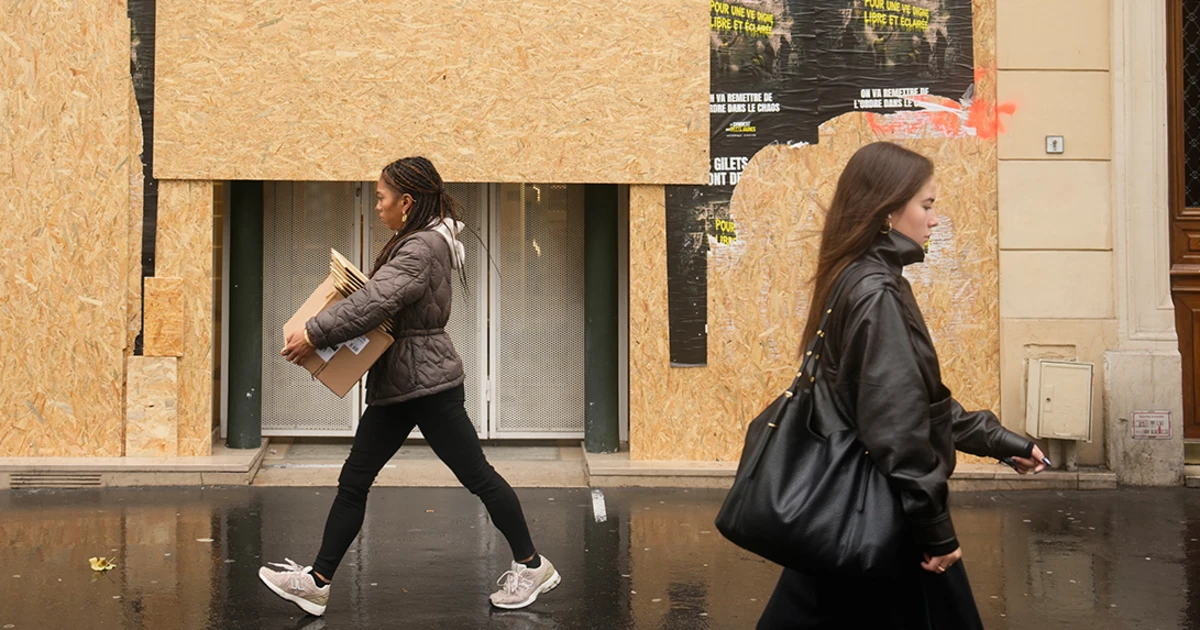
Efforts by the government aimed at curtailing potential disruptions followed incidents of looting, vehicle fires, and vandalism during prior demonstrations. Interior Minister Laurent Nuñez announced that up to 70,000 police officers would be deployed nationwide, supported by helicopters, armored vehicles, and water cannons.
Simultaneously, a peaceful protest against the far-right took place in Orléans, located south of Paris, coinciding with a two-day congress hosted by Marine Le Pen’s National Rally party.
A National Movement Emerges
Initially sparked by concerns over staffing shortages at a high school southeast of Paris, the demonstration has transformed into a broader national movement advocating for improved education and living conditions. Students are calling for better educational resources, while workers are demanding increased salaries and pensions, reflecting widespread dissatisfaction with living standards as President Emmanuel Macron’s term nears its end.
According to the national statistics agency, INSEE, energy prices surged by 21.3% in September compared to the previous year, contributing to an overall inflation rate of 3.1%. Following a meeting with high school representatives, President Macron pledged to reform university admissions; however, they urged that protests should persist until definitive actions are taken.
Last week, over half a million people participated in demonstrations across France, during which approximately 3,000 shops were either damaged or looted.
Business Precautions and Closures
In anticipation of potential unrest, businesses across Paris prepped by boarding up their storefronts. At the Saint-Lazare train station, Akram Ahmed, a 34-year-old contractor, mentioned, “I got the call last night. The owner seemed desperate. He said I was saving his life.”
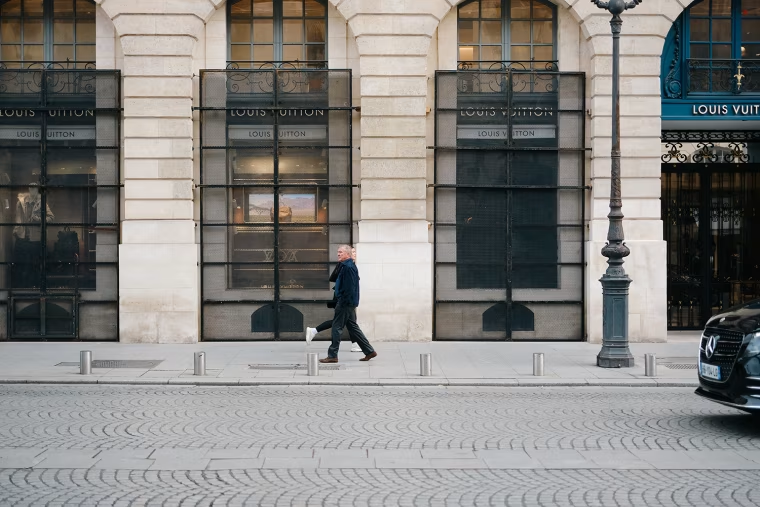
Major cultural institutions, such as the Louvre and the Orsay Museum, opted to close their doors for public safety due to the anticipated protests. While Art Basel, a well-regarded contemporary art fair, opened to the public on Friday, organizers canceled its weekend programming amidst concerns of rising tensions.
Policing and Restrictions on Protests
Changes were made to the protest route in Paris, with the planned march from Bastille to Nation being altered to proceed between Porte d’Italie and Porte de Vincennes. Police communicated via megaphones at the original starting point, demanding dispersal or risk incurring a fine of €135 ($150).
Soumaya Abed, a 58-year-old nurse participating in the demonstration, remarked, “They are using what happened last week as an excuse to quiet protesters. But it won’t stop the movement. It won’t stop students from demanding better conditions in schools.”
While demonstrations in Paris and Marseille are set to continue, local authorities have prohibited others in cities like Lyon, Nice, and Montpellier.
Trade unions criticized the bans as infringements on constitutional rights to free expression. Macron’s administration now faces significant challenges in addressing the crisis, having seen his approval ratings plummet to the lowest since taking office in 2017. He contended that these measures are crucial for safeguarding urban centers, businesses, and public properties.
Nuñez acknowledged the police’s loss of control in various cities during the previous weekend’s disturbances, offering his resignation, which Macron ultimately refused.
Demands from Students and Workers
Student organizations are advocating for an increase of 250,000 places in higher education and a halt to the use of the national admissions system, Parcoursup, for selection. Their ten-point proposal also emphasizes the need for hiring more teachers and repairing existing school and university facilities.
Statistics from the Education Ministry show that public middle and high schools in France lost 15.4 million teaching hours during the 2024-25 school year due to unfilled teacher absences, translating to 7.5% of scheduled instructional time.
Additionally, students are seeking assistance with rising living costs, requesting an increase of €200 per month in student grants and a freeze on rent in public student housing.
Victoria Ambrosini, an art critic and educator at Saint-Denis University, poignantly stated, “The money is now concentrated in the hands of very few people.”
