


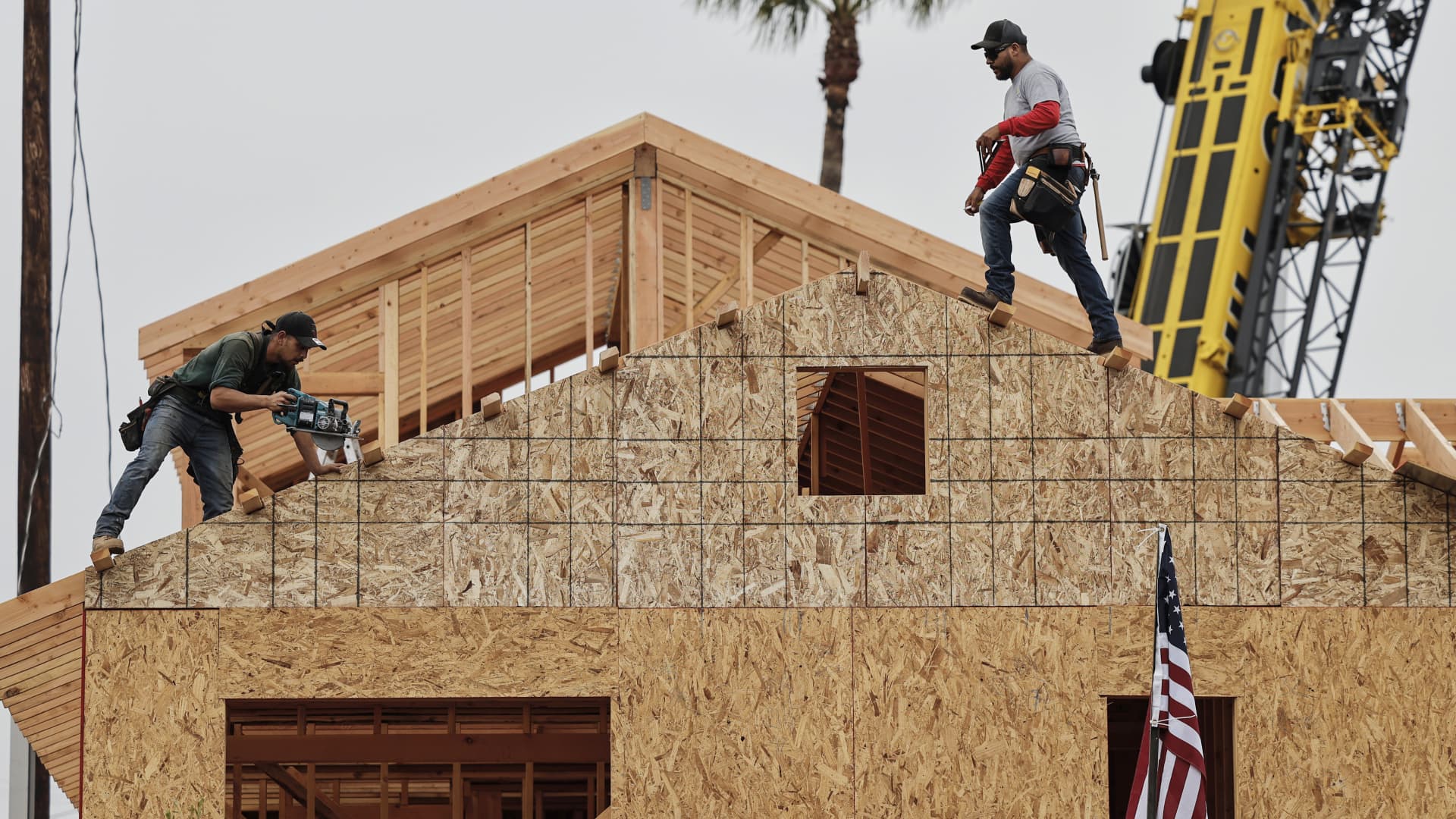
The housing market in the United States is facing significant challenges, complicating the Federal Reserve’s ongoing efforts to combat inflation. Recent data from September indicates a substantial decline in housing activity, raising concerns for both potential homebuyers and policymakers.
Current Housing Market Trends
In a report by the National Association of Realtors (NAR), pending home sales—a critical forward-looking indicator—experienced a dramatic drop of 7.3% in September, marking the lowest point since record-keeping began in 2001. This decline is compounded by a year-over-year decrease of 11.3%, significantly overshadowing Wall Street’s expectations of a mere 0.4% drop.
Additionally, housing starts, which signify new residential construction projects, fell 5.2% at a seasonally adjusted annual rate, diverging sharply from forecasts that anticipated only a 0.4% decline. A corresponding decrease in building permits was also reported, which declined by 0.2% against expectations for a 2% increase, indicating a slowdown in future construction activities.
Impact of Rising Mortgage Rates
As mortgage rates soar, currently at around 7.43%, affordability for homebuyers is further constrained. The implications of an anticipated Federal Reserve rate hike in the near future could exacerbate these challenges. According to Chris Rupkey, chief economist at Fwdbonds, “The housing market is about to go into a deep sleep unless Washington can do a 180 on its policies and make the cost of a new home more affordable.” He warned that while it’s not winter yet, the housing sector is on a trajectory toward a deep freeze.
Broader Economic Context
Despite positive indicators such as job growth and wage increases that could support home purchases, the prevailing inflationary environment heavily influences housing affordability. Lawrence Yun, chief economist for the NAR, noted that “market conditions weakened in September due to fast-rising mortgage rates,” emphasizing the disproportionate effect of these rates on housing dynamics.
Future Outlook for the Housing Market
The 30-year fixed mortgage rate was above 7% for the majority of September, finishing close to 7.6%. Five years prior, rates were around 3%, which contributed to a significant surge in demand and prices during the pandemic. Given the current trends, conditions are expected to deteriorate further before they stabilize. Ronnie Walker, an economist at Goldman Sachs, predicted a continued decline in residential investment over the next few quarters, indicating that affordability woes will likely dominate housing turnover moving forward.
Long-term Projections
Goldman Sachs has forecasted a drop in residential investment by 2.5%, 4%, and 1% over the next three quarters, depending on the trajectory of mortgage rates. The firm estimates that single-family housing starts could reach only 875,000 in 2027, reflecting stagnation in housing activity as homeowners opt to stay put rather than risk higher borrowing costs.
As markets anticipate the Federal Reserve’s next interest rate decisions, current sentiment points toward a potential quarter-point increase by December, followed by another in March 2027. However, optimistic signals from economists like Yun suggest that mortgage rates may have peaked, indicating a possible stabilization in housing activity as buyers and sellers await more favorable conditions.
Conclusion
The intersection of rising mortgage rates, diminished housing activity, and broader inflationary pressures creates a complex landscape for the housing market. With many homeowners locked into lower rates, movement within the housing sector may remain limited until more attractive borrowing conditions arise.
