


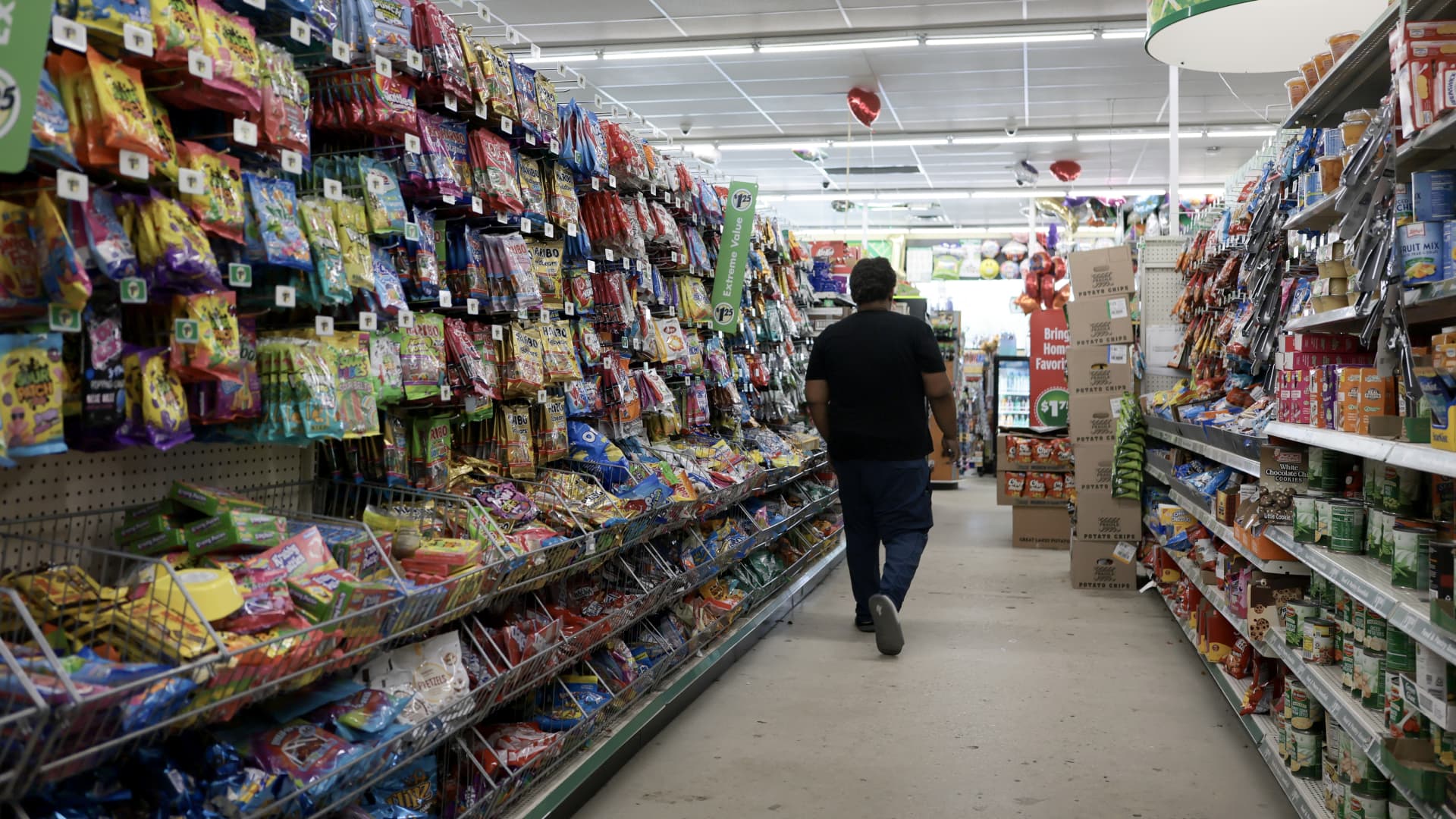
Bags of candy are prominently displayed on store shelves in Miami, Florida, April 21, 2026. The sight reflects consumer habits amid ongoing economic challenges.
Photo by Joe Raedle | Getty Images
U.S. consumers are currently experiencing a prolonged period of elevated inflation, one of the most persistent in the last century. Recent data suggests that many are beginning to accept this high inflation as a new norm, raising concerns for policymakers at the Federal Reserve.
The latest release of the consumer price index shows a year-over-year increase of 3.7% for September. This marks approximately 65 months, or over five years, of consistent annual CPI readings exceeding the 2% target threshold widely considered acceptable for U.S. inflation.
Current Inflation Trends
This enduring inflationary period is among the most stubborn in modern U.S. history. According to an analysis by CNBC leveraging Bureau of Labor Statistics data, the continuous series of monthly CPI readings above 2% indicates a concern that has only been matched twice since the late 1940s.
Since inflation began surpassing 2% in early 2021, the average CPI has hovered around 4.5%. The last period with such sustained high average readings ended in the 1980s.
The public’s outlook on inflation is also becoming less optimistic. The one-year inflation forecast has risen by three-tenths of a percentage point to a notable 3.9%, which represents the highest expectation in over three years, as reported in the New York Fed’s latest Survey of Consumer Expectations.
Consumer Reactions to Inflation
Central bankers are increasingly worried that both businesses and consumers are adapting their behaviors to cope with enduring high prices, potentially creating a cycle that sustains inflation. With businesses anticipating rising costs, they may preemptively increase prices. Simultaneously, employees may demand higher wages to keep pace with inflation.
Such behaviors can solidify inflation as a persistent reality, making monetary policies less effective in curbing price increases. “Inflation expectations have to be anchored for monetary policy to affect the economy in an effective and predictable manner,” stated Gary Richardson, an economist and former Fed historian.
Federal Reserve officials are intently observing consumer behaviors in this context. Remarks from Minneapolis Fed President Neel Kashkari at a recent event underscored the sentiment that inflation is perceived as more detrimental than a recession by some community members, influencing the Fed’s decision-making landscape.
Long-Term Perspectives and Fiscal Responses
In discussions, Cleveland Fed President Beth Hammack expressed vigilance regarding long-term inflation expectations, emphasizing that ongoing high inflation could cultivate an “inflationary mindset,” potentially harming future economic stability.
Economists anticipate interest rate increases as the primary method for curbing demand and alleviating price pressures. Following a rate hike in September, market observers expect further adjustments in December and into 2027.
While long-term rate increases may stabilize inflation, immediate ramifications may place additional financial burdens on consumers as borrowing costs rise. As KPMG’s chief economist Diane Swonk noted, “Inflation is like a cancer, and if you let it metastasize and go further, it’s even worse.” The need for action remains urgent, even when it inflicts short-term pain.
Consumer Sentiment and Behavior
In the Cleveland district, Hammack shared insights that residents appear to be making significant choices—prioritizing expenses in light of rising costs. Many now find themselves deciding between paying for essentials like groceries or covering bills.
The financial strain from prolonged inflation has dampened Americans’ economic confidence, culminating in a record low in the University of Michigan’s consumer sentiment survey earlier this year. The survey found that over 50% of respondents cited high prices as a primary factor affecting their financial situation, a first in the survey’s history.
Persistent high prices dominate the public consciousness, with Joanne Hsu, the director of Michigan’s survey, stating, “They still consider it an unacceptable fact of life.”
Compared to Democrats, Republican and independent voters have reported a sharper decline in consumer sentiment this year. As voters grow increasingly frustrated with rising living costs, there is speculation that this discontent may influence the outcomes of the upcoming midterm elections. With inflation projected to remain elevated, economists caution against expectations for significant price decreases, warning that a deflationary period could spiral the economy downward further.
Analysts suggest that consumers can hope for inflation to moderate to below wage growth levels over a sustained period, which could enhance purchasing power and assist households in adapting to current pricing pressures.
For instance, Olena Nicks, a local lawmaker in Long Island, New York, noted her personal adjustments in response to inflated grocery prices and rising travel costs. To manage her budget, she has reduced dining out and chosen less expensive leisure options. “Frustrated is an understatement,” Nicks remarked. “It feels like you’re stuck.”
