


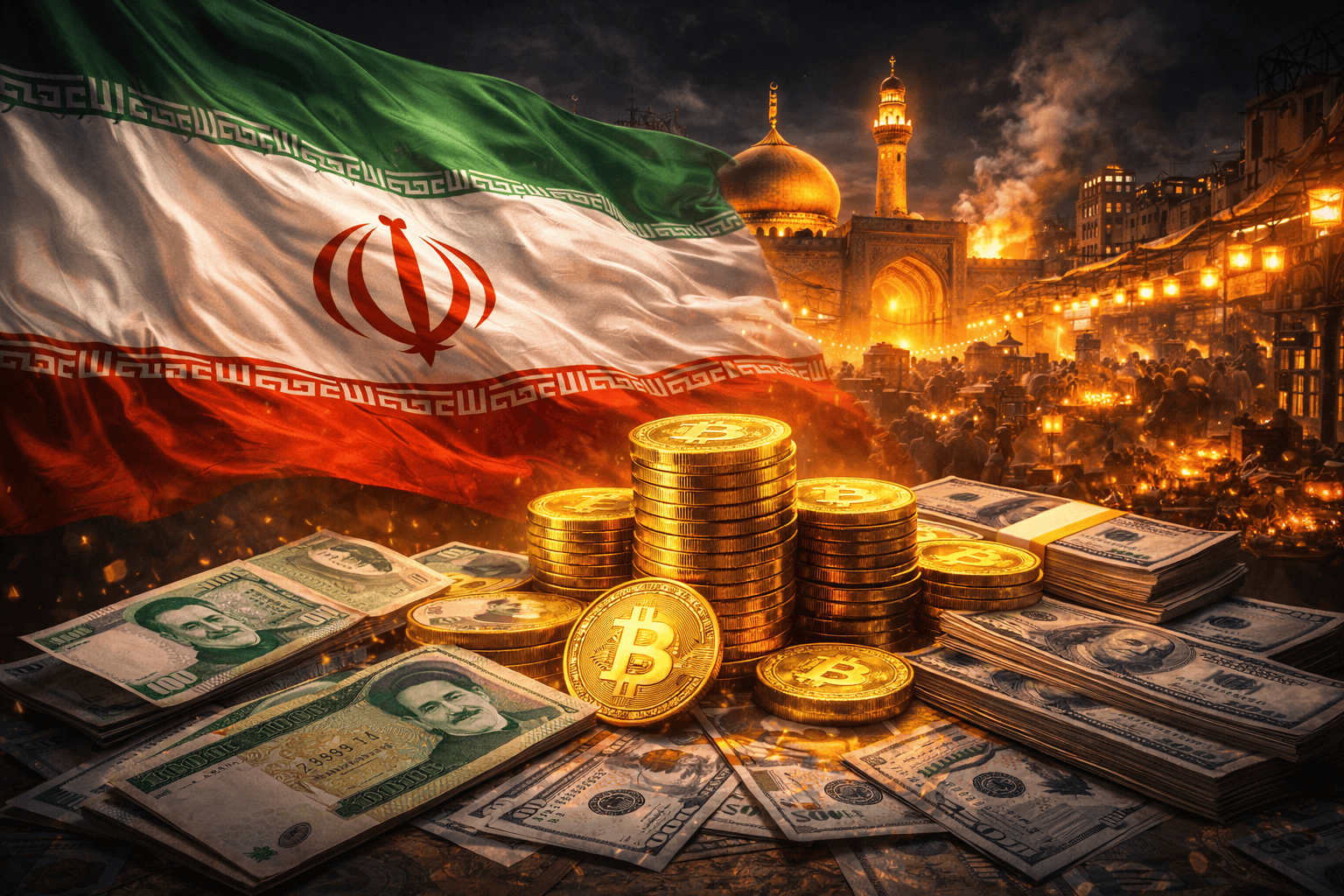
Iran’s economy remains strained under harsh sanctions, high inflation, and a weak currency, with many citizens turning to cryptocurrencies as an alternative financial lifeline.
Related books
Recent blockchain data shows a surge in Bitcoin withdrawals and transfers to personal wallets, especially during periods of uncertainty and internet restrictions. For many Iranians, digital assets now serve as a hedge against currency collapse and a way to move funds beyond government-controlled systems.
The Iranian rial has lost around 90% of its value against the US dollar since 2018, with inflation hovering between 40% and 50%. The use of cryptocurrencies has been steadily increasing accordingly, with total cryptocurrency activity in Iran reaching an estimated $7.78 billion by 2025, according to Chainalysis.
BTC price is trending sideways on the daily chart. Source: BTCUSD on Tradingview
Bitcoin usage increases amid protests and internet blackouts
Cryptocurrency activity surged during mass protests that began in late December 2025 in the wake of rising costs of living and currency devaluation. As the protests spread, authorities imposed an internet shutdown and tightened financial regulations.
During this period, blockchain data showed an increase in average daily transaction value and a notable increase in transfers from Iranian exchanges to self-managed Bitcoin wallets.
Small withdrawals, often related to individual users, recorded the largest growth. Medium and large remittances have also increased, suggesting that both households and businesses are looking to move funds away from local platforms.
The appeal of Bitcoin is that it can be stored and transferred without relying on domestic banks or state supervision. For Iranians facing limited access to cash, foreign currency, or international remittances, cryptocurrencies offer a way to preserve value and maintain some degree of economic liquidity.
The dual role of cryptocurrencies: citizens and state actors
While ordinary Iranians use cryptocurrencies to protect their savings, state-linked actors are also active in the digital asset space.
Wallets associated with Iran’s Islamic Revolutionary Guards Corps (IRGC) accounted for more than half of the country’s cryptocurrency transactions in the final quarter of 2025. These wallets received more than $3 billion in the same year, up from about $2 billion in 2024.
Western authorities believe the Revolutionary Guards are using cryptocurrencies to evade sanctions, move funds across borders and support regional operations. Chain analysis points out that these numbers may underestimate the true size, as many affiliated wallets and networks have yet to be identified.
At the same time, the surge in Iranian crypto activity came on the heels of major political and security events, including the 2024 Kerman bombing, the October 2024 missile attack, and the 12-day conflict in June 2025 that disrupted Iran’s largest crypto exchange and major state-owned banks.
Increasing dependence on digital assets
For many Iranians, cryptocurrencies have become more than just speculative assets. They are increasingly used as a tool for economic survival in an economy characterized by inflation, sanctions, and limited access to world markets. Bitcoin’s censorship resistance and portability make it particularly attractive during periods of unrest and capital controls.
Related books
Blockchain analysts expect the use of cryptocurrencies in Iran to continue to grow as economic pressures continue and geopolitical tensions remain high. Whether it’s a way to protect personal wealth or evade sanctions, digital assets are now central to Iran’s financial landscape.
Cover image from ChatGPT, BTCUSD chart from Tradingview
