



Bitcoin, introduced in 2009, is the pioneering cryptocurrency and has remained the largest in terms of market capitalization since its inception. Its foundation lies in blockchain technology, which facilitates decentralized and intermediary-free peer-to-peer transactions, revolutionizing the concept of digital currency.
Bitcoin (BTC) Market Overview
| Market Cap | $1.65T |
| Fully Diluted Valuation (FDV) | $1.65T |
| 24h Trading Volume | $20.21B |
| Volume / Market Cap | 0.0123 |
| Circulating Supply | 20.10M BTC |
| Total Supply | 20.10M BTC |
| Maximum Supply | 21.00M BTC |
| All-Time High (ATH) | $126,080.00 |
| All-Time Low (ATL) | $67.81 |
Learn more about Bitcoin (BTC)

Contents
The Position of Bitcoin in the Cryptocurrency Market
Bitcoin’s dominance is reflected in its market capitalization, accounting for over half of the total cryptocurrency market value. Investors often turn to BTC as a benchmark for price predictions, particularly looking toward 2026. As of July 2026, Bitcoin’s trading price has fallen to around $77,666.00, indicating a shift in market sentiment compared to previous months.
Market Position and Influence
Bitcoin’s significant share of the market is attributed to its scarcity, high brand trust, and increasing acceptance among institutional investors through various financial products like ETFs. Consequently, discussions around Bitcoin’s future typically focus on its price movements, influencing the entire cryptocurrency ecosystem.
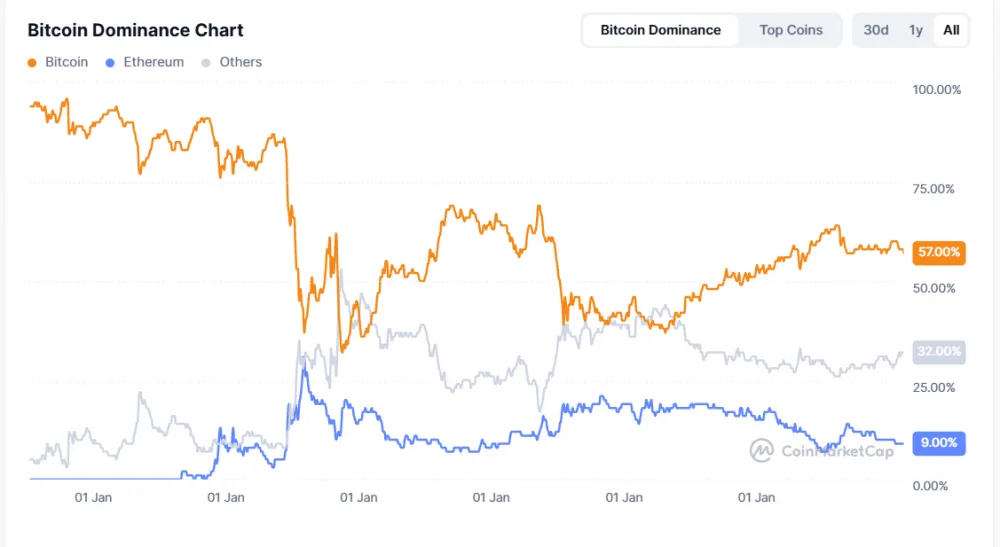
Understanding Bitcoin’s performance is crucial, as the sentiment surrounding BTC often dictates the trends seen in altcoins and the overall crypto market landscape.
Historical Price Movements and Market Cycles
Analyzing Bitcoin’s history of price volatility provides insight into future predictions for 2026. Two notable cycles occurred in 2017 and 2021, with peaks near $20,000 and $69,000, respectively. These rallies were fueled by increased investment and broader market acceptance.
Bull and Bear Cycles
Each bull market has been succeeded by sharp corrections. For example, following the 2017 peak, Bitcoin’s price plummeted over 80% in 2018. Similarly, after the 2021 rally, Bitcoin faced significant downward pressure, highlighting the extreme volatility inherent to the market.
Four-Year Cycle Insights
Bitcoin’s price movement is often analyzed through a four-year cyclic framework, characterized by phases of accumulation, expansion, distribution, and correction. Experts suggest that the upcoming cycle phase may significantly influence the market’s trajectory in 2026.
Key Influencers for Bitcoin in 2026
Several macroeconomic factors will shape Bitcoin’s outlook in the coming years, surpassing mere speculative influences:
Supply and Demand Dynamics
The fixed supply of 21 million Bitcoins creates intrinsic scarcity, which can lead to price appreciation should demand escalate. However, demand is less predictable and fluctuates based on investor sentiment and market dynamics.
Risks of Institutional Adoption
Institutional embrace of Bitcoin, particularly through ETFs, is pivotal for further market validation. Such investments provide a sense of stability and can lead to increased legitimacy in the eyes of the broader investment community.
Macroeconomic Variables
Fluctuations in inflation and the policies of central banks are crucial. Bitcoin often emerges as a hedge in inflationary climates, but rising interest rates can dampen investor risk appetite.
Regulatory Landscapes
The regulatory environment remains a volatile factor. New laws and compliance protocols can either bolster institutional investment or hinder market growth.
Implications of Bitcoin Halving
The process of Bitcoin halving, wherein mining rewards are reduced by half approximately every four years, is a critical factor affecting Bitcoin’s market dynamics. This process inherently reduces the rate of new supply, which can lead to price inflation if demand remains consistent.
Historical Reactions
Historical analysis indicates that previous halvings have often preceded significant price rallies. For instance, the halvings in 2016 and 2020 were followed by notable price increases. However, it typically takes time for the market to adjust to supply changes.
Bitcoin Price Projection: Expert Opinions for 2026
Market experts generally categorize their predictions for Bitcoin into three outlooks: bullish, bearish, and neutral. These predictions are influenced by expectations regarding macroeconomic conditions, the regulatory landscape, and persistent market cycles.
Bullish Forecasts
Optimistic analysts propose that sustained institutional investment coupled with favorable economic trends could drive Bitcoin prices to new heights, possibly surpassing previous records.
Bearish Trends
Conversely, more cautious perspectives cite potential risks like stricter regulations or diminished market liquidity, suggesting that Bitcoin could face challenges in maintaining upward momentum.
Neutral Outlooks
A neutral stance suggests moderate price progression without extreme volatility, contingent on steady adoption rates and stable economic environments.
Technical Analysis and Short-Term Outlook
Recent technical evaluations have revealed a cautious short-term sentiment. As of July 2026, Bitcoin experiences volatility, attempting to maintain support within the mid-$60,000 range. The primary focus remains whether BTC can reclaim key resistance levels.
Support and Resistance Levels
Critical support positions are observed around $58,000, while resistance is noted at approximately $60,000–$61,000. A breakthrough above these levels is vital for fostering a potential rally.
Projected Bitcoin Price Scenarios for 2026
Forecasting Bitcoin’s price involves considering various scenarios based on macroeconomic indicators and market sentiment, which can fluctuate widely:
Bullish Scenario
In an optimistic outlook, Bitcoin could break past its previous highs, targeting ranges of $100,000 to $150,000, contingent on favorable market conditions and ETF inflows.
Bearish Scenario
A pessimistic view might see Bitcoin priced between $40,000 and $60,000 due to stricter regulations and negative macroeconomic factors affecting market confidence.
Base Case Scenario
A moderate growth scenario anticipates Bitcoin maintaining a price range between $55,000 and $85, characterized by stable adoption and gradual market growth.
Investment Potential of Bitcoin in 2026

Determining if Bitcoin is a suitable investment in 2026 hinges on individual risk tolerance, financial goals, and the capacity to endure market fluctuations.
Pros
The primary allure of Bitcoin lies in its status as a leading digital asset and its long-term growth potential, driven by ongoing mainstream acceptance.
Cons
Investors must recognize the inherent volatility and external factors, such as regulatory changes and macroeconomic influences, affecting Bitcoin’s market performance.
Investor Suitability
Long-term investors who can weather price volatility may find value in Bitcoin, while short-term traders need to have a solid trading strategy and risk management skills.
Guidelines for Investors and Traders
To navigate the volatility of Bitcoin investments, maintaining discipline and a comprehensive approach is crucial:
Diversification
Investing across multiple cryptocurrencies rather than concentrating solely on Bitcoin can mitigate risks and provide a buffer against market fluctuations.
Risk Management
Implementing risk management techniques, such as controlling position sizes and dollar-cost averaging, can help protect against potential losses in a volatile market.
Long-Term vs Short-Term Strategies
The choice between a long-term investment approach or a more active trading strategy will depend on individual goals and market understanding.
Emotional Control
Avoiding emotional reactions driven by market fear or greed is essential for making informed trading decisions, especially in rapidly changing environments.
Long-Term Bitcoin Price Forecast: 2026 and Beyond
Bitcoin’s future price trajectory will be largely dictated by macroeconomic developments, market sentiment, institutional adoption, and technological factors. The interplay of these elements will shape price movements in 2026 and beyond.
Monitoring major market events and trends, including ETF flow, regulatory updates, and macroeconomic shifts, is critical for investors to align their strategies and expectations. Ultimately, while Bitcoin’s long-term outlook appears promising, navigating the inherent volatility will require careful analysis and proactive decision-making.
