


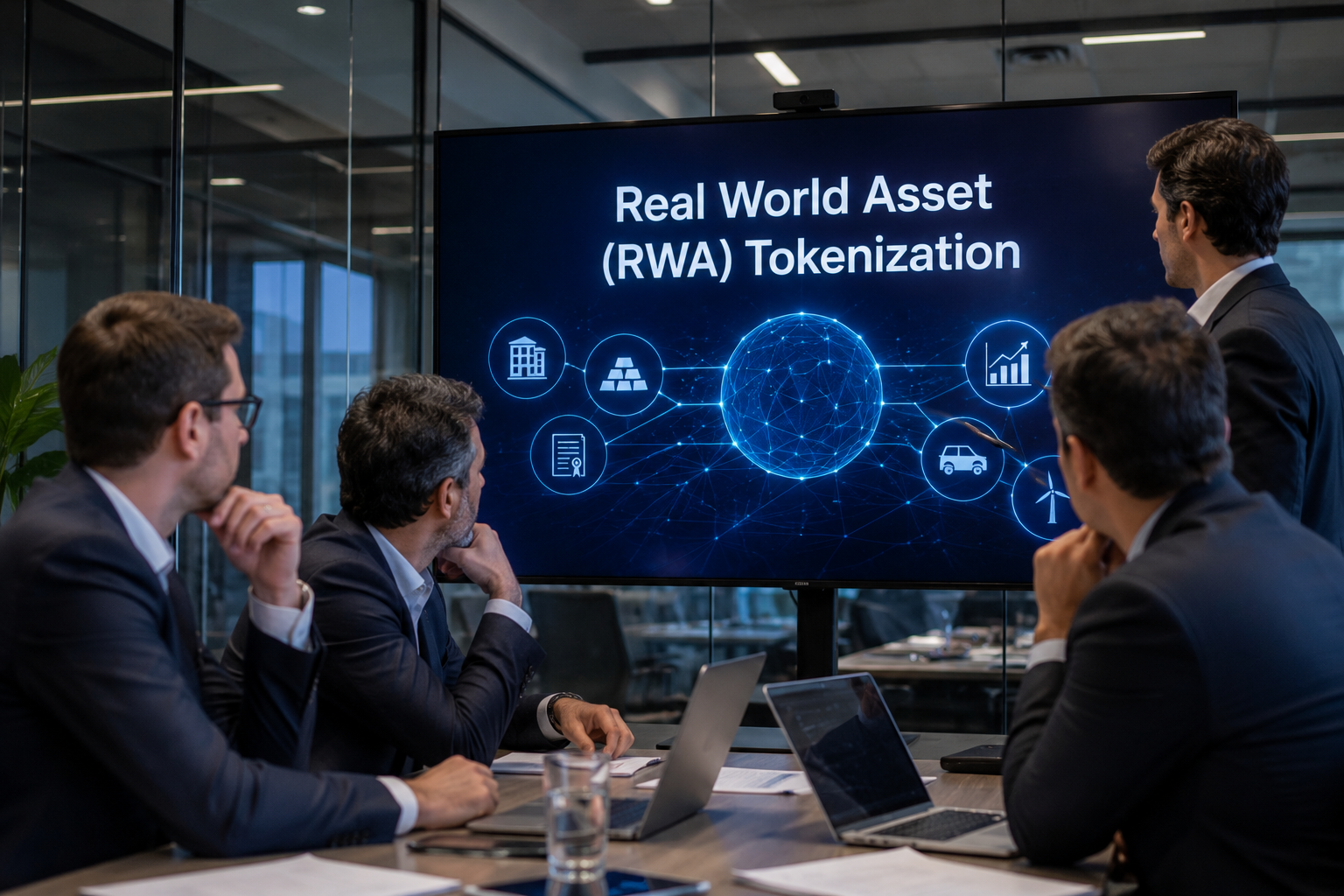
Real Finance and Anchorage Digital sign RWA infrastructure agreement. The partnership combines tokenization, custody and payment tools. Companies aim to institutionally implement on-chain capital markets.
As institutional interest in real world asset (RWA) tokenization continues to grow, Real Finance and Anchorage Digital have entered into a strategic partnership aimed at supporting the entire lifecycle of tokenized assets.
The partnership will combine Real Finance’s blockchain-based tokenization infrastructure with Anchorage Digital’s regulated custody, treasury management, payments, and institutional security capabilities.
The companies said the partnership aims to address key operational challenges that have slowed widespread institutional adoption of tokenized financial products.
Under the agreement, the two companies will cooperate in the areas of asset issuance, custody, settlement, servicing and secondary market liquidity.
This initiative aims to provide a more integrated framework for institutions looking to participate in on-chain capital markets.
Focus on custody and tokenization infrastructure
Real Finance operates an Ethereum Virtual Machine (EVM) compatible layer 1 blockchain developed specifically for real-world asset tokenization.
Meanwhile, Anchorage Digital is the parent company of the first federally chartered cryptocurrency bank in the United States and serves as a qualified institutional custodian.
As part of the partnership, Anchorage Digital will provide regulated custody and treasury infrastructure for the Real Finance ecosystem and its native ASSET token.
The companies also stated that Anchorage Digital will serve as the underlying custodian layer for tokenized financial instruments launched on the Real Finance blockchain.
The arrangement aims to support broader institutional participation by providing regulated custody services alongside the issuance of tokenized assets.
In addition, the two companies will support each other’s pipeline of institutional customers.
Real Finance expects to generate further demand for custody services through asset issuers and onboarding efforts, while Anchorage Digital plans to connect institutional clients to tokenization and blockchain infrastructure solutions built on Real Finance.
Companies aim to introduce institutions
Executives from both companies said the partnership is focused on building the infrastructure needed to deploy tokenized assets at an institutional scale.
Ivo Grigorov, CEO of Real Finance, said:
“Real Finance and Anchorage Digital are working together to build the institutional infrastructure for the next generation of tokenized financial markets. Tokenization alone is not enough. Institutions need a trusted, regulated layer that unifies custody, servicing, payments, and lifecycle management. Together, we are moving the industry from experimentation to a functional on-chain capital market and delivering the unified experience that institutions demand.”
Nathan McCauley, co-founder and CEO of Anchorage Digital, added:
“RWA is one of the clearest examples of how blockchain can modernize capital markets, but financial institutions need more than just tokenization rails; they need a regulated, secure infrastructure that can support storage, payments, and lifecycle connectivity at scale. Our partnership with Real Finance brings together the core building blocks needed for financial institutions to move from isolated pilots to live on-chain capital markets.”
Addressing fragmentation in tokenized markets
The companies said the tokenized asset ecosystem remains fragmented across issuance, custody, compliance, payments, services and liquidity infrastructure.
The companies said financial institutions frequently cited operational reliability concerns and counterparty ties as hindering widespread adoption.
The partnership aims to create a more connected framework by combining blockchain infrastructure, regulated custody, financial management, payment capabilities, and tokenization tools.
Real Finance and Anchorage Digital said the framework could support a variety of tokenized asset classes, including private credit, investment funds, real estate, structured products, and bank integrated financial products.
The announcement comes as financial institutions continue to explore tokenized assets as a way to modernize their capital markets infrastructure and expand access to blockchain-based financial services.
The companies aim to address some of the operational challenges that have limited the growth of the institutional on-chain market by consolidating custody, payments, and tokenization functions within a single ecosystem.
